As an Amazon Associate I earn from qualifying purchases. This post contains affiliate links, which means I may earn a small commission — at no extra cost to you — if you buy through them. I only recommend things I believe are genuinely worth your time.
The parable of the prodigal son (Luke 15) is moving in any language. But a few Greek words at its turning point carry an intensity the English can only hint at — and they all land on the father, who is really the hero of the story. Let me show you the moment he sees his son coming home.
ἔτι … μακρὰν ἀπέχοντος — “while he was still far off”
Luke sets the scene with a genitive absolute: ἔτι δὲ αὐτοῦ μακρὰν ἀπέχοντος — “while he was still a long way off.” That little background clause matters: the father sees him before the son arrives, before the rehearsed apology, before anything is fixed. The grace runs ahead of the confession.
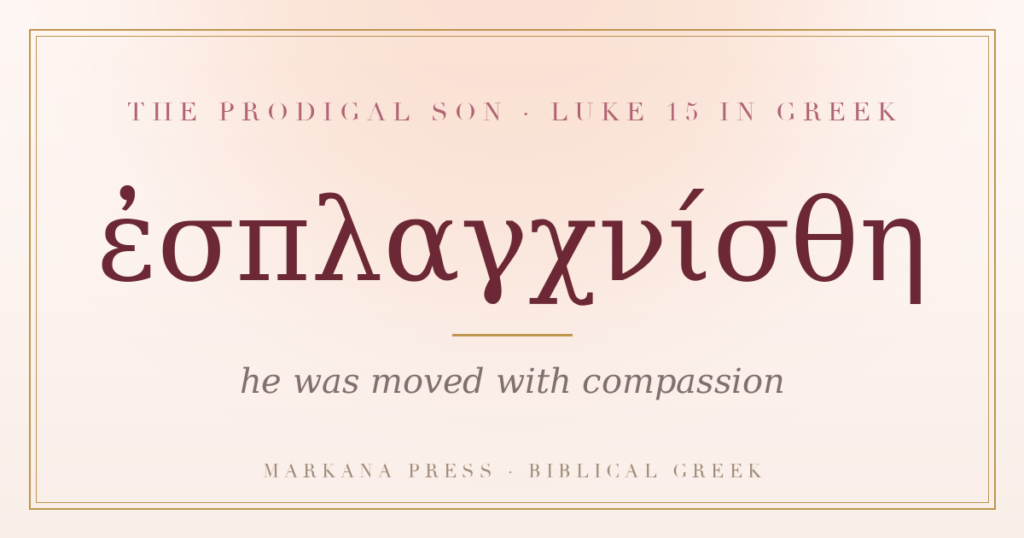
ἐσπλαγχνίσθη — moved in the gut
Then: ἐσπλαγχνίσθη. We translate it “he had compassion,” which is true but tame. The word comes from σπλάγχνα (splanchna) — the inward parts, the guts. To the Greek ear, this is compassion felt physically, in the very core of the body — a love that turns your stomach over. The same verb is used for Jesus’ compassion on the crowds. This is not polite pity; it is being wrenched with love.
ἔδραμεν — and he ran
Now the detail that would have stunned the first hearers: ἔδραμεν — “he ran.” (It is the aorist of the verb for running.) In that culture, a dignified older man did not hike up his robe and run; it was undignified, even shameful. But this father runs — toward the son who wasted everything. The grammar is simple; the picture is overwhelming. God does not wait at the door with arms crossed. He runs.
ἐπέπεσεν … καὶ κατεφίλησεν — he fell on his neck and kissed him
The father ἐπέπεσεν ἐπὶ τὸν τράχηλον αὐτοῦ (“fell on his neck”) and κατεφίλησεν αὐτόν. That last verb is not just φιλέω (“kissed”) but κατα-φιλέω — the prefix intensifies it: he kissed him fervently, again and again. The son has not even finished his speech, and he is already being covered in his father’s kisses.
Why the Greek makes the gospel vivid
String the words together and the parable becomes almost unbearable in its tenderness: while the boy was still far off, his father saw him and was wrenched with compassion, and ran, and fell on his neck, and kissed him again and again. Every verb is a window into how God receives returning sinners. You do not need Greek to be embraced by that grace — but reading the words yourself lets you feel their full weight. That is the quiet reward the four-volume series below is built to give you: the New Testament, in the very words the Spirit inspired.
From Markana Press
Read the New Testament in the language it was written in
Everything in this post is exactly how I teach it in Biblical Greek: A Self-Study Textbook — a four-volume course I publish through my Christian imprint, Markana Press. It assumes no background in Greek and takes you from the alphabet to reading the Gospels in their original words.
📚 All four volumes are free to read on Kindle Unlimited right now — and also available in paperback and hardcover.
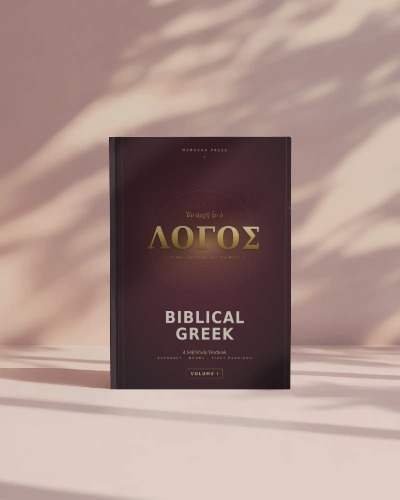 Free on Kindle Unlimited

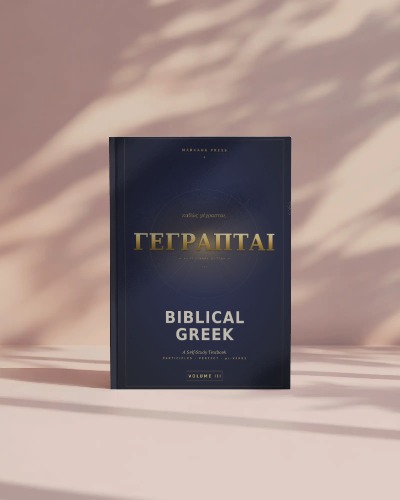
Get the complete four-volume series:
Start with Volume I if you’re new — each volume builds on the one before it.