As an Amazon Associate I earn from qualifying purchases. This post contains affiliate links, which means I may earn a small commission — at no extra cost to you — if you buy through them. I only recommend things I believe are genuinely worth your time.
If you read a chapter of a Gospel in Greek, one tense will appear again and again, carrying the action forward: the aorist. It is the backbone of New Testament narrative — the tense of “he said,” “they came,” “she believed.” And yet it is one of the most misunderstood tenses, because it does not map neatly onto anything in English. Let me clear it up, because once the aorist makes sense, Greek narrative suddenly reads smoothly.
What “aorist” actually means
The word aorist comes from Greek for “undefined” or “unbounded.” That is the key. The aorist presents an action as a simple whole — a single snapshot — without commenting on how long it took or whether it was repeated. Compare it with the present, which pictures action as ongoing (a movie). The aorist just says: it happened. Point taken, move on.
Here is the model verb λύω in the aorist active:
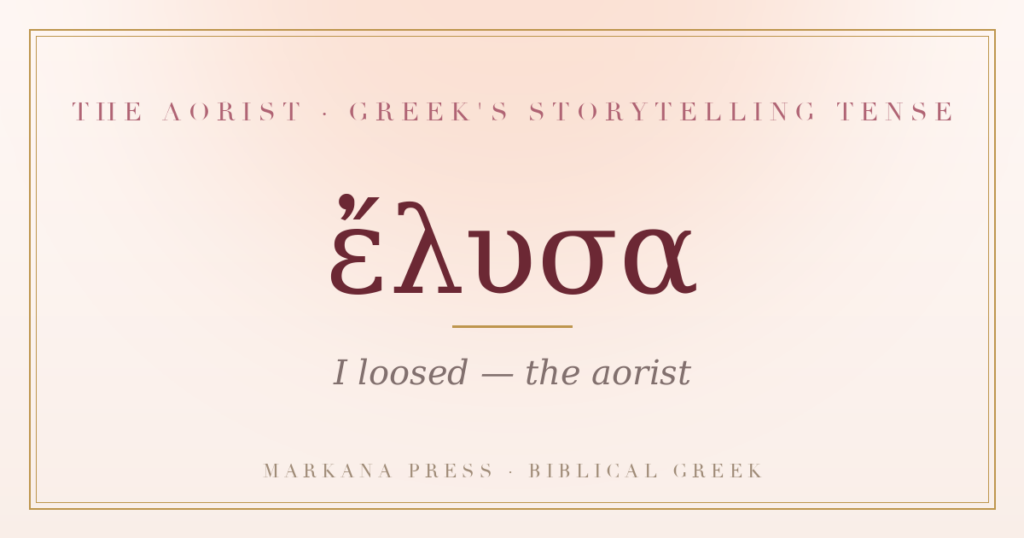
- ἔλυσα — I loosed
- ἔλυσας — you loosed
- ἔλυσεν — he/she/it loosed
- ἐλύσαμεν — we loosed
- ἐλύσατε — you (plural) loosed
- ἔλυσαν — they loosed
How to spot an aorist: two clues
Most aorists wear two visible badges. First, an augment — an ἐ- stuck on the front of the verb, marking past time (ἔλυσα). Second, a tell-tale σ (sigma) in the ending, the aorist’s signature letter: ἔλυσα. Augment in front, sigma in the middle — that combination shouts “aorist” before you have even finished the word.
Some very common verbs use a “second aorist,” which keeps the augment but changes the stem instead of adding sigma — like ἔλαβον (“I took,” from λαμβάνω) or εἶπον (“I said”). Same meaning, different costume.
Aorist vs. imperfect: snapshot vs. movie
Greek has another past tense, the imperfect, and the contrast between them is where the beauty lives. The imperfect pictures a past action as ongoing (“he was knocking, and kept knocking”); the aorist pictures it as a whole (“he knocked”). When a Gospel writer switches between them, he is directing your attention like a filmmaker choosing between a lingering shot and a quick cut. Reading those choices is one of the real joys of Greek.
Why the aorist matters in the New Testament
Some of the most precious statements in Scripture are in the aorist, presenting a finished reality. “God so loved the world that He gave” — that “loved” and “gave” are aorists, pointing to a definite act of love at the cross. When you read the aorist, you are often reading the gospel as accomplished fact. I walk through exactly that in my upcoming look at John’s Greek, and you will see the aorist everywhere once you know its two badges.
Don’t fear the tense that runs the story
The aorist has a fearsome reputation it does not deserve. Boil it down to one sentence: the aorist views an action as a simple whole. Augment on the front, sigma in the middle, “it happened” in your mind. Learn that, and you have learned the tense that moves nearly every story in the Greek New Testament forward. From here, the idea of aspect ties the present, imperfect, and aorist into one elegant system.
From Markana Press
Read the New Testament in the language it was written in
Everything in this post is exactly how I teach it in Biblical Greek: A Self-Study Textbook — a four-volume course I publish through my Christian imprint, Markana Press. It assumes no background in Greek and takes you from the alphabet to reading the Gospels in their original words.
📚 All four volumes are free to read on Kindle Unlimited right now — and also available in paperback and hardcover.
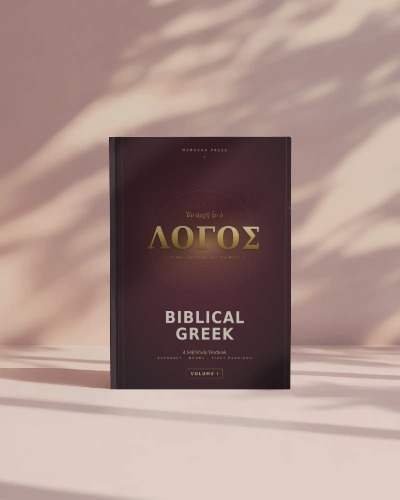 Free on Kindle Unlimited
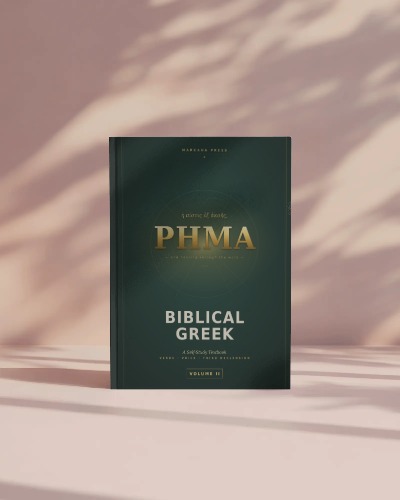
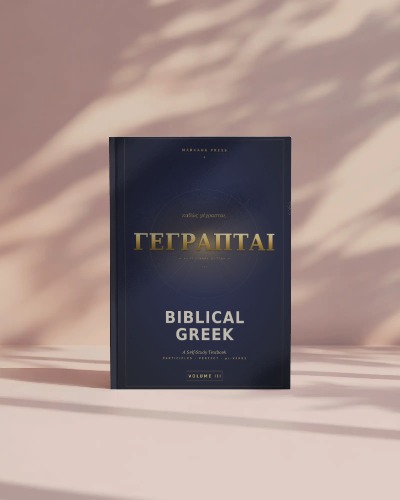
Get the complete four-volume series:
Start with Volume I if you’re new — each volume builds on the one before it.