As an Amazon Associate I earn from qualifying purchases. This post contains affiliate links, which means I may earn a small commission — at no extra cost to you — if you buy through them. I only recommend things I believe are genuinely worth your time.
Here is the single idea that unlocks Greek grammar more than any other: in Greek, a noun changes its ending to show what job it is doing in the sentence. English mostly uses word order — “the dog bit the man” means something different from “the man bit the dog.” Greek can put those words in almost any order, because the endings tell you who is biting whom. Those endings are called cases, and there are four you meet first.
This is the heart of Volume I, and once it clicks, sentences that looked like a jumble suddenly snap into place.
The four cases, in plain English
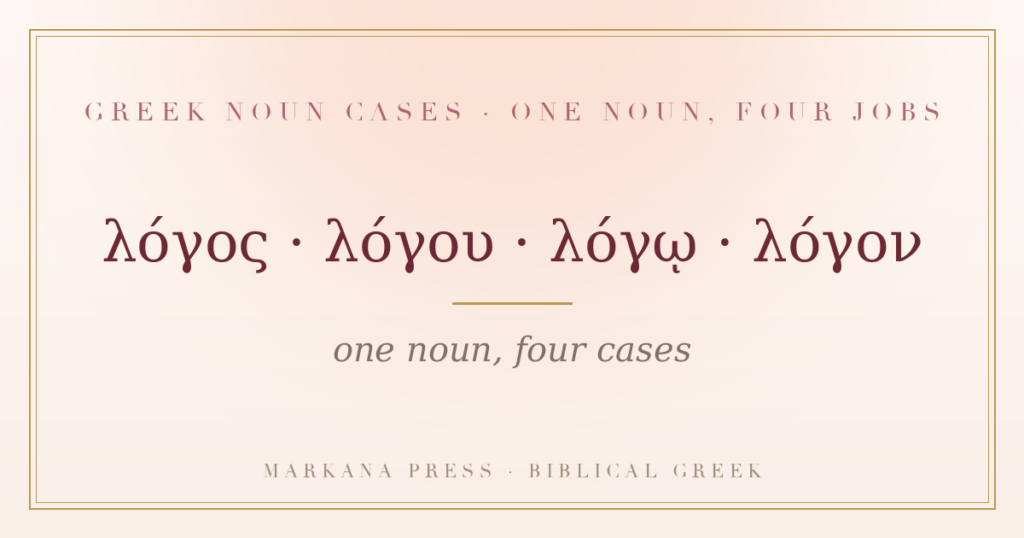
Let’s use the word λόγος (logos, “word”) and watch its ending change job by job:
- Nominative — λόγος — the subject, the one doing the action.
ὁ λόγος μένει — the word remains. - Genitive — λόγου — usually “of” — possession,
source, or relationship.
ἡ ἀρχὴ τοῦ λόγου — the beginning of the word. - Dative — λόγῳ — usually “to” or
“for” or “with/by” — the indirect object or the
means.
πιστεύω τῷ λόγῳ — I trust in the word. - Accusative — λόγον — the direct object, the one receiving the
action.
ἀκούω τὸν λόγον — I hear the word.
Notice the stem λόγ- stays the same; only the tail changes: -ος, -ου, -ῳ, -ον. Learn that little family of endings and you can suddenly parse thousands of nouns. (There is a fifth, the vocative — used for directly addressing someone, like “Lord!” — but the four above carry the daily load.)
Why this is good news, not bad news
At first “four endings for every noun” sounds like more to memorize. It is actually a gift. Because the ending tells you the job, Greek can arrange words for emphasis without confusion. When John writes θεὸς ἦν ὁ λόγος and puts “God” first, he is emphasizing it — and you can still tell that “the Word” is the subject, because of the article and the endings. Word order becomes a tool for stress and beauty, not just grammar. I show that exact effect in John 1:1, word by word.
The case that hides the most treasure: the genitive
The genitive (the “of” case) is where a lot of rich meaning lives, because “of” can mean so many things. The love of God — is that the love God has, or the love we have for Him? Greek often leaves that beautiful ambiguity right there in the genitive, and good translators and commentators wrestle with it. When you can see the genitive yourself, you get to sit in on that conversation instead of only reading its conclusion in English. If you enjoy that kind of close study, you will love going deep on a single word.
How the article helps you spot cases
You do not have to memorize the cases in a vacuum. The little word “the” wears the same case-endings and travels right next to the noun, so it acts like a label: ὁ (nominative), τοῦ (genitive), τῷ (dative), τόν (accusative). Spot the article, and you have usually spotted the case. That is why I teach the definite article right before the cases — they reinforce each other.
Putting it to work
Try this with one verse a day. Take a short line of Greek, find the noun, look at its ending, and ask: is this the one doing the action (nominative), the object (accusative), an “of” (genitive), or a “to/for” (dative)? Within a couple of weeks that question becomes instinct. And the moment it does, you are no longer decoding Greek — you are reading it.
Start with the alphabet if you need it, keep the article close, and let the four cases become the frame you hang every Greek sentence on. It is, genuinely, the doorway from “letters” to “language.”
From Markana Press
Read the New Testament in the language it was written in
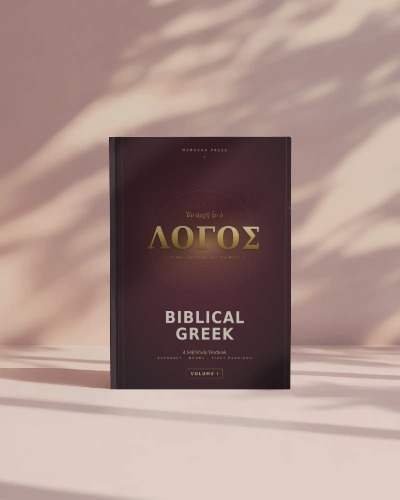
Everything in this post is exactly how I teach it in Biblical Greek: A Self-Study Textbook — a four-volume course I publish through my Christian imprint, Markana Press. It assumes no background in Greek and takes you from the alphabet to reading the Gospels in their original words.
📚 All four volumes are free to read on Kindle Unlimited right now — and also available in paperback and hardcover.
 Free on Kindle Unlimited
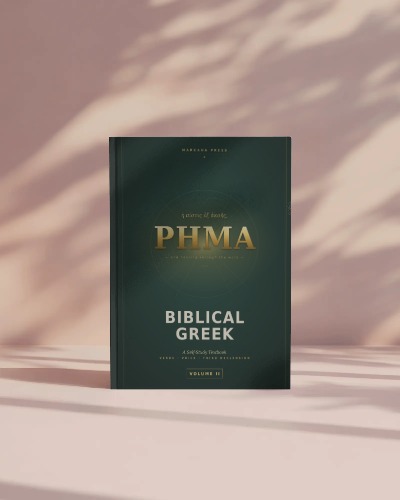
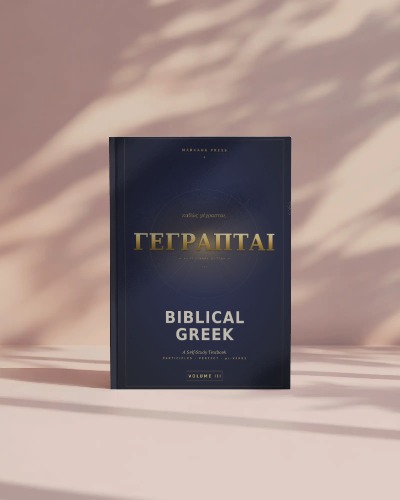
Get the complete four-volume series:
Start with Volume I if you’re new — each volume builds on the one before it.