As an Amazon Associate I earn from qualifying purchases. This post contains affiliate links, which means I may earn a small commission — at no extra cost to you — if you buy through them. I only recommend things I believe are genuinely worth your time.
By the New Testament era, one Greek mood was already fading from everyday speech — the optative. In the older classical language it was everywhere; by Koine it had become the rare, formal mood of wishes and remote possibilities. It survives in the New Testament in a small number of places — but one of them is unforgettable: Paul’s thunderous μὴ γένοιτο.
Volume IV gives the optative its due, partly because it is genuinely useful and partly because recognizing it solves verses that would otherwise puzzle you.
The mood of the wish
If the indicative is “this is,” and the subjunctive is “this may be,” the optative is one more step removed: “may this be” or “if only this were.” It expresses a wish, a prayer, or a faint, remote possibility. Think of it as the verb leaning toward something hoped for but not asserted.
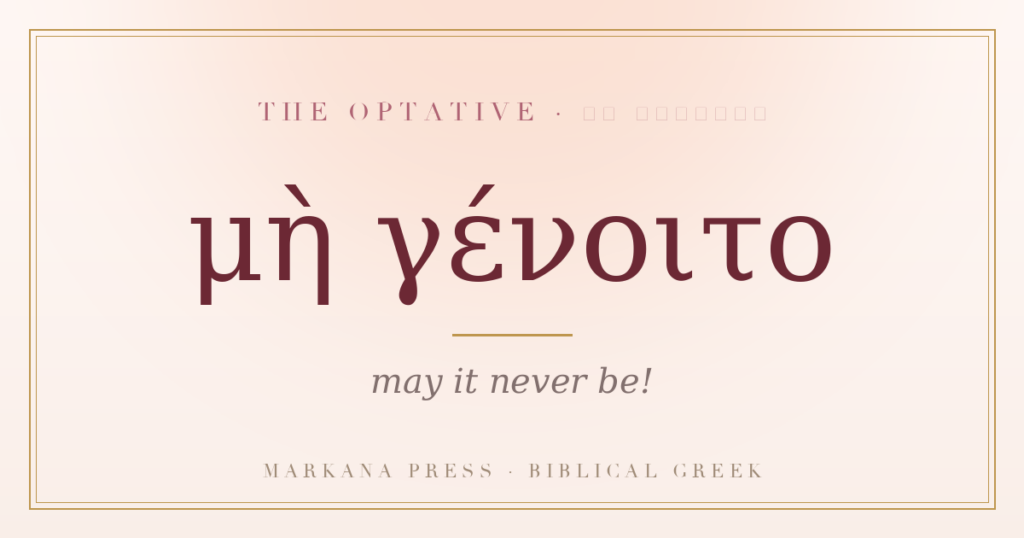
μὴ γένοιτο — “May it never be!”
Paul uses the optative as a kind of holy exclamation. After raising a wrong conclusion someone might draw — “Shall we sin so that grace may increase?” — he slams the door with μὴ γένοιτο: literally “may it not come to be!” Older translations render it “God forbid!”; modern ones say “By no means!” or “Certainly not!” The verb γένοιτο is the optative of γίνομαι (“to become, to happen”), and the phrase is the strongest way Greek has to recoil from an idea. It appears about a dozen times, mostly in Romans and Galatians, always at a hinge in Paul’s argument.
The optative of blessing
The optative is not only for rejecting ideas — it also carries some of Scripture’s loveliest blessings and prayers. “May the God of hope fill you with all joy and peace” and similar benedictions reach for the optative’s wishing force. When you see it, you are often standing in a moment of prayer or benediction, where the writer lifts a hope toward God.
Why learn a “vanishing” mood?
You might ask: if it is so rare, why bother? Three reasons. First, the places it does appear are often theologically charged (Paul’s μὴ γένοιτο, the apostolic blessings) — exactly the verses you most want to read well. Second, recognizing it keeps you from misreading it as something else. And third, it completes your map of the Greek moods, so no verb form can surprise you. A little effort on a rare mood pays off precisely where it matters most.
The takeaway
The optative is the gentle, formal mood of wish and remote possibility — fading in Koine, but alive in some of the New Testament’s most striking lines. Learn to recognize μὴ γένοιτο and the blessing-prayers, and those moments land with their full force. With the optative, you have now met every mood of the Greek verb; the last piece of syntax, indirect discourse, shows how Greek reports what people said and thought.
From Markana Press
Read the New Testament in the language it was written in
Everything in this post is exactly how I teach it in Biblical Greek: A Self-Study Textbook — a four-volume course I publish through my Christian imprint, Markana Press. It assumes no background in Greek and takes you from the alphabet to reading the Gospels in their original words.
📚 All four volumes are free to read on Kindle Unlimited right now — and also available in paperback and hardcover.
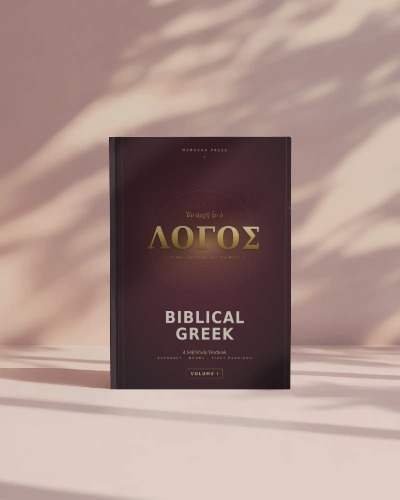 Free on Kindle Unlimited

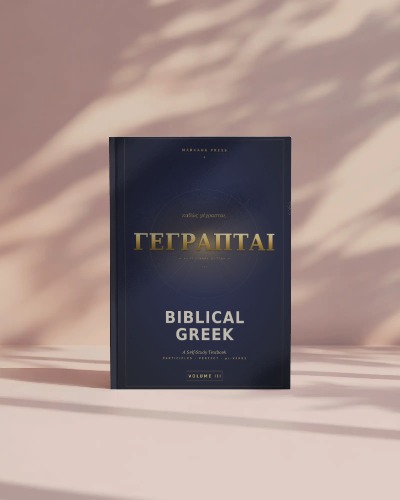
Get the complete four-volume series:
Start with Volume I if you’re new — each volume builds on the one before it.