Learning Korean numbers is one of the first essential steps in mastering the language, but here’s something that surprises many beginners: Korean actually has two completely different number systems. If you’ve been struggling to understand when to use which numbers, you’re not alone. This guide will walk you through both native Korean numbers and Sino-Korean numbers, showing you exactly how to count in Korean with confidence and know which system to use in real-life situations.
Why Korean Has Two Number Systems
Before diving into the numbers themselves, let’s clear up the confusion. Korean uses native Korean numbers (순우리말 숫자) that originated from the Korean language itself, and Sino-Korean numbers (한자어 숫자) that came from Chinese influence centuries ago. Think of it like how English uses both “one, two, three” and “first, second, third”—they’re different systems for different purposes.
Native Korean numbers are used for counting objects, people, and ages, and they only go up to 99. Sino-Korean numbers handle everything else: dates, money, addresses, phone numbers, and numbers above 100. The good news? Once you understand the pattern, both systems become predictable and logical.
Native Korean Numbers 1-100
The native Korean number system follows a straightforward pattern once you learn the basics. Here are the fundamental numbers you need to memorize:
- 1-10: 하나 (hana), 둘 (dul), 셋 (set), 넷 (net), 다섯 (daseot), 여섯 (yeoseot), 일곱 (ilgop), 여덟 (yeodeol), 아홉 (ahop), 열 (yeol)
- 20, 30, 40, etc.: 스물 (seumul), 서른 (seoreun), 마흔 (maheun), 쉰 (swin), 예순 (yesun), 일흔 (ilheun), 여든 (yeodeun), 아흔 (aheun)
To form numbers like 21, 35, or 47, you simply combine the tens place with the ones place. For example, 23 is 스물셋 (seumul-set)—literally “twenty-three.” Similarly, 57 becomes 쉰일곱 (swin-ilgop), combining fifty and seven.
Here’s an important detail that trips up learners: when you use native Korean numbers with counters (words that classify what you’re counting), numbers 1-4 and 20 change slightly. 하나 becomes 한 (han), 둘 becomes 두 (du), 셋 becomes 세 (se), 넷 becomes 네 (ne), and 스물 becomes 스무 (seumu). For example, “two people” is 두 명 (du myeong), not 둘 명.
Sino-Korean Numbers 1-100 and Beyond
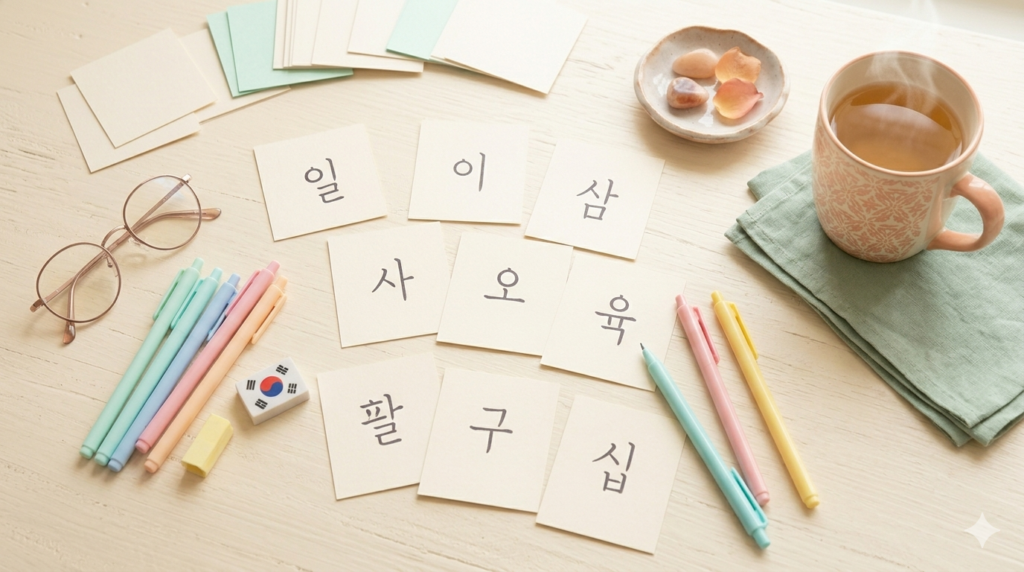
Sino-Korean numbers follow a more mathematical structure that actually makes counting higher numbers easier. The basic building blocks are:
- 1-10: 일 (il), 이 (i), 삼 (sam), 사 (sa), 오 (o), 육 (yuk), 칠 (chil), 팔 (pal), 구 (gu), 십 (sip)
- Larger units: 십 (sip/10), 백 (baek/100), 천 (cheon/1,000), 만 (man/10,000)
The beauty of Sino-Korean numbers is their consistency. To say 25, you combine “two-ten-five”: 이십오 (i-sip-o). The number 347 becomes 삼백사십칠 (sam-baek-sa-sip-chil)—three-hundred-four-ten-seven. Once you grasp this pattern, you can count into the millions.
One quick pronunciation note: 육 (yuk/6) often becomes 유 (yu) when followed by another number starting with certain consonants, and 십 (sip/10) may sound closer to “ship” in casual speech. Listen carefully to native speakers to catch these subtle variations.
When to Use Each Korean Number System
Knowing which number system to use is crucial for natural-sounding Korean. Use native Korean numbers for counting age (when saying “I’m 25 years old” with 살), hours when telling time, and counting objects with counters like 개 (gae/things), 명 (myeong/people), or 병 (byeong/bottles).
Use Sino-Korean numbers for minutes in time expressions, dates and years, money and prices, phone numbers, addresses, and mathematical calculations. For example, when saying 3:45, you’d say 세 시 (se si) using native numbers for the hour, but 사십오 분 (sa-sip-o bun) using Sino-Korean numbers for the minutes.
Here’s a memory trick: if you’re dealing with quantities of physical objects you can touch or people you can count, lean toward native Korean numbers. If you’re dealing with abstract measurements, units, or official numbering systems, use Sino-Korean numbers.
Common Mistakes to Avoid and Practice Tips
The most frequent mistake beginners make is mixing up the two systems—saying prices with native Korean numbers or using Sino-Korean numbers to count people. Another common error is forgetting to modify 하나, 둘, 셋, and 넷 when using them with counters. Always practice numbers in context rather than in isolation to avoid these pitfalls.
To build fluency with Korean numbers 1-100, try these practical exercises: set your phone’s language to Korean and read the time throughout the day, practice counting items around your house with appropriate counters, or challenge yourself to say prices when shopping (even if you’re converting from your own currency). When watching Korean content, pay attention to how numbers are used in context—you’ll start recognizing patterns naturally.
Write out random numbers daily and practice reading them aloud both ways. For instance, write “37” and say it as 서른일곱 (native) and 삼십칠 (Sino-Korean) to train your brain to switch between systems effortlessly. The more you engage with numbers in real-world contexts, the more intuitive the choice becomes.
Putting Korean Numbers Into Practice
Mastering how to count in Korean opens doors to everyday conversations and practical situations. Whether you’re ordering three coffees (커피 세 잔, keopi se jan), saying an appointment is at 2:30 (두 시 삼십 분, du si sam-sip bun), or asking the price of something (얼마예요?, eolmayeyo?), numbers are everywhere in language learning.
Start by focusing on the numbers you’ll use most frequently—1 through 10 in both systems, plus the tens up to 100. Build confidence with these before worrying about larger numbers. Remember that making mistakes is part of the learning process, and most Korean speakers will appreciate your effort even if you occasionally mix up the systems. With consistent practice and real-world application, both native Korean numbers and Sino-Korean numbers will become second nature, giving you the numerical foundation you need to navigate Korean language and culture with ease.