Planning what to do in Seoul for 3 days can feel overwhelming when you’re faced with a sprawling metropolis that seamlessly blends ancient palaces, cutting-edge technology, vibrant street food markets, and serene Buddhist temples. Seoul offers so much to explore that even locals haven’t seen it all, but with a well-planned itinerary, you can experience the city’s most iconic attractions while still leaving room for spontaneous discoveries. This comprehensive Seoul 3 day itinerary will guide you through the perfect balance of historical landmarks, cultural experiences, modern attractions, and authentic Korean cuisine—all while using Seoul’s efficient subway system to navigate like a local.
Day One: Exploring Seoul’s Historical Heart and Traditional Culture
Your first day should focus on Seoul’s royal heritage and traditional neighborhoods. Start early at Gyeongbokgung Palace (경복궁), the largest and most iconic of Seoul’s five grand palaces. Arrive by 9:00 AM when the palace opens to beat the crowds and catch the changing of the guard ceremony at 10:00 AM—a colorful spectacle that recreates the Joseon Dynasty’s royal traditions. Take Line 3 to Gyeongbokgung Station (Exit 5) and you’ll be right at the entrance. The palace grounds are expansive, so dedicate at least 90 minutes to exploring the throne halls, pavilions, and the beautiful Gyeonghoeru Pavilion overlooking a lotus pond.
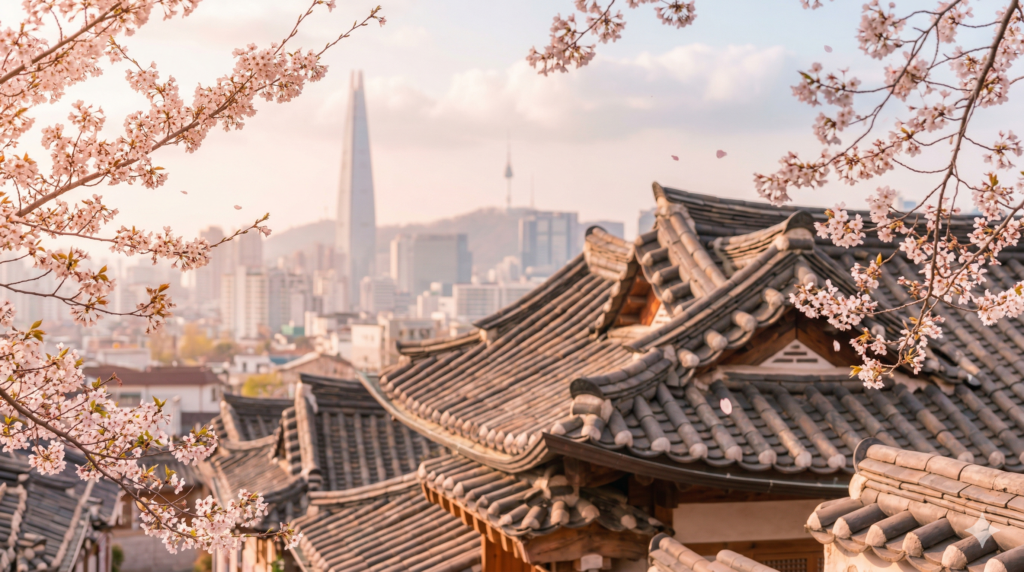
From the palace, walk about ten minutes north to Bukchon Hanok Village, a preserved neighborhood of traditional Korean houses (hanok) nestled between Gyeongbokgung and Changdeokgung palaces. The winding alleyways offer countless photo opportunities, but remember that people actually live here—keep noise to a minimum and respect private property. The best views are from the designated photo zones along Bukchon-ro 11-gil, where you can capture the contrast of traditional tile roofs against Seoul’s modern skyline. If you’re visiting Seoul for the first time, this area provides an invaluable glimpse into how Korean aristocrats lived during the Joseon Dynasty.
For lunch, head to the nearby Insadong neighborhood, just a fifteen-minute walk away. This area specializes in traditional Korean restaurants where you can try dishes like bibimbap, bulgogi, or Korean temple cuisine. After lunch, explore Insadong’s main street, Insadong-gil, which transforms into a pedestrian-only zone on weekends. Here you’ll find traditional tea houses, art galleries, craft shops selling hanji (traditional Korean paper) products, and vendors offering Korean street snacks like hotteok (sweet pancakes) and tteokbokki (spicy rice cakes).
🍡 Need rice cakes (tteok)? Chewy Korean rice cakes are the star of tteokbokki and tteokguk. Here’s the tteok I use →
As an Amazon Associate I earn from qualifying purchases.
End your first day at Cheonggyecheon Stream, a restored urban stream that runs through downtown Seoul. Take the subway to Gwanghwamun Station (Line 5) and walk to the stream’s starting point at Cheonggye Plaza. This 11-kilometer stream offers a peaceful walking path lit by artistic installations at night, creating a romantic atmosphere perfect for unwinding after a day of sightseeing. Walk along the stream toward Dongdaemun, where you can explore the futuristic Dongdaemun Design Plaza (DDP) and the surrounding night markets that stay open until late.
Day Two: Modern Seoul, Shopping Districts, and Street Food Adventures
Your second day in this Seoul 3 day itinerary shifts focus to the city’s modern attractions and bustling commercial districts. Begin at Namsan Seoul Tower (N Seoul Tower), the city’s most recognizable landmark. Rather than taking the cable car, hike up through Namsan Park for about 30-40 minutes—the trail is well-maintained and offers excellent city views along the way. Take Line 4 to Myeongdong Station and follow the signs to the Namsan hiking trail entrance. If you’re not up for hiking, buses 02 and 05 circle the mountain base and connect to the cable car station.
At the tower’s observation deck, you’ll get 360-degree views of Seoul sprawling in every direction. Visit on a clear day if possible—you can see as far as Incheon on the horizon. The tower also features the famous “Locks of Love” terrace where couples attach padlocks as symbols of their relationship. Descend by late morning and head to the Myeongdong district at the mountain’s base, Seoul’s premier shopping area and a paradise for Korean beauty and skincare products.
Myeongdong’s pedestrian-friendly streets are packed with international fashion brands, Korean cosmetics flagships like Innisfree and Etude House, and endless street food stalls. This is your chance to try Korean street food classics: cheese-filled tornado potatoes, crispy Korean fried chicken, odeng (fish cake skewers in hot broth), and the Instagram-famous egg bread. The density of food stalls increases dramatically in the evening, but afternoon visits allow you to shop more comfortably before the crowds arrive.
After shopping, take Line 2 to Gangnam Station to experience Seoul’s affluent southern district made famous by Psy’s “Gangnam Style.” The area around the station embodies modern Korean wealth and style—luxury boutiques, upscale restaurants, trendy cafes, and the famous Gangnam Style statue near Exit 5. For a unique cultural experience, explore the underground Gangnam Terminal shopping complex, a massive subterranean mall connected to the subway where locals do serious shopping.
Conclude your evening in the Hongdae neighborhood (take Line 2 to Hongik University Station), Seoul’s youthful creative hub known for indie music, street performances, quirky cafes, and vibrant nightlife. The streets around Hongik University come alive after dark with buskers, dance crews, and artists selling handmade goods. Hongdae offers some of Seoul’s best fusion restaurants, craft beer bars, and themed cafes—including cat cafes, board game cafes, and even VR gaming cafes. For those interested in Korean cuisine beyond the tourist standards, check out the food and recipes section for deeper dives into Korean cooking traditions.
What to Do in Seoul for 3 Days If the Weather Turns Bad
Seoul experiences distinct seasons, and weather can be unpredictable—summer brings heavy monsoon rains while winter can be bitterly cold. If rain or extreme weather disrupts your outdoor plans, Seoul offers exceptional indoor alternatives that showcase different facets of Korean culture.
The National Museum of Korea (Line 4, Ichon Station) is one of Asia’s largest museums and could easily consume half a day. It houses over 310,000 artifacts spanning Korean history from prehistoric times to the modern era, including the iconic Gilt Bronze Incense Burner of Baekje and extensive collections of celadon pottery. Best of all, permanent exhibitions are free. The War Memorial of Korea (Line 4 or 6, Samgakji Station) provides comprehensive coverage of Korean military history, with particular focus on the Korean War—essential context for understanding modern Korea’s division.
For a uniquely Korean indoor experience, spend time at a traditional jjimjilbang (Korean spa and bathhouse). Dragon Hill Spa in Yongsan is the most foreigner-friendly option, open 24 hours with multiple floors of saunas, sleeping rooms, restaurants, and entertainment facilities. COEX Mall in Gangnam, one of Asia’s largest underground shopping centers, houses the stunning Starfield Library—a two-story public library with floor-to-ceiling bookshelves that has become an Instagram sensation. The same complex includes the COEX Aquarium if you’re traveling with children.
Day Three: Markets, Neighborhoods, and Your Choice of Cultural Deep Dive
Your final day should blend remaining must-see attractions with neighborhoods that match your specific interests. Start at Gwangjang Market (Line 2 or 5, Euljiro 4-ga Station), Seoul’s oldest traditional market and a food lover’s paradise. Unlike tourist-oriented markets, Gwangjang caters primarily to locals, offering an authentic glimpse into daily Korean life. The market is famous for bindaetteok (mung bean pancakes), mayak gimbap (mini seaweed rice rolls nicknamed “drug gimbap” because they’re addictive), and yukhoe (Korean beef tartare).
Visit the market between 9:00 AM and noon for the freshest food and fewer crowds. You’ll find two main sections: the fabric and clothing area (upper floors) where vendors sell traditional hanbok and modern textiles, and the food alley where elderly Korean women prepare fresh dishes at small standing-room-only stalls. Don’t hesitate to point and gesture if you can’t read Korean—vendors are accustomed to foreign visitors and welcoming despite language barriers.
From Gwangjang Market, your afternoon options should depend on your interests. History enthusiasts should visit Changdeokgung Palace and the Secret Garden (Line 3, Anguk Station), a UNESCO World Heritage site renowned for its beautiful landscaping that harmonizes architecture with natural topography. The Secret Garden requires a guided tour (offered in English several times daily), but it’s absolutely worth it—the 90-minute tour takes you through pristine forest paths, pavilions built over lotus ponds, and the 600-year-old trees that Korean royalty once enjoyed.
Art and design lovers should head to the Leeum Samsung Museum of Art (Line 6, Hangangjin Station), which houses both traditional Korean art and contemporary international works in architecturally stunning buildings designed by Mario Botta, Jean Nouvel, and Rem Koolhaas. The contrast between ancient celadon pottery and cutting-edge contemporary installations perfectly encapsulates Seoul’s blend of tradition and modernity.
K-pop fans can’t miss the COEX K-Pop Square and nearby entertainment company buildings in Gangnam. SM Town Coex Artium offers merchandise from SM Entertainment artists, hologram theaters, and cafes decorated with idol memorabilia. The nearby streets around Apgujeong and Cheongdam-dong are where you might spot Korean celebrities, though agencies have become stricter about protecting artist privacy.
For your final evening, consider a Han River park experience. The Han River parks (accessible from multiple subway stations) offer bicycle rentals, riverside walking paths, floating convenience stores, and outdoor dining areas where locals gather for fried chicken and beer (chimaek). Yeouido Hangang Park (Line 5, Yeouinaru Station) is particularly popular at sunset, with views of Seoul’s skyline reflecting off the water. During spring, this area explodes with cherry blossoms, while summer evenings feature water fountain shows set to music.
How Should You Get Around Seoul During Your 3 Days?
Seoul’s subway system is your best friend when figuring out what to do in Seoul for 3 days. The system is efficient, affordable, clean, and fully bilingual with English signage throughout. Purchase a T-money card (available at convenience stores or subway station kiosks for about 2,500-3,000 won plus your initial load amount) on your first day and recharge it as needed—the card works on subways, buses, and even taxis, plus offers small discounts on fares.
Most journeys within central Seoul cost 1,250-1,450 won (roughly $1-1.20) and take 20-40 minutes between major attractions. Download the Kakao Metro or Naver Map app for real-time directions, English interfaces, and platform information. Unlike many cities, Seoul’s last trains run quite late (around midnight on most lines, slightly later on weekends), giving you flexibility for evening activities. Taxis are relatively affordable compared to Western cities, with base fares starting around 3,800 won, but the subway is almost always faster during rush hours (7:30-9:30 AM and 6:00-8:00 PM).
Walking is essential for experiencing Seoul’s neighborhoods fully. Comfortable shoes are non-negotiable—you’ll easily walk 10,000-15,000 steps daily even when using the subway frequently. Many of Seoul’s most charming discoveries happen in the walking distances between subway stations and attractions: hidden cafes in converted hanok, tiny street food stalls serving the best tteokbokki you’ve ever tasted, or boutique shops selling unique Korean design goods.
Practical Tips for Making the Most of Your Seoul Itinerary
Timing your visit strategically can dramatically improve your Seoul travel guide experience. Avoid national holidays (especially Chuseok in autumn and Seollal in late January/early February) when many restaurants and shops close and locals travel to their hometowns. Spring (April-May) and autumn (September-November) offer the best weather and stunning natural scenery, with cherry blossoms or fall foliage adding beauty to palace grounds and mountain trails.
Most major attractions open around 9:00-10:00 AM and close between 5:00-6:00 PM, with last entry typically 30-60 minutes before closing. Palaces are generally closed on Tuesdays, while museums close on Mondays—plan accordingly. Restaurants and cafes, however, operate on different schedules: breakfast options are limited (coffee shops dominate morning culture), lunch runs 11:30 AM-2:00 PM, and dinner starts around 6:00 PM but many places serve until 10:00 PM or later.
Language barriers exist but are manageable. Download Papago (Naver’s translation app) for Korean-English translation—it includes a camera function that translates text in real-time, incredibly useful for menus and signs. Major tourist areas have English speakers, but learning basic Korean phrases enhances your experience and delights locals. If you’re interested in deepening your connection with Korean culture through language, explore the Korean learning resources available on this site.
Cash is still king at traditional markets and small eateries, though Seoul is rapidly becoming cashless. Carry at least 50,000-100,000 won in cash (about $40-80) for street food, market purchases, and small vendors who don’t accept cards. Convenience stores (7-Eleven, GS25, CU) are everywhere and accept both cash and cards—they’re perfect for grabbing snacks, drinks, and even basic Korean cosmetics at lower prices than dedicated shops.
Food culture in Seoul revolves around sharing. Many restaurants serve portions designed for two or more people, and solo diners may face minimum order requirements or per-person charges at certain establishments. If you’re traveling alone, stick to casual restaurants, food courts, and street food where single portions are standard. Korean dining etiquette has a few key points: don’t stick chopsticks upright in rice (this resembles funeral rituals), pour drinks for others rather than yourself, and it’s polite to turn your head when drinking in front of elders.
Making Your Seoul Experience Uniquely Yours
While this Seoul itinerary for first time visitors covers the essential attractions, the city’s real magic emerges when you allow space for spontaneity. Seoul rewards wanderers who take unexpected turns down side streets, accept invitations from friendly locals, and venture beyond the Instagram-famous spots. The neighborhood of Ikseon-dong, for instance, features renovated hanok houses turned into cafes and boutiques but appears in far fewer guidebooks than Bukchon. The Seochon area west of Gyeongbokgung offers similar traditional architecture with fewer crowds and more authentic local character.
Consider dedicating a few hours to a Korean cooking class, temple stay program, or traditional craft workshop. These experiences provide cultural context that pure sightseeing can’t match and often include interactions with Koreans passionate about sharing their heritage. Organizations like the Seoul Global Culture & Tourism Center near City Hall offer free cultural programs including hanbok wearing, traditional games, and craft experiences.
Seoul’s cafe culture deserves special mention. Korean cafes aren’t just places to grab coffee—they’re destinations offering unique concepts, beautiful interior design, and Instagram-worthy presentations. Themed cafes range from minimalist aesthetic spaces to elaborate character cafes (Kakao Friends, Line Friends), plant-filled botanical cafes, and book cafes where you can browse while sipping expertly crafted coffee. Budget 6,000-8,000 won ($5-7) for specialty coffee drinks, higher for desserts or signature beverages.
For those seeking deeper cultural understanding beyond typical tourist activities, Seoul offers opportunities to observe Korean daily life. Visit a local supermarket like E-Mart or Lotte Mart to see Korean ingredients and products. Spend time in a neighborhood park early morning to watch Koreans practicing taichi, playing badminton, or exercising on public fitness equipment. Ride the subway during rush hour to witness the organized chaos of Seoul’s commuter culture. These unglamorous moments often provide the most authentic insights into how Koreans actually live.
If you find yourself captivated by Korean culture and want to explore beyond Seoul, the country’s excellent transportation infrastructure makes day trips feasible. The DMZ (Demilitarized Zone) tours offer sobering perspectives on Korean division, while the traditional city of Jeonju (accessible by express bus or KTX train) showcases hanok villages that feel more authentic than Seoul’s touristy versions. The coastal temple Haedong Yonggungsa near Busan and the ceramic villages of Icheon both make memorable day trips, though they require early starts. For more Korean travel inspiration, browse the travel stories section for additional destination ideas.
Bringing Your Seoul Journey Together
Three days in Seoul barely scratches the surface of what this dynamic city offers, but this itinerary ensures you experience the essential blend of historical grandeur, modern innovation, culinary adventures, and cultural depth that defines the Korean capital. The key to maximizing what to do in Seoul for 3 days lies in balancing structured sightseeing with flexible exploration, popular attractions with off-the-beaten