As an Amazon Associate I earn from qualifying purchases. This post contains affiliate links, which means I may earn a small commission — at no extra cost to you — if you buy through them. I only recommend things I believe are genuinely worth your time.
If you’ve ever enjoyed a Korean barbecue meal or explored authentic Korean cuisine, you’ve likely encountered Korean perilla leaves (kkaennip)—those large, fragrant green leaves that add a distinctive herbal punch to countless dishes. These aromatic leaves are a cornerstone of Korean cooking, offering a unique flavor that’s simultaneously minty, slightly bitter, and wonderfully earthy. Whether you’re wrapping grilled meat in ssam, braising them into tender side dishes, or pickling them for banchan, understanding how to select, store, and cook with perilla leaves will transform your home cooking.
Unlike their Japanese shiso cousins, Korean perilla leaves have a broader shape and a more robust flavor profile that stands up beautifully to bold seasonings like gochugaru, garlic, and soy sauce. They’re nutritional powerhouses too, packed with omega-3 fatty acids, vitamins, and antioxidants that make them as healthy as they are delicious. Let’s explore everything you need to know about working with this essential Korean herb.
🌶️ Stocking your Korean pantry? Good gochugaru is the one ingredient worth ordering online — this coarse Korean red pepper powder is the one I keep on hand →
As an Amazon Associate I earn from qualifying purchases.
Understanding Korean Perilla Leaves and Their Flavor Profile
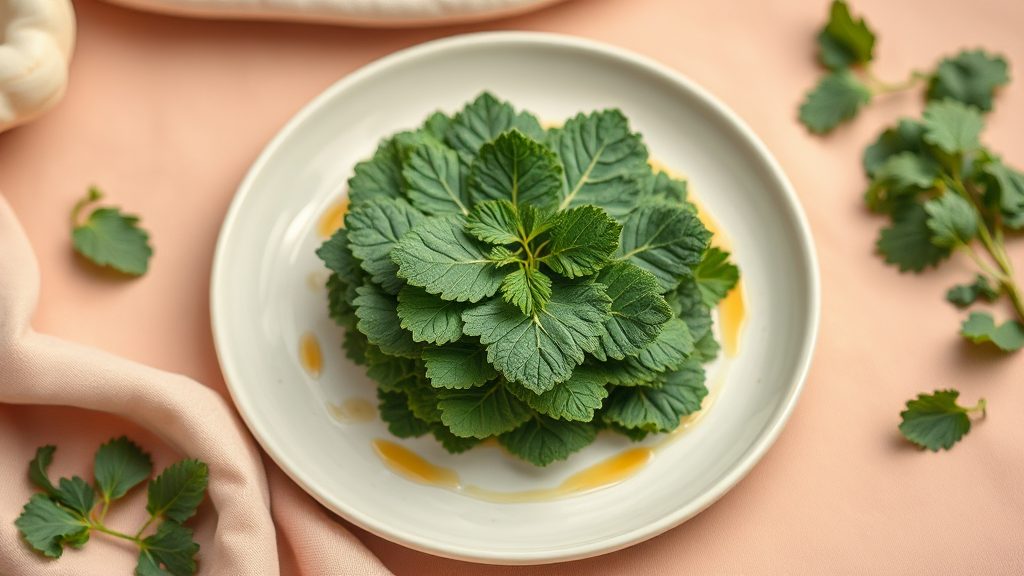
Korean perilla leaves, known as kkaennip (깻잎) in Korean, come from the Perilla frutescens plant and are botanically distinct from the Japanese shiso variety, though they’re often confused. The Korean variety has leaves that are typically larger—sometimes reaching palm-size—with a slightly rougher texture and more pronounced veining. The flavor is what truly sets them apart: imagine a combination of mint, basil, anise, and a subtle bitterness that mellows beautifully when cooked.
When raw, kkaennip delivers a powerful aromatic experience that can be almost peppery, making it perfect for cutting through the richness of grilled meats. The leaves contain perillaldehyde, the compound responsible for their distinctive scent, which some people describe as reminiscent of cumin or even cinnamon. This complexity means Korean perilla leaves kkaennip work equally well in raw applications and cooked preparations, adapting their character depending on how you use them.
From a nutritional standpoint, these leaves are exceptional. A 100-gram serving provides significant amounts of calcium, iron, and vitamins A and C. They’re particularly rich in rosmarinic acid, a polyphenol with anti-inflammatory properties. Korean traditional medicine has long valued perilla leaves for supporting respiratory health and digestion, which explains why they appear so frequently in Korean meals—they’re considered both food and medicine.
Selecting and Storing Fresh Kkaennip
Finding quality perilla leaves makes all the difference in your kkaennip recipe outcomes. When shopping at Korean grocery stores or Asian markets, look for leaves that are vibrant green with no yellowing or brown spots. The leaves should feel slightly firm and springy, not limp or wilted. Smaller to medium-sized leaves tend to be more tender, while larger leaves can be tougher but still excellent for cooking applications where they’ll be braised or steamed.
Check both sides of the leaves carefully. The top surface should be a rich green, while the underside is typically lighter, sometimes with a purple tinge. Avoid bunches with slimy stems or leaves that appear waterlogged, as these won’t last long. Fresh perilla leaves should have that characteristic aromatic smell—if there’s no scent, they’re likely past their prime.
Storage is critical because perilla leaves are delicate and can deteriorate quickly. The best method is to treat them like fresh herbs: gently wrap the bunch in damp paper towels, place them in a plastic bag or container with some air circulation, and refrigerate. They’ll typically stay fresh for 5-7 days this way. Some cooks prefer standing the stems in a small container of water, covering the leaves loosely with a plastic bag, and refrigerating—similar to how you’d store fresh basil or cilantro.
For longer storage, you can freeze perilla leaves, though they’ll lose their crisp texture and are best used in cooked dishes afterward. To freeze, wash and thoroughly dry the leaves, stack them with parchment paper between layers, and seal in a freezer bag. Another traditional Korean preservation method is pickled kkaennip (kkaennip jangajji), which essentially becomes its own delicious banchan and keeps for months in the refrigerator.
What Makes Perilla Leaves Different from Shiso?
While both perilla and shiso come from the same plant family, Korean perilla leaves are a different cultivar with distinct characteristics. Korean kkaennip are larger, rounder, and have a stronger, more robust flavor compared to Japanese shiso, which tends to be more delicate with a pronounced cinnamon-mint taste. The texture of kkaennip is also slightly thicker and more suited to wrapping and cooking applications.
In terms of culinary use, shiso appears more commonly in raw preparations like sushi garnishes and salads in Japanese cuisine, while Korean perilla leaves are incredibly versatile—used raw in ssam wraps, pickled for banchan, braised in stews, and stir-fried in namul dishes. The flavor intensity means kkaennip can stand up to bolder Korean seasonings without being overwhelmed.
Essential Cooking Techniques for Perilla Leaf Dishes
The beauty of perilla leaf dishes lies in their versatility across cooking methods. The most iconic use is in ssam (쌈), the Korean practice of wrapping grilled meat, rice, and condiments in fresh leaves. To prepare perilla leaves for ssam, simply wash them gently under cold water, pat dry, and arrange them on a plate. The natural oils in the leaves mean they don’t need any preparation—just grab, wrap, and enjoy. The leaves’ slight bitterness and herbal notes perfectly balance fatty meats like samgyeopsal (pork belly) or galbi (short ribs).
For kkaennip jjim (steamed perilla leaves), you’ll layer raw leaves with a savory-sweet soy-based sauce, creating a dish that’s intensely flavorful and tender. This technique involves stacking 20-30 leaves, spreading sauce between each layer, then steaming or letting them marinate. The leaves soften and absorb the seasonings, transforming into something completely different from their raw state. Many Korean families make large batches of kkaennip jjim because the flavors deepen over several days in the refrigerator.
Kkaennip namul (perilla leaf side dish) showcases another approach where leaves are either briefly blanched or used raw, then dressed with sesame oil, garlic, soy sauce, and sometimes gochugaru. This Korean herb recipe takes just minutes but delivers complex flavors that complement any Korean meal. The key is not overcooking—if blanching, just 30 seconds in boiling water is enough to slightly soften the leaves while maintaining their color and some texture.
🥢 Sesame oil tip: look for 100% toasted sesame oil, not the pale kind. Here’s the bottle I keep by the stove →
As an Amazon Associate I earn from qualifying purchases.
Stir-frying perilla leaves is less common but equally delicious, especially when combined with other vegetables or proteins. The high heat mellows the bitterness and brings out sweeter, nuttier notes. Chop the leaves into ribbons and add them at the end of cooking to preserve some of their aromatic qualities, or include them earlier for a more integrated, subtle flavor throughout the dish.
Simple Kkaennip Namul Recipe
This quick perilla leaf side dish is a staple in Korean households and works perfectly as banchan for any meal. You’ll need about 20-25 fresh perilla leaves, which you should stack and slice into thin ribbons (about 1/4-inch wide). This cutting technique, called chiffonade, helps the leaves absorb the dressing more effectively.
For the seasoning, combine 2 tablespoons soy sauce, 1 tablespoon sesame oil, 1 tablespoon rice vinegar, 1 teaspoon sugar, 2 minced garlic cloves, 1 teaspoon toasted sesame seeds, and 1/2 teaspoon gochugaru (adjust to your spice preference). Mix the sliced leaves with the dressing in a bowl, massaging gently to help them soften slightly. Let it sit for at least 10 minutes before serving, though it’s even better after 30 minutes when the flavors have melded.
🍚 Pantry tip: rice vinegar is gentler than regular vinegar and worth keeping stocked. This is the one I buy →
As an Amazon Associate I earn from qualifying purchases.
🥢 Garnish tip: a sprinkle of toasted sesame seeds finishes almost every banchan. This is the one I buy →
As an Amazon Associate I earn from qualifying purchases.
Some variations include adding thinly sliced onions, a touch of minced green onion, or even a small amount of fish sauce for extra umami depth. This dish keeps well in the refrigerator for 2-3 days, making it excellent for meal prep. The leaves will wilt and darken slightly, but the flavor intensifies beautifully.
🐟 Pantry staple: one bottle of quality fish sauce lasts ages and elevates everything. Grab the one I reach for →
As an Amazon Associate I earn from qualifying purchases.
Making Traditional Kkaennip Jangajji (Pickled Perilla Leaves)
Pickled perilla leaves represent one of the most beloved kkaennip recipe preparations, transforming fresh leaves into a savory, salty, slightly spicy condiment that keeps for months. This preservation method was traditionally used to extend the season’s harvest, but today it’s made year-round because the pickled version is so distinctly delicious that many Koreans prefer it to fresh leaves.
Start with about 50 fresh perilla leaves, washed and thoroughly dried. Stack them neatly in a container—many cooks use glass or plastic containers with tight-fitting lids. For the brine, combine 1/2 cup soy sauce, 1/2 cup water, 3 tablespoons rice vinegar, 2 tablespoons sugar, 1 tablespoon minced garlic, 1 tablespoon gochugaru, 1 tablespoon sesame oil, and 1 tablespoon sesame seeds. Bring this mixture to a brief boil to dissolve the sugar, then let it cool to room temperature.
Pour the cooled brine over the stacked leaves, making sure they’re completely submerged. You may need to place a small weight on top to keep them under the liquid. Let them pickle at room temperature for 6-8 hours or overnight, then refrigerate. They’re technically ready after one day, but the flavor develops beautifully over the first week. The leaves will darken to a deep green-brown color and become tender and deeply savory.
Serve pickled kkaennip as banchan alongside rice, use them as wraps for bites of meat or rice, or chop them finely to mix into fried rice or bibimbap. The pickling liquid itself becomes a flavorful sauce that you shouldn’t waste—drizzle it over rice or use it as a marinade base for proteins.
Creative Ways to Use Perilla Leaves Beyond Traditional Recipes
While traditional Korean herb recipes are wonderful, perilla leaves’ unique flavor profile makes them surprisingly versatile in fusion and non-traditional applications. Their aromatic intensity works beautifully in pesto—simply substitute perilla leaves for basil, blending them with garlic, pine nuts or walnuts, parmesan, and olive oil. The resulting pesto has an intriguing herbal complexity that pairs wonderfully with pasta or as a spread on sandwiches.
Fresh perilla leaves make an excellent addition to salads, especially when paired with ingredients that can stand up to their bold flavor. Try them in a salad with crispy pork belly, pickled vegetables, and a tangy vinaigrette, or shred them into a slaw with cabbage and carrots dressed with a gochujang-mayo mixture.
🌶️ Pantry staple: a good gochujang lasts months in the fridge and elevates everything. Grab the one I reach for →
As an Amazon Associate I earn from qualifying purchases.
For breakfast applications, consider making kkaennip jeon (perilla leaf pancakes) by dipping whole leaves in a simple flour-egg batter and pan-frying until crispy. They’re similar to Korean vegetable pancakes but have a distinctly herbaceous flavor. You can also finely chop perilla leaves and mix them into scrambled eggs or omelets for an aromatic twist on morning eggs.
Beverage applications are less common but increasingly popular—perilla leaves can be muddled into cocktails for an herbal note, or steeped into tea. Korean perilla seed tea (deulkkae-cha) is traditional, but fresh leaf tea offers a different, more vibrant flavor. Simply steep a handful of leaves in hot water for 3-5 minutes, adding honey if desired.
🌰 Soup secret: a spoonful of ground perilla seeds gives gamjatang and namul that deep, toasty depth. This is the one I buy →
As an Amazon Associate I earn from qualifying purchases.
Those interested in exploring more about Korean ingredients and cooking techniques will find that kkaennip often appears alongside other distinctive flavors that define the cuisine—the interplay of fermented, spicy, sweet, and aromatic elements that make Korean food so compelling.
Growing Your Own Perilla Plants
If you find yourself regularly buying perilla leaves and have even modest gardening space, growing your own plants is remarkably rewarding. Perilla is a vigorous grower in the mint family (though not a true mint), and a few plants will produce abundant leaves throughout the growing season. Seeds are available from Korean grocery stores or online specialty seed suppliers.
Plant perilla seeds after the last frost in well-draining soil with plenty of sunlight—at least 6 hours daily. The plants prefer warm weather and will grow quickly once established, reaching 2-3 feet in height. Pinch off flower buds regularly to encourage leaf production rather than seed development. This also prevents the plant from becoming too woody and the leaves from becoming too bitter.
Harvest leaves regularly by pinching them off from the top of the plant, which encourages bushier growth. Young, tender leaves at the top are best for eating raw, while larger, more mature leaves work well for cooking applications. One plant can produce leaves continuously for months with regular harvesting and proper care.
Be aware that perilla can self-seed aggressively in some climates, so you may find volunteer plants appearing the following year. Some gardeners consider this a bonus, while others prefer to contain the plants or remove seed heads before they mature. Either way, having fresh kkaennip just steps from your kitchen makes spontaneous ssam dinners or quick namul side dishes incredibly convenient.
Bringing Kkaennip Into Your Cooking Routine
Korean perilla leaves deserve a regular place in your cooking repertoire, not just as an occasional specialty ingredient but as a versatile herb that brings distinctive flavor to countless dishes. Whether you’re preparing a full Korean meal with multiple banchan or simply looking to add aromatic complexity to everyday cooking, kkaennip offers both bold flavor and impressive nutritional benefits.
Start with the simplest applications—using fresh leaves as wraps for grilled meats or making a quick namul side dish—then gradually experiment with pickled versions and cooked preparations as you become more comfortable with the ingredient. The beauty of Korean perilla leaves kkaennip is that they’re forgiving and adaptable, working beautifully in traditional recipes while also lending themselves to creative interpretations.
Keep a stash of fresh leaves in your refrigerator during the growing season, and maintain a jar of pickled kkaennip for year-round availability. You’ll find yourself reaching for them not just for Korean meals but whenever you want to add an herbal, aromatic dimension to your cooking. As you explore more Korean ingredients and techniques, perilla leaves will become one of those ingredients that transforms ordinary meals into something special—a small green leaf with an outsized impact on flavor.