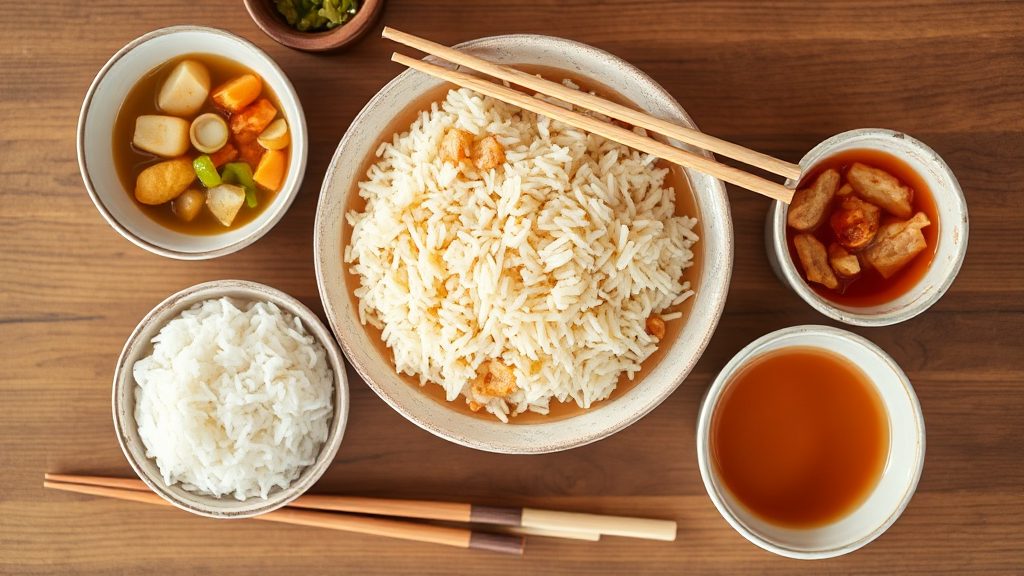
One of the biggest surprises when I started learning about Korean food wasn’t a specific dish — it was the entire structure of how a Korean meal works. Growing up, meals in my house were pretty straightforward: a main dish, maybe a side, everyone gets their own plate. Korean meals are a completely different philosophy. When you sit down to a Korean meal, the table is covered with small dishes, shared bowls, rice for everyone, soup, and this beautiful spread of colors and textures that all work together. It’s less like a “main course” and more like a curated experience.
Understanding how a Korean meal is structured has honestly changed the way I think about feeding people. It’s made me more thoughtful about balance — not just flavors, but textures, temperatures, and how different dishes complement each other on the table. If you’ve ever wondered what a Korean meal actually looks like at home (not just at a Korean BBQ restaurant), this is what I’ve learned so far.
The Foundation of Every Korean Meal: Bap, Guk, and Banchan
A traditional Korean meal is built on three pillars: bap (밥, rice), guk (국, soup), and banchan (반찬, side dishes). These three elements appear at virtually every Korean meal, from a quick weeknight dinner to an elaborate holiday feast. The scale changes — a simple meal might have two or three banchan, while a formal occasion might have a dozen or more — but the structure stays the same.
Bap (rice) is the anchor. In Korean, the word for “meal” and the word for “cooked rice” are actually the same — bap. That tells you everything about how central rice is to a Korean meal. It’s always plain steamed white rice (or sometimes mixed grain rice), served in its own individual bowl. The rice is mild and starchy, and it acts as a neutral base that ties all the bold, fermented, spicy flavors of the other dishes together.
Guk (soup) appears at almost every Korean meal. It might be a light, clear broth like miyeok-guk (seaweed soup) or a more substantial stew like doenjang-jjigae (fermented soybean paste stew). The soup provides warmth, liquid, and another layer of flavor. Koreans often take spoonfuls of soup between bites of rice and banchan — it cleanses the palate and keeps the meal flowing.
🫙 Pantry staple: a good doenjang makes doenjang jjigae taste like the real thing. Grab the one I keep on hand →
As an Amazon Associate I earn from qualifying purchases.
Banchan (side dishes) are what make a Korean meal truly distinctive. These are small dishes — served in little plates and bowls — that accompany the rice and soup. Kimchi is the most famous banchan, but there are hundreds of others: seasoned spinach, braised tofu, pickled radish, stir-fried anchovies, bean sprout salad, seasoned seaweed, egg roll (gyeran-mari), and on and on. A typical everyday Korean meal has three to five banchan; a special occasion might have eight, ten, or more.
The Korean Table Setting: How Everything Is Arranged
The way a Korean meal is set on the table is really specific, and there’s a logic to it that I find beautiful once you understand it.
Each person gets their own bowl of rice (placed on the left) and their own bowl of soup (placed on the right). These are individual — you don’t share rice or soup bowls. The banchan, however, are placed in the center of the table and shared by everyone. This is one of the most distinctive aspects of a Korean meal: the side dishes are communal. Everyone eats from the same plates of banchan, which creates this natural sense of togetherness at the table.
Instead of a fork and knife, a Korean meal is eaten with a set called sujeo (수저) — a pair of metal chopsticks and a long-handled metal spoon. The spoon is used for rice and soup; the chopsticks are used for banchan and other solid foods. Korean chopsticks are metal (usually stainless steel) and flat, which makes them different from the wooden or bamboo chopsticks used in Japan or China. They’re also a bit slippery, which I can personally confirm takes some getting used to.
There are even etiquette rules around the table setting. Elders eat first. You don’t pick up your bowl to eat (unlike in some other Asian dining cultures). You don’t stick your chopsticks upright in rice — it resembles incense offerings at funerals. These details might seem small, but they reflect the deep respect and intentionality that goes into a Korean meal.
Why Every Korean Meal Has Banchan
Banchan aren’t appetizers. They’re not sides in the Western sense. They’re an integral, essential part of every Korean meal — as important as the rice itself. Understanding why banchan exist helps you understand the whole Korean approach to eating.
The philosophy behind banchan is balance. Korean cuisine is deeply influenced by the concept of balancing flavors (salty, sweet, spicy, sour, bitter), textures (crunchy, soft, chewy), temperatures (hot soup, room-temperature banchan, cold pickles), and even colors. A well-composed Korean meal should include a variety of all of these elements. Banchan are how that variety is achieved — each small dish brings something different to the table.
Banchan also reflect the Korean tradition of preservation. Many banchan are pickled, fermented, or salted — techniques that allowed vegetables and proteins to be stored through long Korean winters. Kimchi is the most obvious example, but there are countless others: jangajji (soy-pickled vegetables), jeotgal (salted seafood), and various namul (seasoned vegetable dishes) that use blanching and seasoning to extend the life of fresh produce.
For me, as someone learning Korean cooking, the banchan concept has been one of the most rewarding things to explore. Making even two or three banchan and serving them alongside rice and soup transforms a simple Tuesday dinner into something that feels intentional and complete. It’s changed how I think about meal planning — instead of building around one big main dish, I think about composing a spread of complementary flavors.
How a Korean Meal Differs From Western Meals
If you grew up eating Western-style meals (as I did, after my family moved to Florida when I was about twelve), a Korean meal structure can feel genuinely different. Here are the biggest contrasts I’ve noticed:
No courses. A Western meal often unfolds in stages — appetizer, main, dessert. A Korean meal arrives all at once. Everything hits the table at the same time, and you eat from all the dishes throughout the meal. There’s no waiting for the “main event” because the whole spread IS the main event.
Shared dishes vs. individual plates. In Western dining, everyone typically gets their own plate of food. In a Korean meal, the banchan are shared. Your rice and soup are yours, but everything else is communal. This creates a very different dining dynamic — it’s more interactive, more social, more about the group than the individual.
Rice as the center, not the side. In Western meals, bread or starch is usually a side element. In a Korean meal, rice is the literal and figurative center. Everything else — the soup, the banchan, the kimchi — exists in relation to the rice. You take a bite of something flavorful, then a bite of plain rice to balance it out. The rice isn’t boring; it’s essential.
Fermented flavors everywhere. Western meals occasionally include fermented elements (sourdough bread, cheese, pickles), but Korean meals are built on fermentation. Kimchi, doenjang, gochujang, soy sauce, jeotgal — fermented ingredients appear in almost every component of a Korean meal. As someone who’s gotten really into fermentation (I make my own kimchi and sourdough), this is one of the things that drew me to Korean food in the first place.
🌶️ Need gochujang for this? This sweet-savory fermented chili paste is the heart of so many Korean dishes — here’s the tub I keep in my fridge →
As an Amazon Associate I earn from qualifying purchases.
Spoon and chopsticks, not fork and knife. The utensil difference is more than aesthetic. Using a spoon for soup and rice, and chopsticks for picking up banchan, creates a natural rhythm to the Korean meal — alternate between spoon and chopsticks, between hot and room temperature, between rice and side dishes. It paces the meal in a way that feels natural once you get used to it.
Common Everyday Korean Meals
Fancy Korean meals with a dozen banchan are beautiful, but everyday Korean meals are often much simpler — and just as satisfying. Here’s what a typical, no-fuss Korean meal might look like on a regular weeknight:
A simple home dinner: Steamed rice, a pot of doenjang-jjigae or kimchi-jjigae, kimchi, and one or two other banchan (maybe seasoned spinach and stir-fried fishcakes). That’s it. Four or five components, but together they form a complete, balanced Korean meal. The stew is hot and savory, the kimchi is tangy and crunchy, the spinach is tender and garlicky, and the rice anchors everything.
Quick lunch: A bowl of rice topped with a fried egg, some kimchi, and a drizzle of sesame oil and gochujang. Stir it all together — that’s essentially a deconstructed bibimbap, and it’s a complete Korean meal in under ten minutes.
🥢 One upgrade that matters: cheap sesame oil tastes flat — a real toasted one is nutty and fragrant. This is the toasted sesame oil I use →
As an Amazon Associate I earn from qualifying purchases.
One-pot meals: Sometimes a Korean meal is built around a single substantial dish that includes all the elements. Bibimbap (rice with mixed vegetables, meat, and egg), jjampong (spicy seafood noodle soup), or kimchi fried rice can all stand alone as a complete Korean meal. These are the Korean equivalent of a Western one-pot dinner — satisfying, easy, and balanced in a single bowl.
Weekend spread: When there’s more time, the Korean meal expands. Maybe there’s grilled meat (like bulgogi or galbi), a wider variety of banchan, fresh lettuce for wrapping, and a lighter soup. The table gets fuller, the meal becomes more of an event, and everyone lingers a little longer.
Learning the Korean Meal, One Dish at a Time
I’m not going to pretend I set a traditional Korean meal every night. I’m a mom in Florida working through a cookbook, learning as I go. But understanding the philosophy behind a Korean meal — the balance, the sharing, the respect for fermentation, the way every small dish serves a purpose — has genuinely influenced how I cook and how I feed my family.
Some nights, our “Korean meal” is just rice, kimchi jjigae from a pot on the stove, and whatever banchan I have in the fridge. Other nights I’m more ambitious and try to put together a fuller spread. Either way, the Korean meal structure has taught me that feeding people well isn’t about one impressive main dish — it’s about composing a table where everything works together, where there’s variety and balance, and where the act of sharing food is built into the meal itself.
If you’ve only experienced Korean food through restaurant Korean BBQ or ordering bibimbap, I’d encourage you to explore what a Korean meal looks like at home. Start simple: rice, a soup or stew, kimchi, and one or two other small dishes. Set them all out at once. Eat a little of everything. You’ll notice how the flavors bounce off each other, how the plain rice suddenly becomes essential, and how eating this way — communally, with variety, with intention — just feels different. A Korean meal isn’t just food on a table. It’s a way of eating that makes every component better because of everything else around it.