As an Amazon Associate I earn from qualifying purchases. This post contains affiliate links, which means I may earn a small commission — at no extra cost to you — if you buy through them. I only recommend things I believe are genuinely worth your time.
If you’ve ever wrestled with an overstuffed suitcase or paid hefty baggage fees, you’re not alone. Learning how to pack light for 2 weeks is a game-changer that transforms your travel experience from stressful to streamlined. The truth is, you need far less than you think, and with the right strategy, you can fit everything into a carry-on bag while still having outfits for any occasion.
🧳 Packing carry-on only? A well-sized, durable carry-on makes travel so much smoother. Here’s the carry-on I’d pick →
As an Amazon Associate I earn from qualifying purchases.
Packing light isn’t about deprivation—it’s about freedom. When you master the art of minimalist packing, you’ll breeze through airports, avoid baggage claim delays, and have more flexibility during your trip. Whether you’re exploring new cities or relaxing on a beach, a well-planned capsule wardrobe and smart packing techniques will serve you better than a closet crammed into checked luggage.
The Foundation: Building Your Two Week Packing Strategy
Before you start throwing items into your suitcase, you need a solid strategy. The key to successful carry on only packing is planning around three core principles: versatility, neutrals, and the rule of three.
Start by choosing a color palette of two to three neutral colors (black, navy, gray, khaki, or white) plus one accent color. This ensures every piece coordinates with everything else, multiplying your outfit options exponentially. A capsule wardrobe of just 15-20 clothing items can create dozens of different looks when pieces work together seamlessly.
The rule of three is simple: you should be able to wear each item at least three different ways. A lightweight cardigan works as a layer, a beach cover-up, and airplane blanket. Convertible pants zip off into shorts. A versatile dress transitions from day sightseeing to evening dinner with just a change of accessories. If an item only serves one purpose, seriously reconsider whether it deserves precious suitcase space.
Check your destination’s weather forecast about one week before departure, but pack for variability. Even in warm climates, you’ll want one long-sleeved layer for air-conditioned restaurants or unexpected cool evenings. Research cultural dress codes too—some destinations require covered shoulders or knees for religious sites, which might influence your clothing choices.
Your Complete Minimalist Packing List for Two Weeks
Here’s the proven formula for how to pack light for 2 weeks while having everything you need. This minimalist packing list works for most moderate climates and can be adjusted based on your specific destination.
Clothing essentials:
- 4-5 tops (mix of t-shirts, blouses, or casual shirts that layer well)
- 2 pairs of pants or jeans
- 1 pair of shorts or a skirt
- 1-2 dresses (versatile styles that dress up or down)
- 1 lightweight jacket or cardigan
- 1 warmer layer if needed (fleece, sweater, or travel blazer)
- 7 pairs of underwear
- 5-7 pairs of socks
- 2 bras or undergarments
- 1 swimsuit (if applicable)
- Sleepwear (or just wear a comfortable t-shirt)
Footwear (wear the bulkiest pair during travel):
- 1 pair of comfortable walking shoes (broken in before your trip)
- 1 pair of sandals or casual shoes
- 1 pair of dressier shoes if needed (optional—often the sandals can work)
Toiletries and essentials:
- Travel-sized toiletries in TSA-approved containers (3.4 oz/100ml or less)
- Solid alternatives: shampoo bars, solid sunscreen, bar soap
- Medications in original containers
- Small first-aid kit with basics
- Quick-dry travel towel (if hosteling or camping)
- Reusable water bottle
Tech and accessories:
- Phone and charger
- Universal adapter
- Portable battery pack
- E-reader or one physical book (check out my reading recommendations for travel-friendly options)
- Headphones
- Minimal jewelry or accessories
Notice what’s not on this list: multiple “just in case” items, full-sized products, or specialty single-use pieces. Every item earns its place through versatility or absolute necessity.
How Do You Make a Capsule Wardrobe Work for Two Weeks?
A capsule wardrobe travel strategy centers on mix-and-match pieces that create maximum outfits from minimum items. With 5 tops and 3 bottoms, you have 15 different outfit combinations right away—more than enough variety for two weeks, especially when you factor in layering and accessories.
The secret is selecting pieces in complementary fabrics and styles. Choose wrinkle-resistant materials like merino wool, synthetic blends designed for travel, or knits that pack small and bounce back. Avoid pure cotton and linen if you’re tight on space, as they wrinkle easily and take longer to dry if you need to do laundry.
Here’s a practical example: pack two pairs of dark jeans or pants, one pair of khaki shorts, three neutral t-shirts, one patterned blouse, and one casual button-up. Add one cardigan and one light jacket. From these 9 pieces, you can create casual daytime looks, slightly dressier evening outfits, and comfortable travel ensembles. Swap accessories like a scarf or statement necklace to change the vibe completely without adding bulk.
For a two-week trip, embrace the reality that you’ll wear items multiple times. This isn’t only normal—it’s smart. Most fellow travelers won’t notice or care if you rotate the same three pairs of pants. Focus your variety on tops, which are more visible and lighter to pack.
Packing Cubes and Organization Systems That Actually Work
Once you’ve selected your items, how you pack them matters almost as much as what you pack. Packing cubes are essential tools for two week packing because they compress clothing, keep items organized, and make unpacking at each destination effortless.
🧳 Game-changer: check out these packing cubes →
As an Amazon Associate I earn from qualifying purchases.
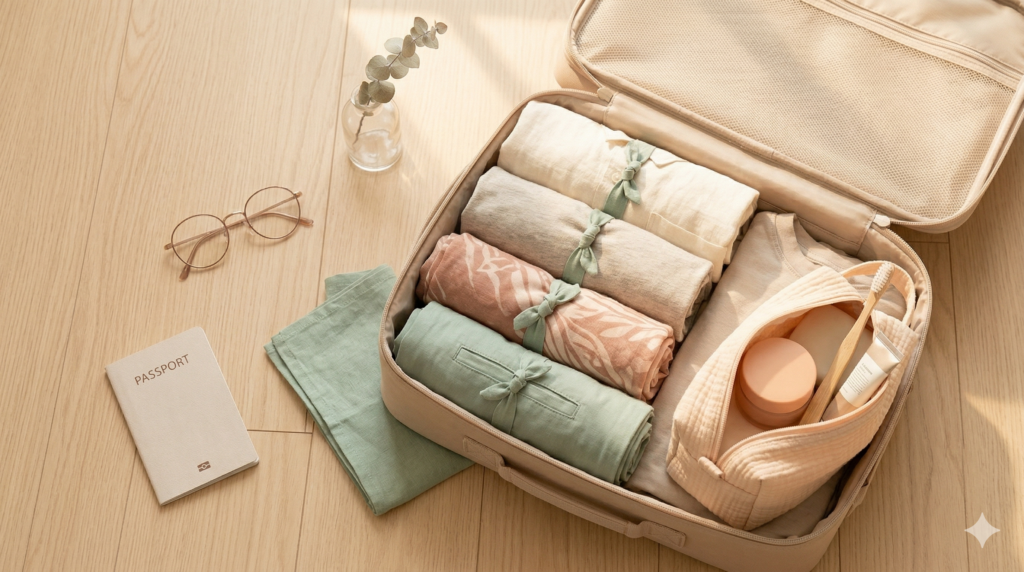
Use a simple system: one cube for tops, one for bottoms, one for underwear and socks, and one for toiletries or accessories. Compression cubes squeeze out excess air, often saving 20-30% of space. Roll your clothes rather than folding them—rolling minimizes wrinkles and allows you to see everything at a glance without disturbing the whole stack.
For shoes, stuff socks or small items inside them to maximize every inch of space, then place them in shoe bags or shower caps (which take up zero space and keep dirt contained). Position heavier items like shoes at the bottom of your carry-on, near the wheels, to prevent your bag from tipping.
Keep essentials accessible. Your quart-sized liquids bag should be easy to grab for security screening. Pack one complete outfit, medications, and valuables in your personal item (backpack or purse) in case your carry-on needs to be gate-checked on a full flight.
Many experienced travelers swear by the bundle packing method, where you wrap clothes around a central core object, creating fewer wrinkles through tension rather than folds. While this works beautifully, it’s less practical if you’re moving between accommodations frequently, as you need to unbundle and rebundle the entire system each time.
Laundry Strategies for Extended Carry-On Travel
Here’s the truth about learning how to pack light for 2 weeks: you’ll need to do laundry at least once, possibly twice. Rather than seeing this as an inconvenience, view it as the key that unlocks minimalist packing. Once you accept that washing clothes mid-trip is normal and easy, you can pack half as much.
The simplest option is using your accommodation’s laundry facilities if available. Many hotels offer same-day laundry service (at a premium), while hostels and vacation rentals often have washers you can use yourself. Even if you’re staying somewhere without laundry access, most cities have laundromats or wash-and-fold services where you can drop off a bag in the morning and pick it up clean that afternoon.
For sink washing, pack a small amount of travel laundry detergent sheets or liquid (in your liquids bag). Fill a bathroom sink with water and a small amount of detergent, let items soak for 15-30 minutes, rinse thoroughly, and hang to dry. Quick-dry fabrics like synthetic blends or merino wool will be ready to wear the next morning. A portable travel clothesline with attached clips is incredibly useful for this, or you can drape items over chairs, shower rods, or balcony railings.
Plan your laundry around rest days or times when you’ll be in one place for at least 24 hours. A common strategy is to do a sink wash on day 7, giving you fresh clothes for the second week. Underwear and socks should be hand-washed every few days regardless—they dry quickly and take minimal effort.
Pro tip: pack items you won’t mind potentially losing or replacing. If you’re anxious about washing your favorite cashmere sweater in a hostel sink, leave it at home. Travel is easier when you’re not worried about your clothing.
Adapting Your Packing for Different Climates and Activities
The basic formula for carry-on only packing remains consistent across destinations, but you’ll need to adjust specific items based on climate and planned activities. The good news is that these adjustments rarely require adding items—usually it’s about substitution.
For cold weather destinations: Replace shorts with a second pair of pants, upgrade your cardigan to a warmer sweater, and add a proper winter jacket (wear it on the plane rather than packing it). Merino wool base layers are incredibly efficient—they regulate temperature, resist odors, and can be worn multiple days without washing. Pack one pair of warm pants, leggings for layering, and swap sandals for closed-toe shoes or boots.
For beach or tropical locations: Emphasize lightweight, breathable fabrics. Increase the number of t-shirts, add a second swimsuit for rotation, and include a sun hat or cap. A lightweight sarong or large scarf serves multiple purposes: beach cover-up, picnic blanket, impromptu curtain, or even a modest wrap for temple visits. You can reduce the number of pants to one, adding an extra pair of shorts or casual skirt instead.
For adventure or outdoor-focused trips: Invest in technical fabrics designed for your specific activities. If you’re hiking daily, two pairs of proper hiking pants and moisture-wicking shirts matter more than a dress-up outfit. A lightweight rain jacket becomes essential. If camping, you’ll need to factor in sleeping bag and tent, which means ruthlessly minimizing everything else—but that’s a topic for a different guide focused on backpacking specifically.
For city exploration: Prioritize comfortable walking shoes above all else. Cities mean lots of pavement pounding, so your feet need proper support. Pack one slightly nicer outfit for restaurants or cultural events, but otherwise keep things casual. A crossbody bag or anti-theft backpack is more practical than a purse for sightseeing days.
If you’re combining destinations with different climates during your two weeks—say, starting in a mountain region and ending at the beach—pack layers you can add or remove. Ship or donate winter items when you no longer need them, or plan your packing around the coldest destination and embrace being slightly warm elsewhere. As you gain more travel experience, you’ll develop instincts for what you actually use versus what sits untouched in your bag.
What Common Packing Mistakes Should You Avoid?
The biggest mistake people make when learning how to pack light for 2 weeks is packing for hypothetical scenarios instead of planned activities. Don’t pack “just in case” items for situations that probably won’t happen—you can almost always purchase something locally if an unexpected need arises.
Other frequent errors include packing full-sized toiletries (buy travel sizes or transfer products to smaller containers), bringing more than two pairs of shoes, packing bulky cotton towels instead of quick-dry travel versions, and including too many electronics with overlapping functions. Your smartphone can serve as a camera, alarm clock, map, translator, and entertainment device—you probably don’t need to pack separate items for each function.
Don’t pack valuable jewelry or items with strong sentimental value. The stress of potentially losing irreplaceable items outweighs any benefit they provide. Similarly, avoid packing anything you’d be devastated to have damaged, stained, or stolen.
Finally, resist the urge to fill every inch of available space in your carry-on. Leave about 20% empty for souvenirs, items you purchase during your trip, or simply having room to reorganize. An overstuffed bag is harder to close, more stressful to manage, and offers zero flexibility.
Making Light Packing Your Default Travel Style
Once you successfully complete a two-week trip with only carry-on luggage, you’ll wonder why you ever hauled massive suitcases through airports. The freedom of traveling light—skipping baggage claim, moving easily between accommodations, never worrying about lost luggage—transforms your entire travel experience.
Start building your travel wardrobe intentionally over time. Invest in a few high-quality versatile pieces rather than many cheap items. Look for clothing specifically designed for travel: wrinkle-resistant, quick-drying, and packable. These items cost more upfront but perform better and last longer than regular clothing forced into travel duty.
🎒 Travel tip: this is a great packable daypack →
As an Amazon Associate I earn from qualifying purchases.
After each trip, review what you actually wore versus what stayed packed. Be honest about items that seemed necessary but never left your bag. This post-trip evaluation helps refine your packing list for future adventures, gradually eliminating excess and honing in on your personal minimalist packing formula.
Remember that packing light is a skill that improves with practice. Your first attempt might feel uncomfortable or make you anxious about not having enough options. That’s normal. By your third or fourth light-packing trip, you’ll pack confidently and efficiently, creating more time and mental energy to focus on what matters: actually enjoying your travels and the experiences waiting for you. Whether you’re exploring new cultures, seeking adventure, or simply taking time to rest and reflect, traveling light lets you move through the world with grace and ease.