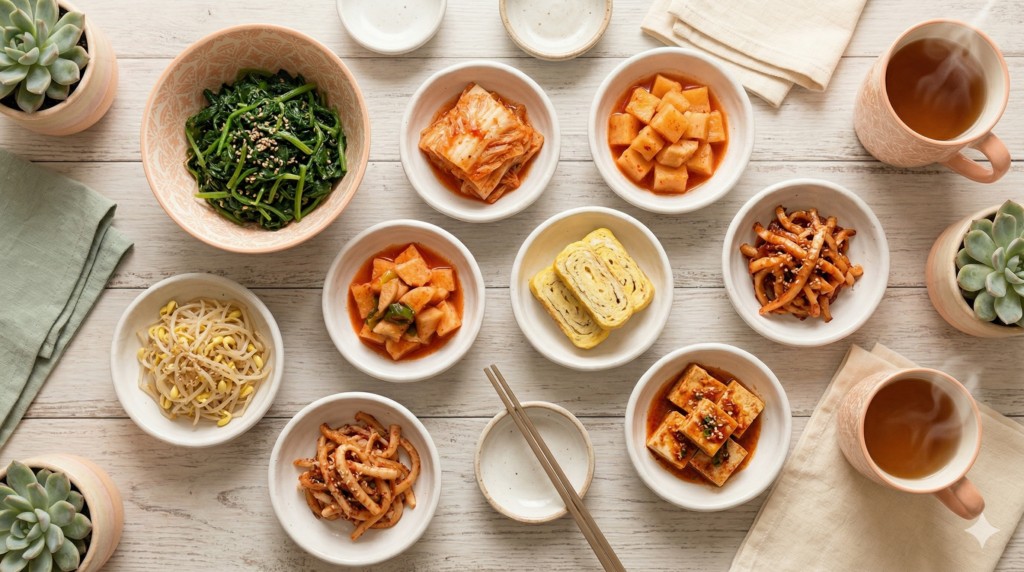
If you’ve ever enjoyed a Korean meal at a restaurant, you’ve likely been delighted by the colorful array of small plates that arrive at your table before the main course. These are banchan, and learning to make easy Korean side dishes at home is simpler than you might think. Unlike elaborate main courses that require specialized equipment or hard-to-find ingredients, beginner-friendly banchan recipes use straightforward techniques and common vegetables to create the authentic flavors that make Korean cuisine so memorable. Whether you’re new to Korean cooking or simply looking to expand your meal prep repertoire, these simple side dishes will transform your everyday meals into something special.
Understanding Banchan in Korean Cuisine
Banchan (반찬) refers to the small side dishes served alongside cooked rice in Korean meals. Unlike Western side dishes that typically number one or two, a traditional Korean table can feature anywhere from three to twelve different banchan, depending on the occasion and formality of the meal. This practice reflects the Korean philosophy of balance in dining—not just nutritional balance, but also harmony in colors, textures, and flavors.
The beauty of Korean banchan lies in their diversity. Some are served cold, others warm. Some are spicy and bold, while others are mild and refreshing. Common ingredients include vegetables like spinach, bean sprouts, cucumber, radish, and eggplant, though you’ll also find tofu, seaweed, and occasionally fish or meat-based banchan. What makes them particularly appealing for home cooks is that most banchan can be prepared in advance and stored in the refrigerator, making them perfect for meal prepping.
In Korean households, having several banchan ready in the refrigerator is standard practice. Families often prepare larger batches on weekends, then serve them throughout the week alongside different main dishes. This approach not only saves time but also ensures that every meal includes vegetable-forward dishes that add nutrition and variety to your diet. If you’re interested in exploring more aspects of Korean food culture, understanding banchan is an essential foundation.
Essential Ingredients and Seasonings for Simple Korean Sides
Before you start making easy Korean side dishes, it helps to stock your pantry with a few essential Korean ingredients. The good news is that most banchan recipes rely on the same core seasonings, so once you have these basics, you’ll be equipped to make dozens of different dishes.
The foundation of most banchan seasoning starts with soy sauce, sesame oil, and garlic. Korean soy sauce (guk-ganjang or jin-ganjang) has a slightly different flavor profile than Japanese or Chinese varieties, but regular soy sauce works perfectly fine for beginners. Toasted sesame oil is non-negotiable—its nutty aroma is essential to authentic Korean flavor. Fresh garlic, minced or crushed, appears in nearly every savory banchan recipe.
Beyond these basics, you’ll want to keep gochugaru (Korean red pepper flakes) on hand for spicy dishes. Unlike cayenne or crushed red pepper, gochugaru has a complex flavor that’s simultaneously sweet, smoky, and spicy without overwhelming heat. Sesame seeds, both toasted and raw, add texture and visual appeal. Rice vinegar provides acidity for pickled or refreshing banchan. Finally, fish sauce or salted shrimp (saeujeot) adds umami depth to kimchi and fermented preparations, though these can be omitted for vegetarian versions.
The vegetables themselves are usually whatever is fresh and seasonal. Korean cooking embraces simplicity with vegetables—rather than masking their natural flavors with heavy sauces, banchan recipes use light seasonings that enhance and complement. This means your ingredients don’t need to be exotic; familiar vegetables like spinach, zucchini, carrots, and cucumbers all make excellent banchan.
Seasoned Spinach: Your Gateway to Korean Banchan
Sigeumchi namul (seasoned spinach) is perhaps the most accessible entry point for anyone new to making Korean side dishes. This simple Korean side requires only five ingredients and takes less than ten minutes from start to finish, yet delivers authentic flavor that complements virtually any meal.
To make seasoned spinach, start by bringing a large pot of water to a rolling boil. While waiting, prepare an ice bath in a large bowl. Wash one pound of fresh spinach thoroughly—regular curly spinach works fine, though Korean or baby spinach have a more delicate texture. Once the water boils, blanch the spinach for just 30-40 seconds until wilted and bright green. Immediately transfer the spinach to the ice bath to stop the cooking and preserve the vibrant color.
After the spinach cools completely, drain it and squeeze out excess water with your hands. This step is crucial—too much water will dilute the seasoning and create a watery dish. Form the spinach into a ball and squeeze firmly, then gently pull it apart into a loose pile. In a mixing bowl, combine the spinach with one tablespoon of soy sauce, one tablespoon of toasted sesame oil, two cloves of minced garlic, and one teaspoon of toasted sesame seeds. Mix everything gently with your hands or chopsticks until evenly coated.
The result is a side dish with remarkable depth considering its simplicity. The sesame oil’s nuttiness balances the slight bitterness of spinach, while garlic adds aromatic punch and soy sauce provides savory saltiness. This banchan keeps well in the refrigerator for up to five days, making it an excellent make ahead Korean dish for busy weeknights. You can serve it cold or at room temperature alongside rice, grilled meats, or in a bibimbap bowl.
Bean Sprout Banchan: Crunchy and Refreshing
Kongnamul muchim (seasoned bean sprouts) offers a completely different texture experience from spinach while using a similar seasoning approach. The crisp, crunchy bite of properly cooked bean sprouts provides refreshing contrast to richer main dishes, and this banchan is particularly popular served with Korean stews and soups.
Purchase fresh soybean sprouts from Korean or Asian grocery stores—these are longer and sturdier than the thin mung bean sprouts often sold in regular supermarkets, though mung bean sprouts can work in a pinch. For one pound of bean sprouts, bring a pot of water to boil with a pinch of salt. Add the bean sprouts and cook for 3-4 minutes until they’re tender but still retain some crunch. The key is avoiding overcooking, which turns them mushy and unpleasant.
Drain the bean sprouts in a colander and let them cool naturally—you don’t need an ice bath for this banchan. Once cooled, transfer them to a mixing bowl and add two tablespoons of chopped scallions, one tablespoon of soy sauce, one tablespoon of sesame oil, two cloves of minced garlic, half a teaspoon of gochugaru (adjust to taste), and a teaspoon of sesame seeds. Toss everything together gently but thoroughly.
Some cooks add a small amount of fish sauce or salted shrimp for extra umami, but this is optional and can be skipped for vegetarian diets. The scallions add a mild onion flavor and fresh green color that makes the dish visually appealing. This banchan recipe stays fresh for about three to four days refrigerated, though the bean sprouts may release some water over time—simply drain before serving if needed.
What Makes Cucumber Kimchi Different from Regular Kimchi?
Cucumber kimchi, or oi sobagi, differs from traditional cabbage kimchi in that it’s typically consumed fresh rather than fermented for weeks or months. It’s a quick kimchi that develops flavor in just one to two days and offers a crunchy, refreshing quality with less intense funkiness than aged kimchi. This makes it an ideal easy Korean side dish for beginners who want kimchi’s bold flavors without the longer fermentation commitment.
To make cucumber kimchi, you’ll need four to five Korean cucumbers or small pickling cucumbers—avoid large American slicing cucumbers, which have too much water content and fewer seeds. Cut each cucumber into quarters lengthwise, stopping about an inch from the stem end so the pieces stay connected. This creates a pocket for stuffing the seasoning paste. Sprinkle the cucumbers generously with salt and let them sit for 30 minutes to draw out excess moisture.
While the cucumbers rest, prepare the kimchi paste. In a bowl, combine three tablespoons of gochugaru, one tablespoon of fish sauce (or soy sauce for vegetarian), one tablespoon of rice vinegar, one tablespoon of sugar, four cloves of minced garlic, one teaspoon of grated ginger, and just enough water to form a thick paste. Julienne one small carrot and chop two scallions, then mix these vegetables into the paste. Some recipes include Korean chives, mu (radish), or Asian pear for added complexity.
After 30 minutes, rinse the cucumbers thoroughly under cold water to remove excess salt, then pat them dry. Gently open each cucumber quarter and stuff the kimchi paste into the pockets, ensuring even distribution. Place the stuffed cucumbers in a container, pressing them together snugly. They can be eaten immediately, but the flavor improves significantly after resting in the refrigerator for 24 hours. This quick kimchi stays fresh for about one week and provides a spicy, tangy, crunchy element to any meal.
Storing and Serving Your Homemade Korean Side Dishes
One of the greatest advantages of making banchan recipes at home is their meal prep friendliness. Most Korean side dishes actually improve in flavor after a day or two in the refrigerator as the seasonings meld together, making them perfect candidates for batch cooking.
Store your banchan in airtight glass or plastic containers in the refrigerator. Glass containers are ideal because they don’t absorb odors or colors from strong ingredients like gochugaru or garlic. Label each container with the preparation date so you can track freshness. Most vegetable-based banchan last four to seven days when properly stored, though leafy greens like spinach are best consumed within five days for optimal texture.
When serving banchan, remember that they’re meant to be shared and sampled in small portions throughout the meal, not consumed as large side servings. Traditionally, banchan are presented in small individual dishes or plates, creating a visually appealing spread. You don’t need to serve all your prepared banchan at every meal—select three to five varieties that offer complementary flavors and textures. For example, you might pair seasoned spinach (mild and earthy) with cucumber kimchi (spicy and tangy) and bean sprouts (crunchy and refreshing) for a balanced combination.
Banchan are typically served at room temperature or cold, so you can set them out directly from the refrigerator. The exception is certain panchan like sautéed zucchini or pan-fried tofu, which some people prefer slightly warm. Most importantly, banchan are communal—everyone at the table shares from the same dishes using their chopsticks or serving utensils, creating a convivial dining atmosphere that’s central to Korean food culture.
Building Confidence with Easy Korean Side Dishes
Starting your journey with simple Korean sides opens the door to a world of flavors and techniques that will enhance your entire cooking repertoire. The three banchan featured here—seasoned spinach, bean sprouts, and cucumber kimchi—represent different preparation methods (blanching, boiling, and quick pickling) that form the foundation of countless other Korean side dishes. Once you master these basics, you can easily adapt the techniques to other vegetables like carrots, radishes, zucchini, eggplant, and mushrooms.
The beauty of banchan is that they encourage experimentation without high stakes. If your first batch of seasoned spinach is slightly under-seasoned, you’ll know to add more soy sauce next time. If your cucumber kimchi is too spicy, reduce the gochugaru in your next preparation. Each batch teaches you something about balancing flavors and understanding how Korean seasonings work together. This iterative learning process builds genuine cooking confidence that extends beyond Korean cuisine.
Additionally, incorporating these make ahead Korean dishes into your weekly routine can significantly improve your diet’s variety and nutritional profile. Rather than relying on the same two or three vegetable preparations week after week, you’ll have a rotating selection of flavorful sides that make meals more interesting and enjoyable. This variety helps ensure you’re consuming different nutrients and prevents the meal fatigue that often derails healthy eating intentions.
As you become comfortable with these beginner banchan, you can explore more complex preparations and expand your understanding of Korean cooking. The blog features additional Korean recipes and cultural insights that can deepen your appreciation for this cuisine. You might also consider exploring Korean language resources to better understand menu items and recipe instructions in their original language, adding another dimension to your culinary journey.
The key to success with easy Korean side dishes is consistency rather than perfection. Make one or two banchan each week, and soon you’ll have developed a natural rhythm and intuition for Korean flavors. You’ll learn which seasonings you prefer more or less of, which vegetables your household enjoys most, and how to efficiently prep multiple banchan during a single cooking session. Before long, setting a Korean-inspired table with rice, a simple main dish, and three or four homemade banchan will feel as natural as any other meal preparation routine—except your dinners will be infinitely more colorful, nutritious, and delicious.