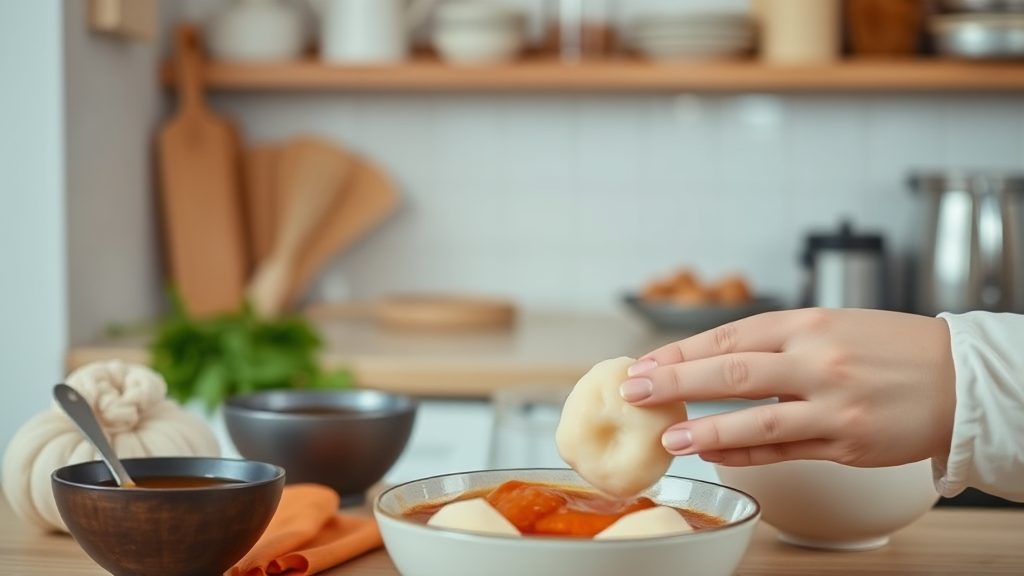
If you’ve ever wandered through the bustling streets of Seoul or explored a Korean night market, chances are you’ve been drawn to the intoxicating aroma of tteokbokki recipe variations simmering in large pans. This iconic Korean street food features chewy rice cakes bathed in a fiery-sweet gochujang sauce that’s become one of Korea’s most beloved comfort foods. Whether you’re craving an authentic taste of Korean cuisine or looking to expand your cooking repertoire, mastering tteokbokki at home is easier than you might think, and the results are absolutely worth the effort.
Tteokbokki (�떡볶이) literally means “stir-fried rice cakes,” and while the dish has ancient roots dating back to the Joseon Dynasty, the spicy red version we know today only emerged in the 1950s. Since then, it’s become synonymous with Korean street food culture, comfort eating, and late-night cravings. The beauty of this dish lies in its simplicity—you need just a handful of ingredients to create something deeply satisfying and packed with umami flavor.
Choosing the Right Rice Cakes for Your Tteokbokki Recipe
The foundation of any great Korean spicy rice cakes dish starts with selecting the proper tteok (rice cakes). You’ll primarily encounter two types: garaetteok (가래떡), which are long cylindrical rice cakes, and the pre-cut oval or tube-shaped pieces commonly found in Korean grocery stores. Fresh rice cakes are always preferable to frozen ones because they have a superior texture—soft, chewy, and slightly bouncy without being gummy.
When shopping, look for rice cakes that are white, smooth, and feel slightly firm but pliable. Avoid any that appear dried out, cracked, or have an off smell. Fresh tteok typically lasts about a week in the refrigerator when stored in water that you change daily. If you can only find frozen rice cakes, don’t worry—they work perfectly well. Just thaw them completely and soak in warm water for about 10 minutes before cooking to restore some of that characteristic chewiness.
One important tip: if your rice cakes are stuck together (this happens frequently with fresh ones), separate them gently before cooking. Forcing them apart can cause them to break, and while this won’t ruin your dish, uniform pieces cook more evenly and look better in the final presentation. For a standard recipe serving 2-3 people, you’ll need about 500 grams (roughly 1 pound) of rice cakes.
Creating the Perfect Gochujang Sauce Base
The soul of any tteok recipe easy to follow lies in the sauce—a brilliant red, glossy coating that delivers the perfect balance of spicy, sweet, and savory notes. The primary ingredient is gochujang (Korean red chili paste), a fermented condiment that brings both heat and depth of flavor. However, gochujang alone isn’t enough; you need to build layers of taste that complement the mild rice cakes.
For the sauce, combine 3 tablespoons of gochujang with 1 tablespoon of gochugaru (Korean red pepper flakes) for extra heat and color. Add 2 tablespoons of sugar or corn syrup for sweetness—this isn’t just about making it sweet, but about balancing the spice and creating that signature glossy finish. Include 1 tablespoon of soy sauce for umami depth, and 2 minced garlic cloves for aromatic punch. Some recipes call for a small amount of sesame oil at the end, which adds a nutty richness that rounds out the flavors beautifully.
The liquid component is equally crucial. Traditional recipes use anchovy stock (made by simmering dried anchovies and kelp), which provides a subtle seafood undertone that enhances the overall taste without overpowering it. If you’re short on time or ingredients, you can use water or even vegetable stock, though the result won’t be quite as complex. For about 500 grams of rice cakes, you’ll need approximately 2-3 cups of liquid—start with less and add more as needed to achieve your desired sauce consistency.
Step-by-Step Cooking Technique for Restaurant-Quality Results
Now that you’ve prepared your ingredients, the actual cooking process for this Korean street food favorite is surprisingly straightforward. Start by bringing your anchovy stock (or water) to a gentle boil in a wide, shallow pan—a skillet or sauté pan works better than a deep pot because it allows the sauce to reduce properly and coat the rice cakes evenly.
Add your sauce mixture to the boiling liquid and stir until everything is well combined and the gochujang has dissolved completely. There should be no lumps of paste remaining. Once the sauce is uniform, add your rice cakes and reduce the heat to medium. This is where patience becomes important—you want to simmer the rice cakes gently, stirring occasionally, for about 8-12 minutes.
As the rice cakes cook, they’ll soften and become increasingly chewy while simultaneously releasing starch into the sauce. This starch acts as a natural thickener, transforming the initially thin sauce into a glossy, clingy coating. You’ll know your tteokbokki is ready when the rice cakes are tender all the way through (without any hard centers), and the sauce has reduced to a consistency that coats the back of a spoon. If your sauce reduces too quickly and starts looking dry, add a splash of water or stock. Conversely, if it’s too thin after the rice cakes are cooked, increase the heat slightly for the last few minutes to reduce it further.
The final texture should be pleasantly chewy—what Koreans call “jjolgit-jjolgit” (쫄깃쫄깃), a wonderfully descriptive term for that bouncy, satisfying bite. Overcooking will make the rice cakes mushy and cause them to fall apart, while undercooking leaves them with an unpleasant hard center. Testing one piece before serving is always a good idea.
What Can You Add to Basic Tteokbokki for More Variety?
While plain rice cakes in spicy sauce are delicious on their own, tteokbokki is incredibly versatile and welcomes numerous additions. Common proteins include fish cakes (eomuk), hard-boiled eggs, and Korean blood sausage (sundae), while popular vegetables include cabbage, scallions, and onions—all of which add texture, nutrition, and complementary flavors to the dish.
Fish cakes are probably the most traditional addition and they’re available at any Korean grocery store in various shapes and sizes. Simply cut them into bite-sized pieces and add them to the pan at the same time as your rice cakes. They’ll absorb the spicy sauce while contributing their own subtle seafood flavor. If you’re including hard-boiled eggs, add them whole or halved during the last 3-4 minutes of cooking so they can warm through and take on some of that beautiful red color from the sauce.
For vegetables, Korean cabbage is excellent because it provides a fresh, slightly sweet crunch that contrasts beautifully with the chewy rice cakes. Add it during the last 5 minutes of cooking—you want it tender but still with some bite. Scallions are typically scattered on top just before serving, adding a sharp, fresh note that cuts through the richness of the sauce. Some regional variations include instant ramen noodles (rabokki), cheese (a modern fusion that’s wildly popular), or even dumplings.
If you’re looking to explore more Korean recipes and food culture, tteokbokki serves as an excellent gateway dish that introduces you to fundamental Korean flavors and cooking techniques. The balance of sweet, spicy, and savory that defines this dish appears throughout Korean cuisine, making it a valuable lesson in Korean culinary philosophy.
How Spicy Is Tteokbokki and Can You Adjust the Heat Level?
Traditional tteokbokki delivers a moderate-to-high level of spiciness that builds as you eat, though it’s balanced by sweetness that makes the heat more approachable. If you’re sensitive to spice or cooking for children, you can absolutely adjust the heat level by reducing the gochugaru and gochujang quantities while maintaining the overall flavor profile.
To make a milder version, reduce the gochugaru by half or eliminate it entirely, and decrease the gochujang to 2 tablespoons instead of 3. You might want to add an extra tablespoon of soy sauce to maintain depth of flavor and a bit more sugar to emphasize the sweet notes. Some people even make “cream tteokbokki” by adding heavy cream or milk, which creates a pink, milder sauce that’s particularly popular with kids and those who can’t handle serious heat.
On the flip side, if you’re a heat enthusiast, you can intensify the spiciness by adding extra gochugaru, incorporating fresh sliced chili peppers, or even adding a spoonful of chili oil. Just remember that the rice cakes themselves are very mild, so they need a well-seasoned sauce to shine. The beauty of making tteokbokki at home is that you have complete control over the heat level, unlike restaurant or street vendor versions where the spice level is predetermined.
Essential Tips for Perfecting Your Korean Spicy Rice Cakes
After you’ve made tteokbokki a few times, you’ll develop an intuitive feel for the process, but several professional tips can help you avoid common mistakes and achieve consistently excellent results. First, never cook rice cakes over high heat—this causes the outside to become mushy while the inside remains hard, and it can cause the sauce to burn or reduce too quickly before the rice cakes are properly cooked.
Second, resist the urge to stir constantly. Occasional gentle stirring is sufficient; excessive stirring can cause the rice cakes to break apart and release too much starch too quickly, resulting in a gluey texture rather than a glossy sauce. Let them simmer peacefully with just enough attention to prevent sticking.
Third, taste and adjust your sauce before it’s fully reduced. Once the sauce has thickened significantly, it becomes much harder to incorporate additional seasonings evenly. If you need more sweetness, salt, or spice, make those adjustments while there’s still plenty of liquid in the pan. This also applies to salt levels—remember that soy sauce provides saltiness, so additional salt is rarely needed, but everyone’s taste preferences differ.
Storage and reheating deserve mention too. Tteokbokki is best enjoyed fresh, but leftovers can be refrigerated for up to 2 days. The rice cakes will harden considerably in the fridge, which is normal. To reheat, add a few tablespoons of water and heat gently on the stovetop, stirring frequently. The rice cakes will soften again as they warm, though they may not be quite as perfectly chewy as when freshly made. Microwaving is possible but tends to produce uneven results.
For those interested in diving deeper into Korean culture beyond the kitchen, exploring Korean language and customs can enrich your appreciation for dishes like tteokbokki and the food culture they represent. Understanding the context behind the food often makes the cooking and eating experience more meaningful.
Serving Suggestions and Pairing Ideas
Tteokbokki is typically enjoyed as a snack or light meal rather than a main course in Korean dining culture, though there’s no reason you can’t make it the centerpiece of your meal. When served as street food, it’s often eaten with a small wooden skewer directly from a paper cup or shallow bowl. At home, you have more flexibility in presentation and can serve it as part of a larger Korean spread.
Common accompaniments include crispy fried foods that provide textural contrast to the soft, saucy rice cakes. Korean fried chicken, tempura vegetables, or fried dumplings all pair beautifully. The combination of rabokki (tteokbokki with ramen noodles) and fried items like twigim (Korean fried snacks) is a classic pojangmacha (street vendor) pairing that’s worth recreating at home.
For beverages, many Koreans enjoy tteokbokki with a cold drink to balance the heat—options include traditional rice punch (sikhye), cold barley tea, or even soda. The sweetness and coldness help temper the spiciness while cleansing your palate between bites. If you’re serving tteokbokki as part of a larger meal, consider lighter, refreshing side dishes like cucumber salad or pickled radish to provide balance.
Garnishing your finished dish makes a significant visual impact. A sprinkle of toasted sesame seeds adds nutty flavor and attractive contrast to the red sauce. Sliced scallions provide color and freshness. A drizzle of sesame oil just before serving enhances aroma and adds glossy sheen. Some people also add a sprinkle of crumbled roasted seaweed for an extra layer of umami.
Bringing Korean Street Food Magic to Your Kitchen
Mastering a proper tteokbokki recipe opens the door to one of Korea’s most iconic comfort foods and gives you valuable skills that transfer to other Korean dishes. The principles you’ve learned here—building a balanced sauce, cooking rice cakes to the perfect texture, and understanding how starch naturally thickens a dish—apply to numerous other recipes in Korean cuisine. More importantly, you now have the ability to recreate those memorable street food experiences whenever the craving strikes, without needing to travel to Korea or search for a Korean restaurant.
The beauty of tteokbokki lies not just in its addictive flavor combination, but in its adaptability. Once you’re comfortable with the basic recipe, you can experiment confidently with different proteins, vegetables, and even fusion variations that suit your personal taste. Whether you prefer yours extra spicy, loaded with fish cakes and eggs, or simplified to just rice cakes in sauce, the fundamental technique remains the same.
Start with quality ingredients—especially fresh rice cakes and good gochujang—and don’t rush the cooking process. Let the rice cakes simmer gently until they achieve that characteristic chewy texture, and allow the sauce to reduce naturally to a glossy, clingy consistency. With these principles in mind and a bit of practice, you’ll be creating restaurant-quality Korean spicy rice cakes that rival anything you’d find at a Seoul street market. For more culinary adventures and cultural explorations, visit the complete blog archive where food, travel, and learning come together.