As an Amazon Associate I earn from qualifying purchases. This post contains affiliate links, which means I may earn a small commission — at no extra cost to you — if you buy through them. I only recommend things I believe are genuinely worth your time.
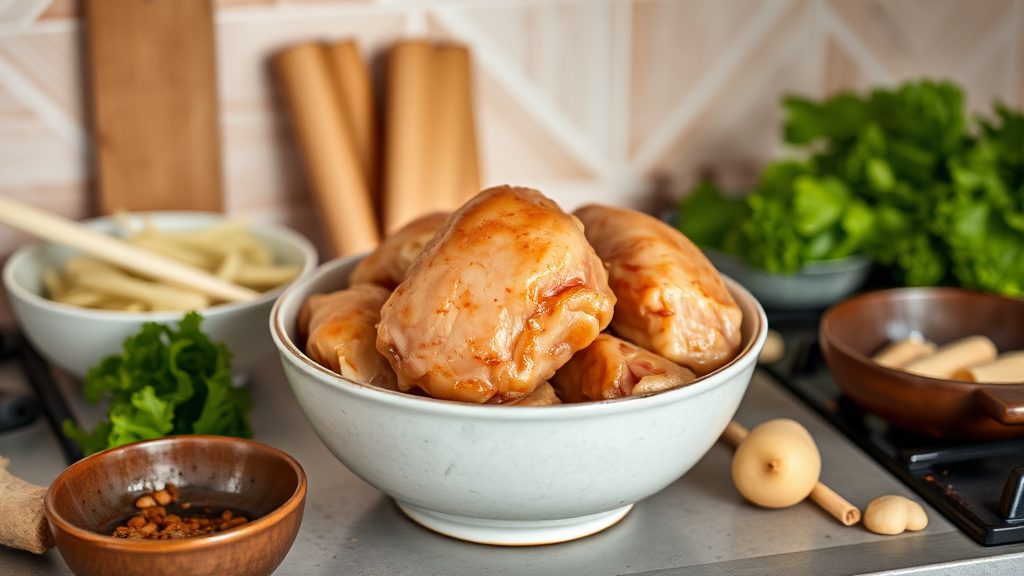
If you’re looking for a comforting dish that fills your home with rich, savory aromas, Korean braised chicken thighs are exactly what you need. This classic jjim recipe transforms simple chicken thighs into tender, fall-off-the-bone pieces bathed in a deeply flavorful sauce that balances sweet, savory, and slightly spicy notes. Unlike quick stir-fries, Korean braised chicken develops its incredible depth through slow, gentle cooking that allows every ingredient to meld together beautifully. Whether you’re new to Korean cooking or already a fan of dishes you’ve discovered through exploring Korean food, this braised chicken Korean style will quickly become a regular in your dinner rotation.
What Is Korean Jjim and Why It’s Perfect for Chicken
Jjim is a fundamental Korean cooking technique that refers to steamed or braised dishes cooked with moisture in a covered pot. The term encompasses everything from elaborate seafood preparations to simple vegetable braises, but the core principle remains the same: ingredients cook slowly in liquid until they become incredibly tender while absorbing all the flavors around them. When you make korean chicken jjim, you’re not just boiling chicken in sauce—you’re creating layers of flavor that penetrate deep into the meat.
Chicken thighs work exceptionally well for jjim because their higher fat content and connective tissue actually benefit from the extended cooking time. While chicken breasts can become dry and stringy when braised, thighs turn silky and succulent. The dark meat also stands up better to the bold flavors in Korean braising liquids, which typically include soy sauce, garlic, ginger, and gochugaru (Korean red pepper flakes). In 2026, as more home cooks discover the superiority of thighs over breasts for braising, this dish has gained popularity for its foolproof results and minimal hands-on time.
🌶️ Pantry note: real Korean gochugaru makes a noticeable difference here. This is the bag I reach for →
As an Amazon Associate I earn from qualifying purchases.
Traditional Korean households often serve jjim dishes during family gatherings or when someone needs comfort food. The communal nature of sharing a large pot of braised chicken, with everyone reaching in with chopsticks, creates warmth beyond just the temperature of the food. You’ll find that this dish carries that same spirit even when you’re cooking for just yourself or a small group.
Gathering Your Ingredients for Korean Braised Chicken Thighs
The beauty of this jjim recipe lies in its accessibility—you don’t need obscure ingredients or specialty equipment. Start with bone-in, skin-on chicken thighs, which provide the best texture and flavor. Plan for about two to three thighs per person, depending on their size. Bone-in pieces release gelatin during cooking, creating a luxuriously thick sauce, while the skin adds richness even if you remove it before serving.
For the braising liquid, you’ll need soy sauce as your base—use regular soy sauce rather than low-sodium, as you’ll dilute it with water anyway. Korean ingredients that make a significant difference include gochugaru for that characteristic warmth and color, and mirin or rice wine for subtle sweetness. If you can find Korean rice wine (cheongju or mirim), use it, but Japanese mirin works perfectly fine. Gochujang, the fermented red pepper paste, adds another dimension of umami and heat, though you can adjust the amount based on your spice tolerance.
🍶 Staple: mirin lasts a long time and shows up in tons of these recipes. Grab the one I reach for →
As an Amazon Associate I earn from qualifying purchases.
🌶️ No gochujang on hand? It’s worth buying the real thing rather than substituting — this is the gochujang I use →
As an Amazon Associate I earn from qualifying purchases.
Aromatics form the backbone of flavor in braised chicken Korean style. You’ll need plenty of garlic—at least six to eight cloves for four chicken thighs—along with fresh ginger. Don’t skimp on these; they become mellow and sweet during braising. A medium onion, cut into chunks, adds body to the sauce. Many Korean cooks also add potatoes and carrots, which absorb the braising liquid beautifully and turn the dish into a complete one-pot meal. Asian pear or apple is a traditional addition that tenderizes the meat while adding natural sweetness, though it’s optional.
For finishing touches, keep green onions, sesame seeds, and sesame oil on hand. These garnishes might seem minor, but they brighten the rich, deep flavors of the braised chicken just before serving. If you enjoy learning about ingredient combinations and their cultural significance, you might appreciate diving deeper into Korean culinary traditions and how they’ve evolved.
🥢 Toasted sesame seeds add that signature nutty crunch and aroma to Korean dishes. Here’s the jar I keep on hand →
As an Amazon Associate I earn from qualifying purchases.
🥢 Finishing touch: a good toasted sesame oil is what makes these dishes taste like the real thing. Grab the one I reach for →
As an Amazon Associate I earn from qualifying purchases.
Preparing Your Chicken and Vegetables for Braising
Proper preparation sets you up for effortless cooking. Begin by patting your chicken thighs completely dry with paper towels—this step is crucial if you plan to sear them first, which isn’t mandatory but adds another layer of flavor. Trim off any excess fat or loose skin, but leave the skin intact if you’re searing. Some cooks prefer to remove the skin entirely before braising for a lighter dish, which works fine since the bone still contributes plenty of flavor.
Season the chicken lightly with salt and pepper. Don’t oversalt since the braising liquid contains soy sauce, which is already quite salty. If you’re including potatoes, peel them and cut them into large chunks about two inches across—any smaller and they’ll disintegrate during the forty-minute cooking time. Carrots should be peeled and cut into similar-sized pieces for even cooking. The onion can be quartered or cut into thick wedges.
Prepare your garlic by smashing the cloves with the flat side of your knife and removing the papery skin. You can leave them whole or roughly chop them—whole cloves become sweet and jammy, while chopped garlic distributes more intensely throughout the sauce. Peel a thumb-sized piece of ginger and slice it into coins about a quarter-inch thick. These slices are easy to eat once braised, unlike grated ginger which can create an unpleasant stringy texture.
Mix your braising liquid in a bowl or measuring cup before you start cooking. A basic formula for four chicken thighs includes one-third cup soy sauce, two tablespoons gochugaru, one tablespoon gochujang, two tablespoons mirin, one tablespoon sugar, and one cup of water. This mixture should taste quite strong and salty on its own—remember that it needs to flavor the chicken, vegetables, and eventually reduce into a concentrated sauce. Adjust the gochugaru and gochujang based on your heat preference, keeping in mind that gochugaru provides more color and fruity pepper flavor while gochujang adds fermented depth and thickness.
How Do You Get the Best Texture in Korean Braised Chicken?
The secret to perfectly tender Korean braised chicken thighs lies in maintaining a gentle simmer rather than a rolling boil. After bringing the liquid to a boil initially, reduce the heat so you see just a few bubbles breaking the surface every second. This low, slow approach allows the connective tissue in the thighs to break down gradually into gelatin without toughening the meat proteins.
Temperature control makes all the difference. If you have an instant-read thermometer, you’re looking for an internal temperature of 175-180°F in the thickest part of the thigh, which is slightly higher than the standard 165°F for chicken safety. At this higher temperature, the collagen fully converts to gelatin, giving you that spoon-tender texture that defines excellent jjim.
Step-by-Step Cooking Instructions for Perfect Results
Choose a heavy-bottomed pot or Dutch oven large enough to hold all your chicken thighs in a single layer without too much crowding. If you’re searing first, heat a tablespoon of neutral oil over medium-high heat until it shimmers. Place the chicken thighs skin-side down and let them sear undisturbed for four to five minutes until deeply golden. Flip and sear the other side for another three minutes. This step adds complexity to the final dish, though you can skip it if you prefer a lighter preparation or want to save time.
🍲 A Dutch oven here’s the Dutch oven I use →
As an Amazon Associate I earn from qualifying purchases.
If you seared the chicken, remove it temporarily and pour off most of the fat, leaving about a tablespoon in the pot. Add your onion chunks and cook for two minutes until they start to soften. This quick sauté in the flavorful fat left from the chicken creates another flavor layer. Add the garlic and ginger, stirring for thirty seconds until fragrant but not browned—burned garlic will make your braising liquid bitter.
Return the chicken to the pot, nestling the pieces among the aromatics. Pour your prepared braising liquid over everything, then add your potatoes and carrots, tucking them around the chicken. The liquid should come about halfway up the sides of the chicken pieces—add a bit more water if needed, but don’t submerge the chicken completely. Bring everything to a boil over medium-high heat.
Once boiling, immediately reduce the heat to low and cover the pot, leaving the lid slightly ajar to allow some steam to escape. This prevents the sauce from becoming too watery while still maintaining enough moisture for braising. Set a timer for thirty minutes, then check the chicken and vegetables. The potatoes should be tender when pierced with a fork, and the chicken should offer no resistance when you insert a knife into the thickest part.
If everything isn’t quite done, cover and continue cooking in five-minute increments. Once the chicken is tender, remove the lid entirely and increase the heat to medium. Let the sauce bubble more vigorously for five to ten minutes to reduce and concentrate. You’ll notice it transforms from a thin liquid into a glossy, clingy sauce that coats the back of a spoon. Baste the chicken with the sauce several times during this reduction phase so the thighs develop a beautiful lacquered appearance.
Taste the sauce and adjust the seasoning. At this point, you might want to add a final pinch of sugar if it’s too salty, or a splash of soy sauce if it needs more depth. Stir in a teaspoon of sesame oil and turn off the heat. This last addition of sesame oil provides a nutty aroma that announces the dish is ready—adding it earlier would cook off those delicate aromatics.
Serving Your Korean Braised Chicken for Maximum Enjoyment
Korean braised chicken thighs shine when served family-style in the pot they cooked in, or transferred to a large, shallow serving bowl that shows off the glossy sauce and tender vegetables. Sprinkle generously with sliced green onions and toasted sesame seeds—the fresh onion bite cuts through the richness while the sesame adds a subtle crunch and nutty flavor that complements the dish perfectly.
Serve your jjim recipe with plenty of steamed white rice, which is non-negotiable in traditional Korean meals. The rice soaks up the flavorful sauce and balances the intensity of the braised chicken. You might also include some simple banchan (side dishes) like kimchi, seasoned spinach, or pickled radish to add variety in texture and taste. The contrast between the rich, warm chicken and crisp, tangy banchan creates the harmonious balance that defines Korean dining.
For a more substantial meal, serve the chicken with lettuce leaves for wrapping. Place a piece of chicken, some potato, and a spoonful of sauce on a lettuce leaf, add a bit of rice and kimchi, then wrap and eat with your hands. This ssam-style eating turns dinner into an interactive experience that encourages conversation and connection around the table—values deeply embedded in Korean food culture that you can explore more through other cultural insights.
The dish actually improves if you let it rest for ten minutes before serving. This brief wait allows the chicken to reabsorb some sauce and the flavors to settle, resulting in even more tender meat. If you’re entertaining, you can time your cooking so the chicken finishes just as your guests arrive, then let it rest while everyone gathers, serving it at the perfect temperature—hot but not scalding.
Storing, Reheating, and Making Ahead
One of the best qualities of Korean braised chicken thighs is how well they keep and reheat. In fact, many Korean cooks insist the dish tastes even better the next day after the flavors have had more time to meld. Let the chicken cool to room temperature, then transfer everything—meat, vegetables, and sauce—to an airtight container. Properly stored in the refrigerator, it will keep for four to five days.
The sauce will thicken considerably as it cools due to the gelatin released from the chicken bones. Don’t worry—this is a sign of a well-made jjim. When you reheat, the sauce will return to its glossy, pourable consistency. Reheat gently on the stovetop over medium-low heat, adding a few tablespoons of water if the sauce has become too thick. Stir occasionally and heat until the chicken is warmed through, about ten minutes. You can also reheat individual portions in the microwave, covering them to prevent drying out.
For meal prep enthusiasts, this braised chicken Korean style is ideal. Make a full batch on Sunday and portion it into containers with rice for easy weekday lunches. The potatoes and carrots mean you already have vegetables included, making it a complete, balanced meal. The flavors remain vibrant even after several days, unlike some dishes that fade with time.
You can also freeze Korean braised chicken for up to three months, though the potatoes may become slightly grainy after freezing and thawing. If you plan to freeze it, consider omitting the potatoes or removing them before freezing and adding freshly cooked potatoes when you reheat. Thaw overnight in the refrigerator, then reheat as you would refrigerated leftovers. The chicken itself freezes beautifully and maintains its tender texture.
If you want to make the dish ahead for entertaining, you can braise the chicken completely, let it cool, then refrigerate it for up to two days before your gathering. About thirty minutes before serving, reheat it gently, which gives you more time to focus on other preparations or simply enjoy your guests’ company rather than being stuck in the kitchen.
Bringing Comfort to Your Table
Korean braised chicken thighs exemplify what makes Korean home cooking so appealing—bold flavors, simple techniques, and results that feel special without requiring advanced skills. The gentle braising transforms affordable chicken thighs into something restaurant-worthy, while the aromatic sauce creates the kind of comfort that makes you want seconds even when you’re already full. You don’t need to travel to Korea or visit a Korean restaurant to experience this dish; with a few key ingredients and a bit of patience, you can create authentic jjim in your own kitchen.
The real magic happens when you lift the lid after thirty minutes of braising and see how the chicken has transformed, when you taste the sauce and adjust it to your exact preferences, and when you sit down with a bowl of rice to enjoy the fruits of your minimal labor. This is cooking that rewards you not with complexity but with depth, not with fussiness but with soul-satisfying flavor. As you explore more Korean recipes in 2026 and beyond, you’ll find that this balance of simplicity and satisfaction runs through much of the cuisine, inviting you to cook and share food that brings people together around warmth and flavor.