As an Amazon Associate I earn from qualifying purchases. This post contains affiliate links, which means I may earn a small commission — at no extra cost to you — if you buy through them. I only recommend things I believe are genuinely worth your time.
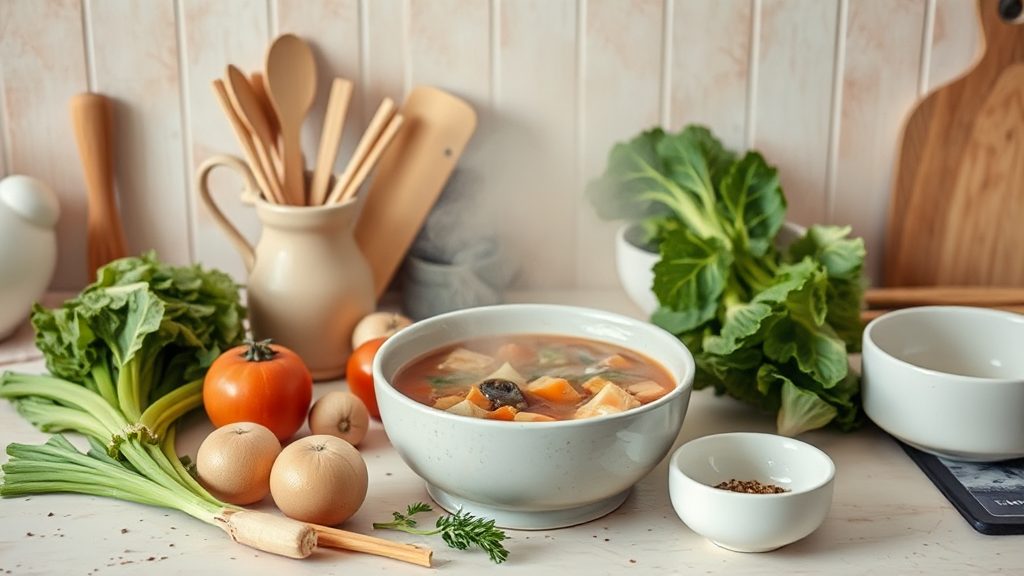
There’s something deeply comforting about a steaming bowl of Korean vegetable stew, or yachae jjigae, on a chilly evening or even just a regular weeknight when you need nourishment that feels like a warm hug. This humble stew represents Korean home cooking at its finest—simple, wholesome ingredients transformed into something far greater than the sum of their parts through the magic of a well-seasoned broth and the communal experience of sharing a meal.
Unlike some of Korea’s more famous stews that feature meat, seafood, or fermented ingredients as the star, yachae jjigae puts vegetables front and center, making it an accessible, budget-friendly, and incredibly versatile dish that adapts to whatever you have in your refrigerator. Whether you’re looking to use up lingering produce, seeking a lighter meal option, or simply craving the soul-warming satisfaction of Korean comfort food, this vegetable-forward stew delivers on every level.
Understanding Yachae Jjigae in Korean Food Culture
In Korean cuisine, jjigae refers to a category of stews that are thicker and heartier than guk (clear soups) but less reduced than jjim (braised dishes). The word “yachae” simply means vegetables, making yachae jjigae a straightforward descriptor: vegetable stew. But don’t let the simplicity of the name fool you—this dish holds an important place in Korean home cooking traditions.
Historically, Korean vegetable stew served as an economical way to create a satisfying meal when meat was scarce or expensive. Korean households have long practiced the art of banchan (side dishes) and resourceful cooking, where nothing goes to waste and humble ingredients are treated with respect. Yachae jjigae embodies this philosophy perfectly, transforming common vegetables like zucchini, mushrooms, and onions into a deeply flavorful centerpiece for the table.
In a traditional Korean meal structure, jjigae typically appears as part of a spread that includes rice, several banchan, and perhaps a protein dish. The stew is often served bubbling hot in an earthenware pot called a ttukbaegi, placed in the center of the table where everyone can serve themselves throughout the meal. This communal aspect reflects the Korean dining philosophy of sharing and togetherness. If you’re interested in exploring more about Korean culinary traditions, you’ll find plenty of inspiration in our food and recipes section.
What makes yachae jjigae particularly appealing in 2026 is its alignment with modern dietary preferences. As more people embrace plant-forward eating, this traditional Korean dish offers a time-tested template for creating satisfying, nutritious meals without relying on animal products—though you can certainly add them if you prefer.
Choosing Your Vegetables for Korean Vegetable Jjigae
The beauty of this comfort food stew lies in its flexibility. While certain vegetables appear more frequently in traditional preparations, there’s no single “correct” combination. Instead, Korean cooks typically follow principles of texture, flavor balance, and seasonal availability when selecting their vegetables.
Common vegetable choices include zucchini (both Korean and standard varieties), which provides a mild sweetness and tender texture when cooked. Mushrooms—whether shiitake, oyster, enoki, or button—add umami depth and a meaty texture that makes the stew more substantial. Korean radish (mu) contributes a subtle sweetness and helps clarify the broth while cooking. Onions form the aromatic base, while scallions add freshness when stirred in near the end.
Leafy vegetables play an important role too. Napa cabbage, the same variety used for kimchi, brings a gentle sweetness and pleasant crunch if not overcooked. Spinach wilts beautifully into the broth, adding color and nutrients. Perilla leaves (kkaennip) offer a unique, slightly minty flavor that’s distinctly Korean. Bean sprouts contribute textural variety with their crisp bite.
For additional protein and texture, many cooks add tofu, which absorbs the broth’s flavors while contributing substance to the stew. Firm or extra-firm tofu works best, cut into generous cubes that won’t fall apart during cooking. Some variations include Korean rice cakes (tteok), glass noodles (dangmyeon), or even small amounts of dried anchovies or kelp in the broth base for added umami.
🍜 Glass noodles (dangmyeon) are the springy sweet-potato noodles that make japchae shine. Here’s the ones I use →
As an Amazon Associate I earn from qualifying purchases.
🍡 Need rice cakes (tteok)? Chewy Korean rice cakes are the star of tteokbokki and tteokguk. Here’s the tteok I use →
As an Amazon Associate I earn from qualifying purchases.
🐟 Stock tip: a handful of dried anchovies gives soups their authentic backbone. This is the one I buy →
As an Amazon Associate I earn from qualifying purchases.
🌊 Broth tip: a few pieces of dashima transform plain water into savory stock. This is the kelp I buy →
As an Amazon Associate I earn from qualifying purchases.
The key is balancing different textures and cooking times. Harder vegetables like radish should go in first, followed by medium vegetables like zucchini and mushrooms, with delicate greens and tofu added toward the end. This layered approach ensures everything finishes cooking at the same time without turning to mush.
Building the Perfect Broth Base
The soul of any Korean vegetable stew lies in its broth. While some versions use simple water enhanced by the vegetables themselves, taking time to create a proper broth base elevates the dish from good to extraordinary. The foundation typically starts with anchovy-kelp stock (myulchi-dashima yuksu), which provides a clean, savory base without overwhelming the vegetables.
To make this stock, combine about six cups of water with a handful of dried anchovies (heads and guts removed to prevent bitterness) and a few pieces of dried kelp in a pot. Bring to a gentle boil, then reduce heat and simmer for about 15 minutes. Strain out the solids, and you have a beautifully umami-rich foundation that’s completely plant-based if you use only kelp, or deeply savory with the anchovies included.
For a vegan version, mushroom stock works wonderfully. Dried shiitake mushrooms steeped in hot water for 20-30 minutes create an intensely flavorful broth that complements the fresh mushrooms you’ll add later. Some cooks combine both mushroom and kelp for maximum depth.
The seasoning layer builds from there. Korean fermented soybean paste (doenjang) is the traditional choice, providing complex, earthy flavors similar to miso but with a distinctly Korean character. Start with about two tablespoons per six cups of liquid, adjusting to taste. Gochugaru (Korean red pepper flakes) adds gentle heat and a beautiful rust-red color—use as much or as little as your preference dictates. A tablespoon of soy sauce rounds out the saltiness, while minced garlic (at least three or four cloves) is non-negotiable for authentic flavor.
🫙 Need doenjang? This fermented soybean paste is the soul of Korean stews and ssamjang. Here’s the tub I use →
As an Amazon Associate I earn from qualifying purchases.
🌶️ Can’t find gochugaru locally? You’re not alone — it’s a specialty item most stores don’t carry. Here’s the coarse Korean red pepper powder I order →
As an Amazon Associate I earn from qualifying purchases.
Some cooks add a small amount of gochujang (Korean red pepper paste) for additional depth and slight sweetness, though this isn’t universal. A touch of sesame oil stirred in at the end adds aromatic richness. Remember that seasoning is personal and should be adjusted to your taste—start conservatively and build from there.
🥢 Sesame oil tip: look for 100% toasted sesame oil, not the pale kind. Here’s the bottle I keep by the stove →
As an Amazon Associate I earn from qualifying purchases.
🌶️ Need gochujang for this? This sweet-savory fermented chili paste is the heart of so many Korean dishes — here’s the tub I keep in my fridge →
As an Amazon Associate I earn from qualifying purchases.
What Makes Korean Vegetable Stew Different from Other Korean Jjigae?
The primary distinction is the absence of a dominant protein or fermented ingredient that defines other jjigae varieties. Unlike kimchi jjigae (kimchi stew) or sundubu jjigae (soft tofu stew), yachae jjigae celebrates vegetables as the main event rather than supporting players. This makes it lighter, more delicate in flavor, and infinitely adaptable to dietary preferences and seasonal availability.
While kimchi jjigae relies on the funky, sour complexity of well-fermented kimchi and doenjang jjigae showcases the deep umami of fermented soybean paste with vegetables playing a supporting role, yachae jjigae recipe formulations keep the vegetable flavors at the forefront. The broth serves to enhance rather than dominate, allowing you to taste each individual component while they harmonize into a cohesive whole.
Step-by-Step Yachae Jjigae Recipe
Now that you understand the principles, here’s a detailed recipe that serves four people as part of a larger Korean meal, or two to three as a main course with rice.
For the broth base:
- 6 cups water
- 1 piece dried kelp (about 4×4 inches)
- 6-8 dried anchovies, heads and guts removed (optional for vegan version)
- 2-3 dried shiitake mushrooms (optional, for extra depth)
For the stew:
- 1 medium zucchini, sliced into half-moons
- 1 cup Korean radish or daikon, cut into bite-sized pieces
- 4-5 fresh shiitake or button mushrooms, sliced
- 1 small onion, sliced
- 1 cup napa cabbage, roughly chopped
- 1 block firm tofu, cut into cubes
- 2-3 scallions, cut into 2-inch pieces
- 1 handful spinach or other leafy greens
- 4-5 cloves garlic, minced
- 2 tablespoons doenjang (Korean soybean paste)
- 1 tablespoon gochugaru (Korean red pepper flakes), adjust to taste
- 1 tablespoon soy sauce
- 1 teaspoon sesame oil
- Optional: 1 small hot pepper, sliced
Method:
Begin by preparing your broth. Combine water, kelp, anchovies (if using), and dried mushrooms in a pot. Bring to a boil over medium-high heat, then reduce to a simmer for 15 minutes. Strain out all solids and return the clear broth to the pot.
While the broth simmers, prep all your vegetables. This prep work is crucial—Korean cooking often involves having everything ready before you start the actual cooking process, which then moves quickly.
Add the doenjang to your strained broth and whisk until completely dissolved. This prevents lumps and ensures even distribution of flavor. Add the gochugaru, soy sauce, and minced garlic, stirring to combine.
Bring the seasoned broth to a gentle boil, then add the radish pieces first since they take longest to cook. Let them simmer for about 5 minutes until they start to become tender. Add the onion, zucchini, and mushrooms, continuing to cook for another 5-7 minutes.
Add the napa cabbage and tofu cubes, gently stirring to incorporate without breaking the tofu. Cook for another 3-4 minutes. Finally, add the scallions, leafy greens, and fresh hot pepper if using. These final additions need only a minute or two to wilt and warm through.
Taste the broth and adjust seasoning as needed. Some prefer more salt (add soy sauce), more heat (add gochugaru), or more depth (add doenjang). Turn off the heat and drizzle with sesame oil, giving one final gentle stir.
The entire cooking process from adding vegetables to finished stew takes only about 15-20 minutes, making this an incredibly efficient weeknight meal despite its complex, slow-cooked taste.
Serving Your Korean Vegetable Stew
Authentic Korean meal presentation matters almost as much as the cooking itself. Traditionally, yachae jjigae arrives at the table in a heavy earthenware pot (ttukbaegi) or stone bowl that retains heat beautifully, keeping the stew piping hot throughout the meal. If you don’t have traditional Korean cookware, any heavy pot or dutch oven works well—you can even transfer the finished stew to a heat-safe serving bowl.
🍲 Kitchen essential: check out this Dutch oven →
As an Amazon Associate I earn from qualifying purchases.
🥘 Worth it: grab the dolsot I recommend →
As an Amazon Associate I earn from qualifying purchases.
The stew is never served alone. At minimum, you’ll want freshly cooked short-grain white rice—the starchy, slightly sticky texture is essential for the proper eating experience. You place a spoonful of rice in your bowl, then ladle the hot stew over it, or eat them alternately, taking a bite of rice followed by a sip of broth with vegetables.
Banchan (side dishes) complete the meal. Even for a simple weeknight dinner, two or three banchan elevate the experience. Kimchi is almost mandatory—its spicy, sour crunch provides perfect contrast to the gentle, savory stew. Other good options include seasoned spinach (sigeumchi namul), soy-braised potatoes (gamja jorim), or seasoned bean sprouts (kongnamul muchim). These don’t need to be elaborate or homemade; even store-bought varieties add the variety and balance that characterize Korean meals.
For drinks, barley tea (boricha) served warm or cold is traditional and cleanses the palate beautifully. Some prefer water or even a light beer. The key is something that won’t compete with the nuanced flavors you’ve built in the stew.
Leftovers are actually a blessing with this dish. The flavors deepen overnight as the vegetables continue to absorb the seasoned broth. Reheat gently, adding a splash of water if the stew has thickened too much. Some people enjoy adding cooked noodles or rice cakes to leftover stew for a completely different meal the next day.
Adapting and Personalizing Your Stew
Once you’ve mastered the basic technique, the possibilities for customization become endless. Seasonal variations keep the dish interesting year-round. In spring, add fresh bamboo shoots or young greens. Summer calls for abundant zucchini and eggplant. Fall welcomes mushroom varieties and sweet potatoes. Winter is perfect for hearty root vegetables and cabbage.
Protein additions transform the stew into a heartier meal. Beyond tofu, you might add eggs (crack them directly into the simmering stew a few minutes before serving), thinly sliced beef or pork, or seafood like clams or shrimp. These additions technically move the dish away from pure yachae jjigae, but home cooking is about making meals that work for you.
For those managing spice tolerance, the gochugaru is easily adjustable. You can make a completely mild version by omitting it entirely, letting diners add their own gochugaru or hot sauce at the table. Conversely, spice lovers can increase the gochugaru significantly or add fresh hot peppers and even a spoonful of gochujang for serious heat.
Texture preferences vary too. If you prefer a thicker stew, reduce the liquid slightly or add a slurry of potato starch mixed with water near the end of cooking. For a brothier consistency, simply add more stock. Some cooks like their vegetables quite soft, while others prefer them with more bite—adjust cooking times accordingly.
🥔 Crispy tip: potato starch fries up lighter and crunchier than flour. This is the one I buy →
As an Amazon Associate I earn from qualifying purchases.
The learning curve for Korean cooking can seem steep at first, but dishes like yachae jjigae demonstrate how approachable it really is. If you’re interested in diving deeper into Korean culture and language alongside the cuisine, explore our Korean learning resources for a more comprehensive understanding.
Bringing Comfort to Your Table
Korean vegetable stew represents more than just a recipe—it’s an invitation to experience the warmth and hospitality that characterize Korean home cooking. In a world where we often rush through meals or default to complicated recipes thinking complexity equals quality, yachae jjigae reminds us that simple, thoughtfully prepared ingredients can create profound satisfaction.
The real beauty of mastering this dish is the confidence it builds. Once you understand the basic framework—a flavorful broth, layered vegetables added according to cooking time, and balanced seasoning—you’ll find yourself creating variations without even consulting a recipe. You’ll start seeing your refrigerator’s vegetable drawer differently, recognizing potential rather than random produce.
Whether you’re cooking for one, feeding a family, or hosting friends who are curious about Korean food, this stew serves as an accessible entry point that doesn’t compromise on authenticity or flavor. It asks for your attention and care but rewards you generously with a meal that nourishes body and spirit equally. Start with the recipe provided, then make it your own, adjusting and adapting until you’ve created a version that feels like home to you.
For more Korean recipes and culinary inspiration, visit our blog where we regularly share new dishes and techniques. The journey into Korean cooking is endlessly rewarding, and yachae jjigae is a wonderful place to begin or deepen your practice.