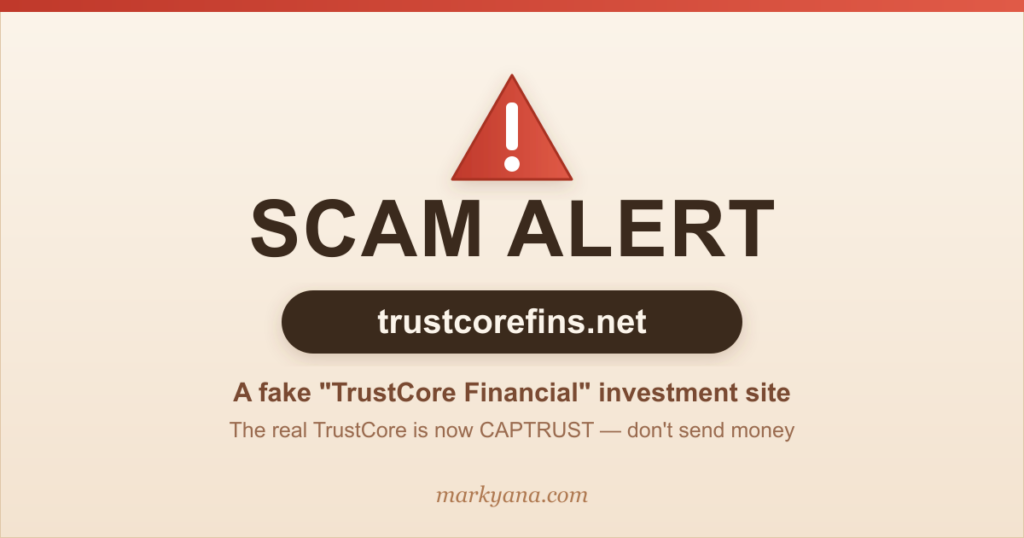
⚠️ Quick answer: If someone called or messaged you about an investment “platform” tied to TrustCore Financial Services and pointed you to trustcorefins.net — it’s a scam. Do not deposit any money.
- The website trustcorefins.net is not the real TrustCore. It’s a fake, registered anonymously in December 2025.
- The real TrustCore Financial Services was a legitimate firm — but it was acquired by CAPTRUST in late 2022 and no longer operates on its own. Its real site, trustcore.com, now redirects to CAPTRUST.
- TrustCore’s standalone SEC registration is Terminated (per the SEC’s own database). Scammers are reusing the dead company’s name and borrowing CAPTRUST’s SEC record to look legitimate.
- Red flags: a cold call (often in Russian), “guaranteed returns,” pressure to fund an account, and “the SEC is your guarantee” talk. No honest firm guarantees profit.
- In my case the man called himself “Vitaliy” and messaged from the WhatsApp number +1 (437) 292-4389 — a Canadian (Toronto) number, despite claiming to be a U.S. firm based in Utah.
- If you’ve been contacted: don’t send money, verify the firm yourself at adviserinfo.sec.gov, and report it to the FTC and FBI IC3.
The full story of how this happened to me — and exactly how I confirmed it was fraud in about ten minutes — is below.
A few days ago I got a phone call from a man who spoke Russian, called himself Vitaliy, and was warm, patient, and disarmingly reasonable. He told me I’d applied for a job, then pivoted to an “investment platform” with guaranteed returns and expert financial advisors. He named a real, respected company and sent me what looked like real SEC paperwork.
Let me be clear about one thing right away: I knew it was a scam from the very beginning. It never came close to working on me. The reason I kept the conversation going wasn’t that I was tempted — it was that I kept hoping maybe, just maybe, he didn’t fully understand what he was part of, and that if I showed him the truth, he’d stop. By the end I realized I was wrong about that. He knows exactly what he’s doing. He doesn’t need my proof. He is willingly cheating people out of their money — and he isn’t going to stop because one person on the phone showed him the receipts.
So I’m writing this for a different person entirely: the next one who types “is trustcorefins.net a scam” into Google at 11pm with a knot in their stomach. He messaged me from the WhatsApp number +1 (437) 292-4389 (I don’t remember the number he originally phoned from). The company he claimed to represent — TrustCore Financial Services — doesn’t operate the way he said anymore, and the website he sent me, trustcorefins.net, has nothing to do with the real TrustCore. I went looking online to see if anyone else had reported this, and I found nothing. Here’s exactly what happened, how I confirmed it was fraud, and how you can check any company like this for yourself.
The Pitch: “Guaranteed Returns” Through TrustCore Financial Services
The story Vitaliy told me followed a script you may recognize:
- He said he was a broker and that his company gives clients access to the market through their own platform.
- I could deposit money, trade with the help of their “analytics” and “specialists,” and they would take a fixed 10% of my profits on withdrawal.
- He insisted there was no risk, because everything was protected by the SEC (Securities and Exchange Commission) — “the only real guarantee,” as he kept saying.
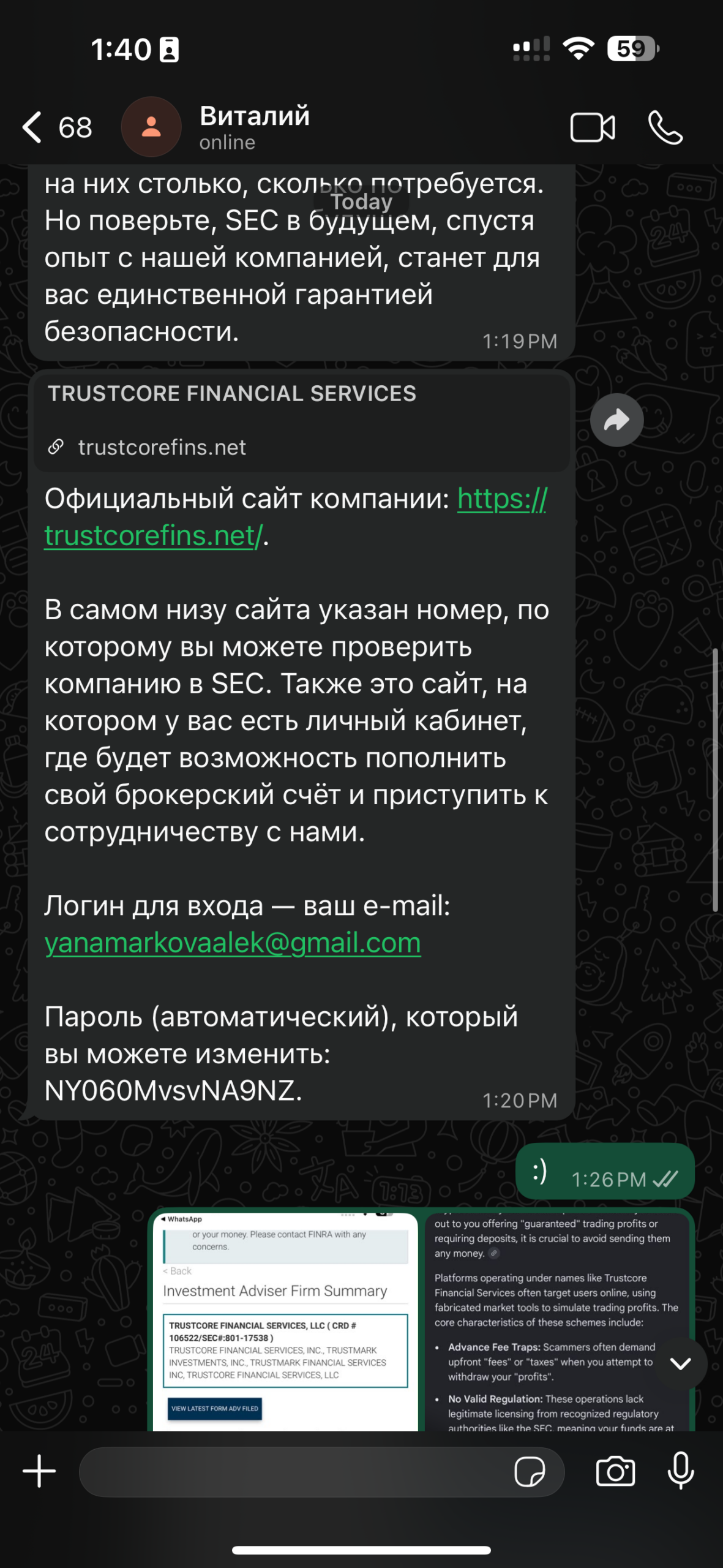
- He sent me the “official company website,” trustcorefins.net, told me there was a number at the bottom of the site I could use to “verify the company with the SEC,” and said I already had a personal account waiting where I could fund my brokerage balance and “get started.”
He even created a login for me before I’d agreed to anything. That alone made my skin crawl. Real, regulated investment firms do not cold-call you, set up an account in your name, and rush you to deposit money.
The Red Flags I Noticed Right Away
Before I verified a single thing, the conversation was already setting off alarms. If you’ve gotten a call like this, see how many of these sound familiar:
- An unsolicited call about a job that instantly turned into an investment opportunity.
- A “guaranteed” return. No legitimate advisor on earth guarantees profit. The market doesn’t work that way, and any regulated professional knows it’s illegal to promise it.
- Pressure and urgency — “your account is ready,” “let’s get you funded,” “in a few minutes I’ll call you back.”
- Leaning on the SEC as a sales tool. He repeated “SEC, SEC, SEC” like a magic word. As I told him, no honest advisor or company says “guaranteed profit” — that’s red flag number one.
- A speaks-your-language angle. He spoke Russian and was friendly. Scammers who target immigrant communities know that hearing your mother tongue lowers your guard. Don’t let it.
How I Verified It Was a Scam — Step by Step
This is the part I most want you to copy, because you can do every one of these checks for free, in about ten minutes, on your phone.
1. I checked the SEC’s own database (IAPD)
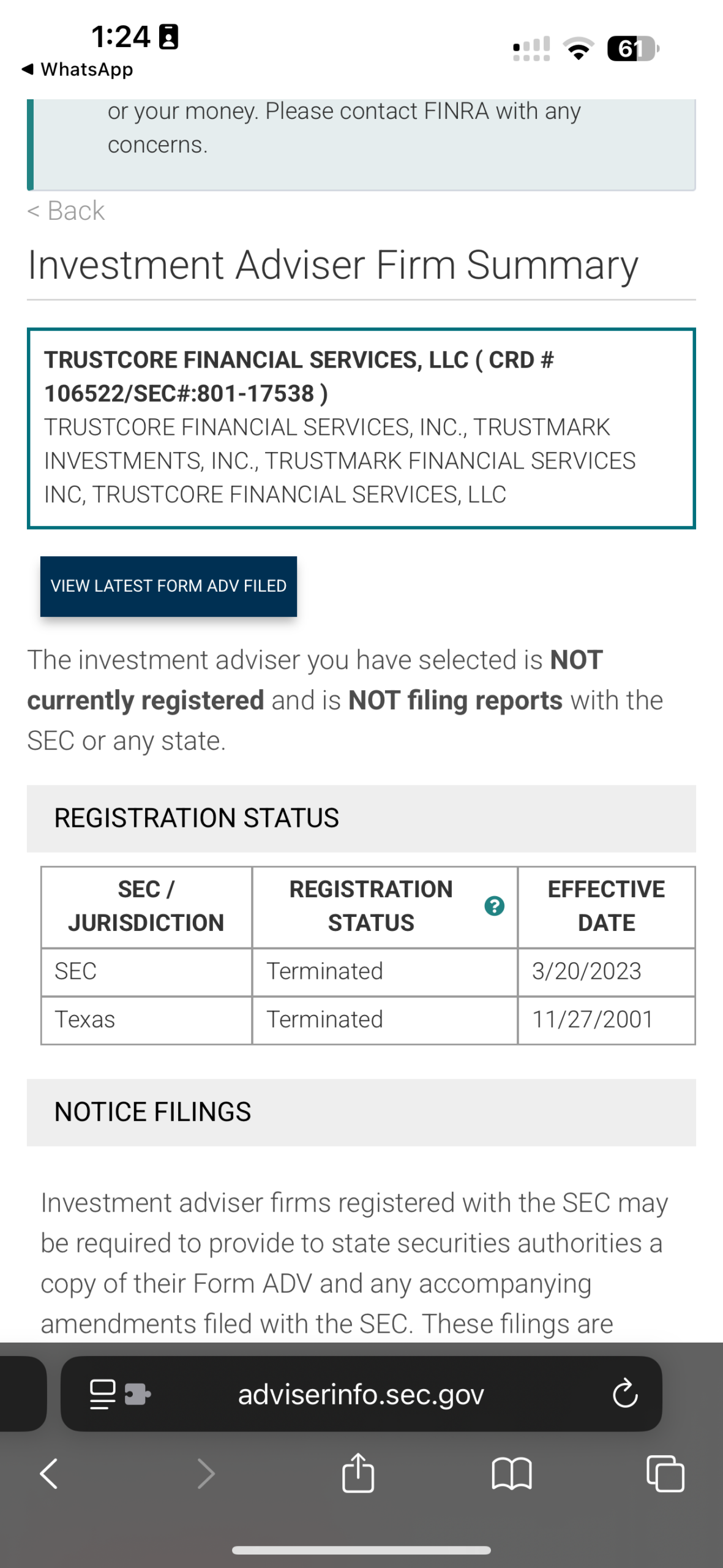
The SEC runs a free public tool called Investment Adviser Public Disclosure (adviserinfo.sec.gov). I looked up TrustCore Financial Services, LLC (CRD #106522). The record was blunt: the firm is “NOT currently registered and is NOT filing reports with the SEC or any state.” Its SEC registration shows Terminated, effective 3/20/2023.
So the very regulator he kept invoking as my “guarantee” says this entity is no longer registered. That’s not a small detail — that’s the whole thing falling apart.
2. I looked up the real company — and found CAPTRUST
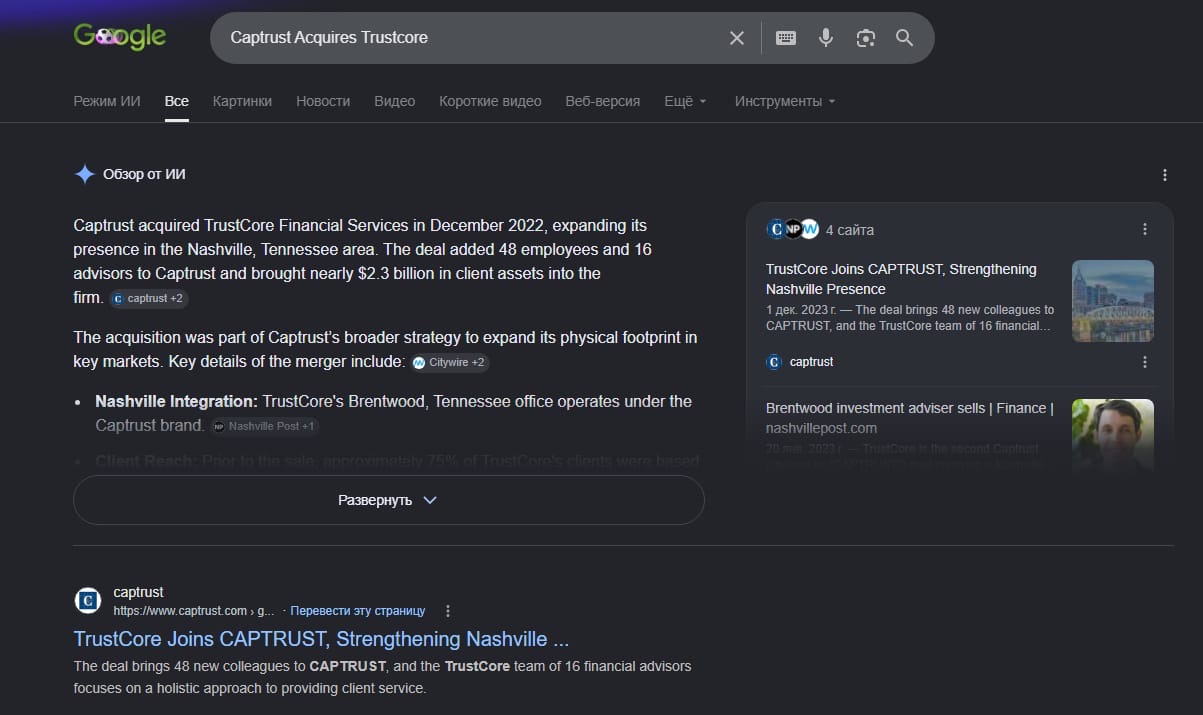
Here’s what actually happened to TrustCore, and it’s all public record: CAPTRUST acquired TrustCore Financial Services in late 2022 (announced January 2023). The real TrustCore was a legitimate, well-respected RIA in Brentwood, Tennessee, managing about $2.3 billion in client assets, with 48 employees and 16 financial advisors. After the acquisition, the whole team moved under the CAPTRUST brand. CAPTRUST even put out a press release about it.
In other words: the real TrustCore no longer exists as its own company. It’s CAPTRUST now. So when “Vitaliy” sent me an SEC summary as proof, it was actually CAPTRUST’s registration record — and he tried to explain that away by saying TrustCore now “operates under CAPTRUST’s SEC.” That’s not how SEC registration works. You can’t borrow another firm’s registration to make your fake platform look legitimate.
3. I checked the websites
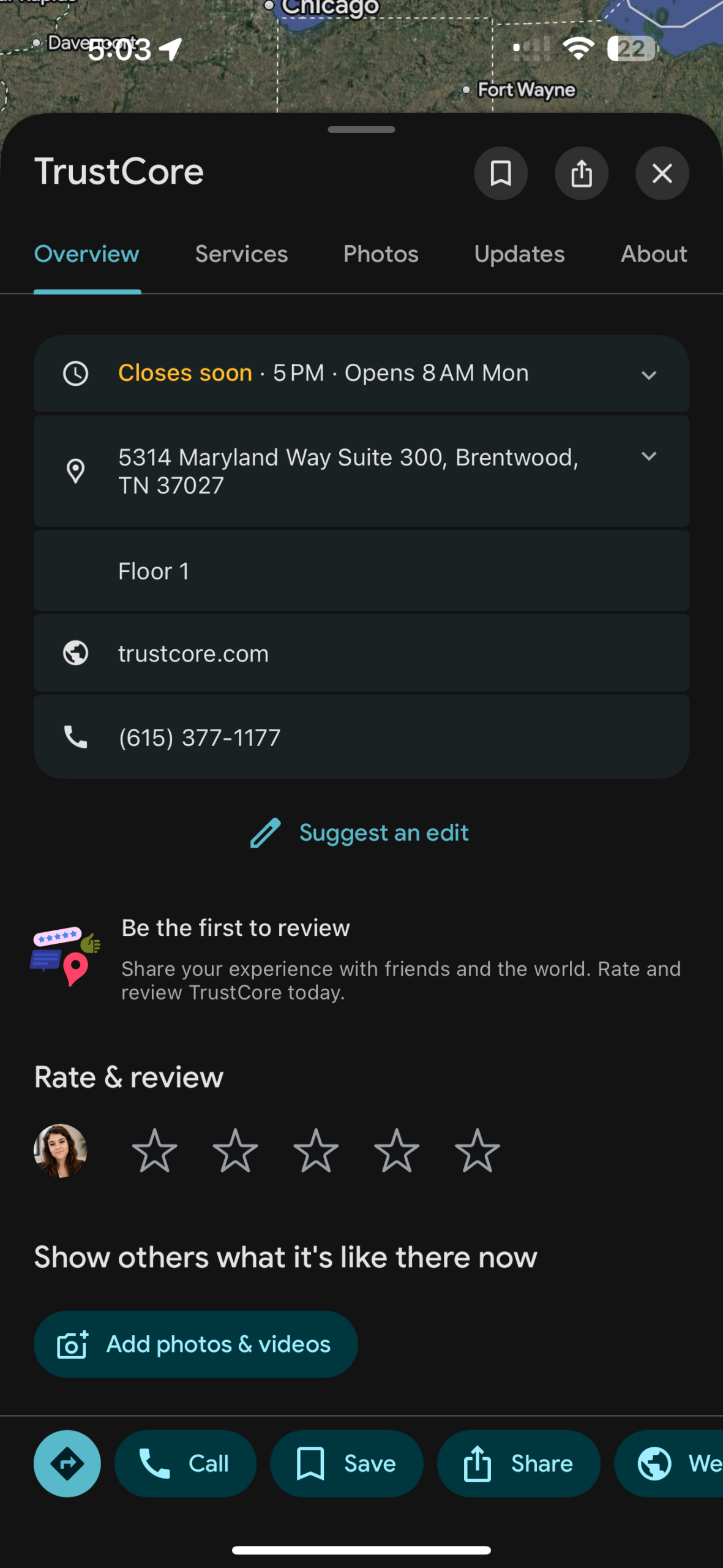
The real TrustCore website was trustcore.com — and today it redirects to CAPTRUST, exactly as you’d expect after an acquisition. The scammer’s site was trustcorefins.net — a completely different domain. Real companies don’t operate their “official” brokerage portal on a random off-brand domain.
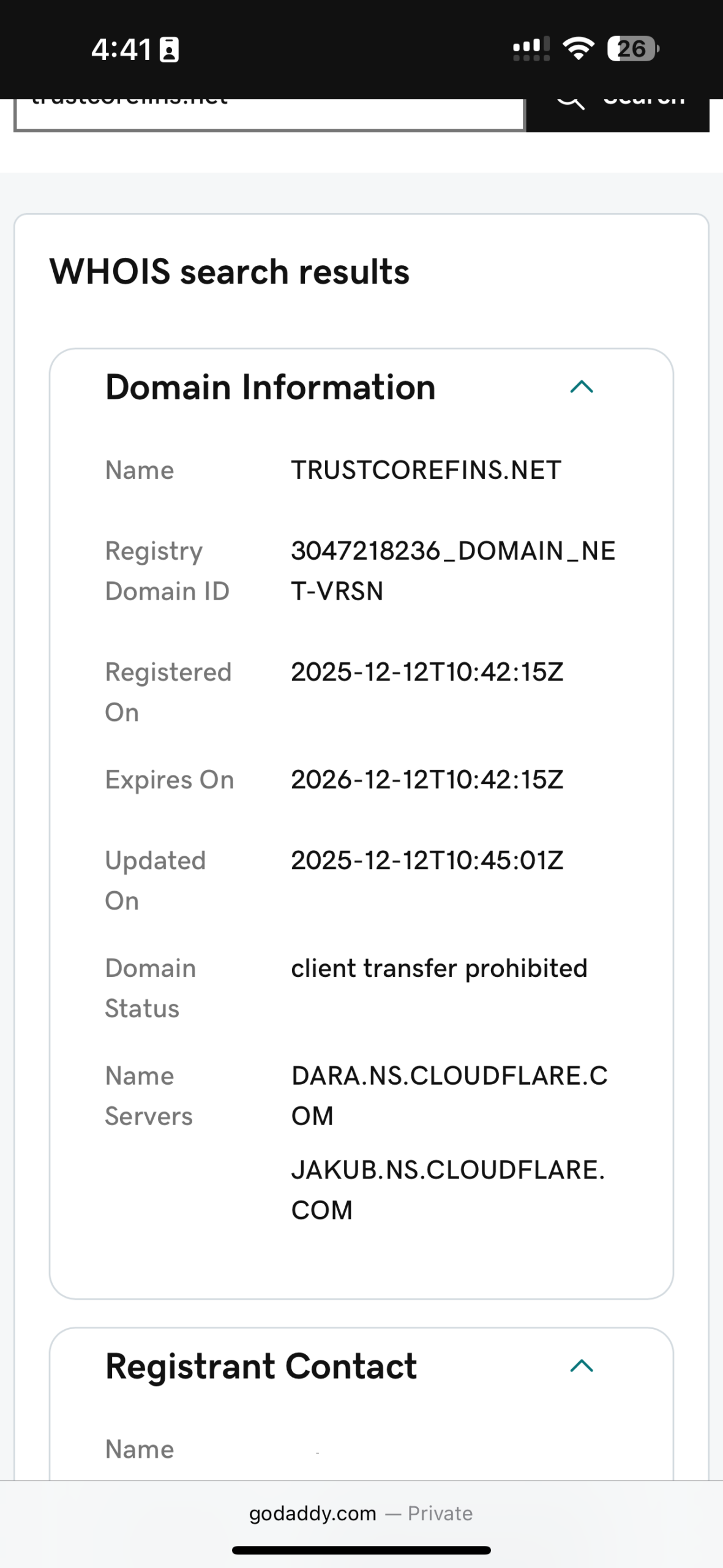
4. I ran a WHOIS lookup on trustcorefins.net
A WHOIS search shows when a domain was created. trustcorefins.net was registered on December 12, 2025 — years after the real TrustCore was absorbed into CAPTRUST. The registration is hidden behind a privacy shield (an Iceland-based proxy service) and uses Cloudflare nameservers. A multi-billion-dollar advisory firm does not run its real client portal on a brand-new, anonymously-registered domain.
5. I checked the business registrations
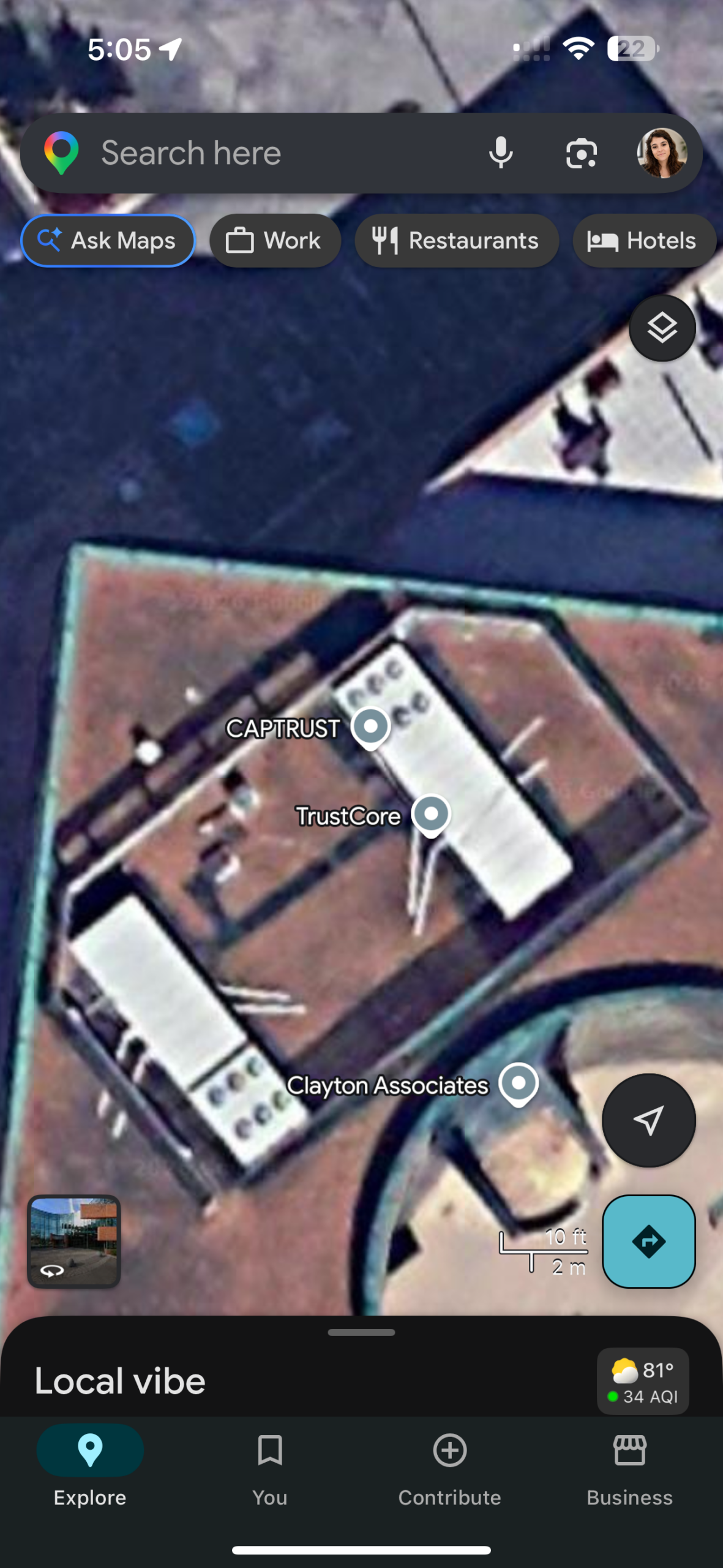
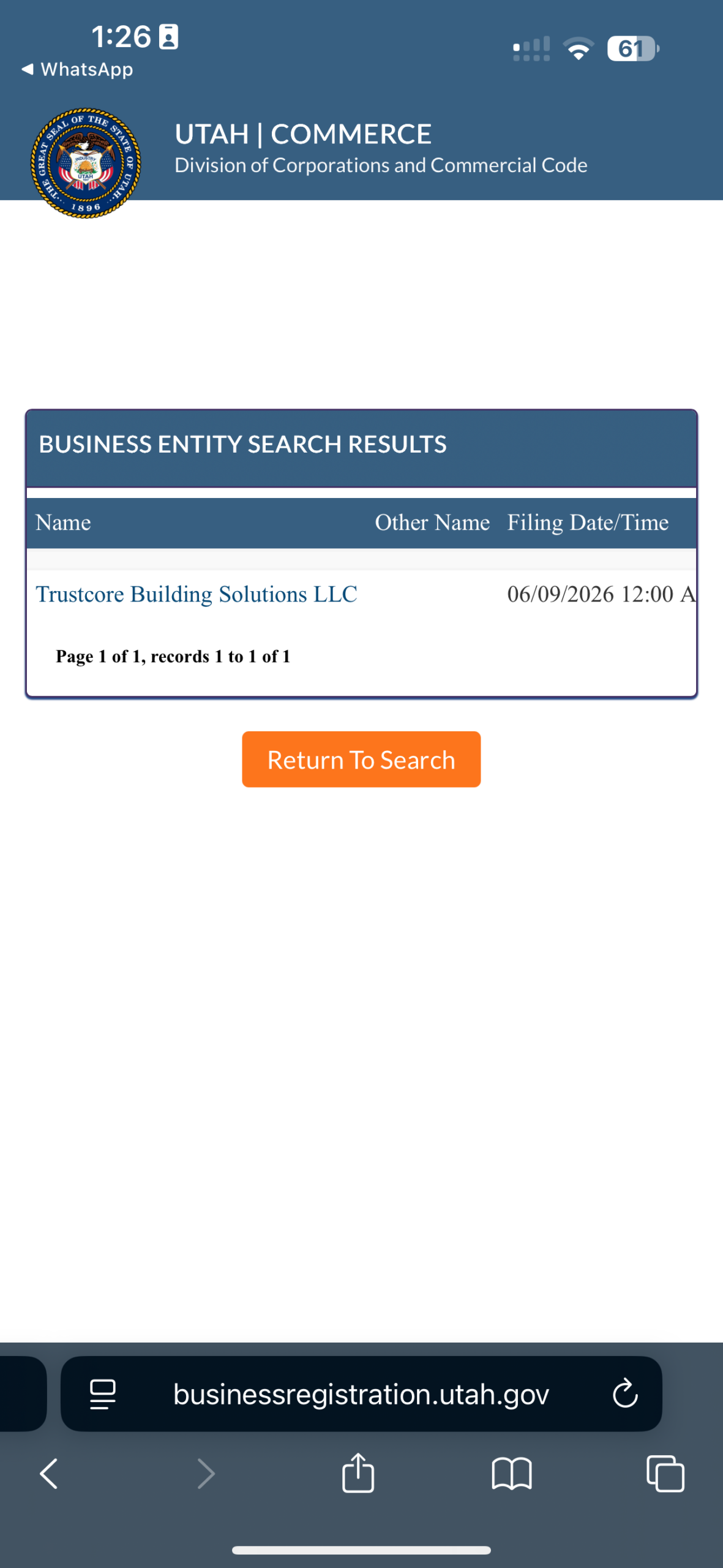
He told me the company was in Utah. There is no TrustCore investment firm registered in Utah — the only close match is an unrelated “Trustcore Building Solutions LLC,” filed in June 2026. Meanwhile, the real office is in Brentwood, Tennessee (5314 Maryland Way) — and when I pulled it up on the map, you can see exactly what happened: TrustCore used to be at that address, but the building is now labeled CAPTRUST. The old name lingers on the map, but the company itself has fully become CAPTRUST. And CAPTRUST isn’t some single-office operation in one state — it’s a large national firm with offices all over the U.S. None of that matched the “Utah platform” story he was telling me.
Every single check pointed the same direction. This wasn’t TrustCore. It was someone wearing a dead company’s name like a costume.
How Scammers Abuse a Real Company’s Good Name
What makes this scam clever — and dangerous — is that it’s built on a true story. TrustCore was real. It was SEC-registered. It was acquired by a legitimate firm. The scammers take that real history and exploit the gap: they’re betting you’ll find just enough real information to feel reassured, and not enough to realize the company doesn’t operate that way anymore.
This is called affinity and impersonation fraud, and it’s everywhere right now. The pattern: a real, trusted brand name + a lookalike domain + borrowed regulatory paperwork + a friendly human who shares your language or your faith. If you ever feel that flicker of “well, the company is real…” — that’s exactly the moment to slow down and verify independently, using the company’s official contact info, never the link or number the caller gives you.
What to Do If You’ve Been Contacted
If someone has pitched you “TrustCore,” trustcorefins.net, or anything like it, here’s what I’d do:
- Do not deposit any money. I didn’t, and that’s the single most important thing. Once funds leave your account to one of these “platforms,” they’re almost impossible to recover.
- Verify the firm yourself at the SEC’s Investment Adviser Public Disclosure site and FINRA BrokerCheck. Use these directly — not a link the caller sends.
- Do a WHOIS lookup on the website’s domain to see how recently it was created.
- Report it. File with the FTC at ReportFraud.ftc.gov, the FBI’s Internet Crime Complaint Center (IC3), and the SEC’s tips and complaints page. Reporting is how the next person’s search actually turns something up.
- Tell someone. Scammers count on shame and silence. There is no shame in being targeted — only in staying quiet and letting them move on to the next person.
Why I’m Really Sharing This
I could have just hung up, blocked the number, and moved on. But two things stayed with me.
First, practical: when I searched, there was nothing online warning people about trustcorefins.net. If this post saves even one person — one retiree, one young family, one immigrant grandmother who trusted a friendly voice in her own language — their savings, then it was worth writing.
Second, and bigger for me: the real reason I stayed on the line as long as I did was him. I kept asking myself whether he actually understood what he was caught up in — and I asked him directly, because one day he’ll answer for it before God. I told him that whatever fear or pressure had him doing this, Jesus already paid for it, and there’s a way out and a different life on the other side of repentance. By the end of the conversation I had my answer: this wasn’t a confused man in over his head. He knows precisely what he’s doing, he didn’t want my proof, and he intends to keep doing it. That broke my heart in a different way. The people running these scams are not just stealing money — they’re trading their own souls for it, and they need the gospel as much as their victims need protection. So I’ll do both: warn people, and pray for the ones doing the harm. Both can be true.
If this happened to you, please don’t carry it in secret. Verify, report, and talk to someone you trust. And if you’re the one who’s been doing the calling — it’s not too late to put it down. There’s grace for that too, and a real new beginning waiting on the other side of it.
Have you been contacted by “TrustCore” or trustcorefins.net? You’re not alone — and you’re not crazy. Please report it using the links above, and share this post with anyone who might get the same call, so the next person finds the truth before they send a single dollar.