As an Amazon Associate I earn from qualifying purchases. This post contains affiliate links, which means I may earn a small commission — at no extra cost to you — if you buy through them. I only recommend things I believe are genuinely worth your time.
If you’ve ever enjoyed the complex, garlicky flavors of traditional cabbage kimchi and wondered what other vegetables could undergo that same magical fermentation transformation, you need to try a perilla leaf kimchi recipe. This Korean side dish, known as kkaennip kimchi, takes the tender, aromatic leaves of the perilla plant and layers them with a savory, spicy seasoning paste to create one of the most addictive banchan (side dishes) you’ll ever taste. Unlike the crunchy, sour bite of napa cabbage kimchi, perilla leaf kimchi offers a uniquely soft, almost silky texture with an herbaceous quality that pairs beautifully with rice, grilled meats, or even as a wrap for ssam.
The beauty of kkaennip kimchi lies in its simplicity and relatively quick preparation time. You don’t need to salt and rinse the leaves for hours like you would with cabbage, and the stacking method makes the entire process feel more like an enjoyable kitchen ritual than a chore. Whether you’re expanding your Korean cooking repertoire or simply looking for easy kimchi variations to add variety to your meal prep, this recipe will become a staple in your refrigerator.
Understanding Perilla Leaves and What Makes Them Special
Before diving into the recipe itself, it helps to understand what perilla leaves are and why they work so brilliantly for kimchi. Perilla leaves (called kkaennip in Korean, or ggaennip depending on romanization) come from the perilla plant, which is related to mint and shiso. Korean perilla differs from Japanese shiso in flavor—it’s less minty and more robustly herbal with a slightly nutty, almost anise-like quality. The leaves are broad, slightly fuzzy, and deeply aromatic, with a flavor profile that stands up beautifully to bold seasonings.
You can find fresh perilla leaves at most Korean grocery stores, typically sold in bundles of 40-50 leaves. Look for leaves that are vibrant green without browning edges or wilting. The leaves should feel slightly velvety to the touch and smell intensely fragrant. Some markets also sell them year-round, though they’re technically in peak season during summer months. If you’re lucky enough to have garden space, perilla grows prolifically—many Korean home cooks plant a few seedlings and end up with more leaves than they know what to do with by mid-summer, making kimchi one of the best preservation methods.
The texture of perilla leaves after they’ve been seasoned and allowed to marinate is unlike any other kimchi. They become tender and almost melt-in-your-mouth soft, yet retain enough structure to be picked up with chopsticks. The leaves absorb the seasoning paste beautifully, creating intense pockets of flavor in every bite. This is why korean pickled perilla has such a devoted following—once you taste how the leaves transform, you’ll understand the appeal immediately.
Essential Ingredients and Proper Ratios for Perilla Leaf Kimchi
Getting your ingredient ratios right makes the difference between mediocre and exceptional perilla leaf kimchi. For a standard batch using about 50 perilla leaves (typically one bundle), you’ll need to prepare a seasoning paste with the following components: 3 tablespoons of gochugaru (Korean red pepper flakes), 2 tablespoons of soy sauce, 1 tablespoon of fish sauce, 1 tablespoon of sesame oil, 1 tablespoon of rice syrup or corn syrup, 4-5 cloves of minced garlic, 1 teaspoon of minced ginger, 2 tablespoons of finely chopped green onions, and 1 tablespoon of toasted sesame seeds.
🍯 Glaze tip: a spoon of rice syrup adds shine to tteokbokki, jorim, and stir-fries. This is the bottle I buy →
As an Amazon Associate I earn from qualifying purchases.
🐟 Need fish sauce? A good Korean or Vietnamese fish sauce brings deep savory depth to kimchi and soups. Here’s the bottle I use →
As an Amazon Associate I earn from qualifying purchases.
🥢 Toasted sesame seeds add that signature nutty crunch and aroma to Korean dishes. Here’s the jar I keep on hand →
As an Amazon Associate I earn from qualifying purchases.
🥢 Finishing touch: a good toasted sesame oil is what makes these dishes taste like the real thing. Grab the one I reach for →
As an Amazon Associate I earn from qualifying purchases.
🌶️ Pantry note: real Korean gochugaru makes a noticeable difference here. This is the bag I reach for →
As an Amazon Associate I earn from qualifying purchases.
The quality of your gochugaru matters significantly here. Korean red pepper flakes have a specific flavor and heat level that differs from other chili flakes—they’re fruity, slightly sweet, and not overwhelmingly spicy. For perilla leaf kimchi, you want a medium-coarse grind that will cling to the leaves without creating a gritty texture. The combination of soy sauce and fish sauce provides the essential umami depth, while the rice syrup adds a subtle sweetness that balances the heat and helps with fermentation.
Some recipes include additional ingredients like minced onion, Korean radish cut into matchsticks, or even thinly sliced carrots for added crunch and complexity. These vegetables are typically layered between the perilla leaves, creating pockets of different textures and flavors. If you’re making this for the first time, I’d recommend starting with the basic version above, then experimenting with additions once you understand the fundamental flavor profile you’re aiming for.
One ingredient note that’s particularly important: don’t skip the sesame oil. It adds a nutty richness that complements the perilla leaves’ natural flavor beautifully, and it also helps the seasoning paste coat each leaf more evenly. Similarly, the sesame seeds aren’t just decorative—they add textural interest and enhance the overall nuttiness of the dish.
Step-by-Step Method for Making Kkaennip Kimchi
The preparation method for this perilla leaf kimchi recipe differs significantly from cabbage kimchi, using a stacking technique rather than massaging or mixing. Start by gently washing your perilla leaves in cold water—they’re delicate, so handle them carefully to avoid tearing. Pat them dry with a clean kitchen towel or use a salad spinner on the gentlest setting. It’s crucial that the leaves are completely dry before you begin seasoning, as excess water will dilute your sauce and create a watery final product.
While your leaves are drying, prepare your seasoning paste by combining all the sauce ingredients in a bowl and mixing thoroughly until you have a smooth, thick paste. The consistency should be similar to a slightly loose pesto—spreadable but not runny. Taste the paste and adjust as needed; it should be noticeably salty and spicy at this stage, as the flavors will mellow and distribute throughout the leaves as they marinate.
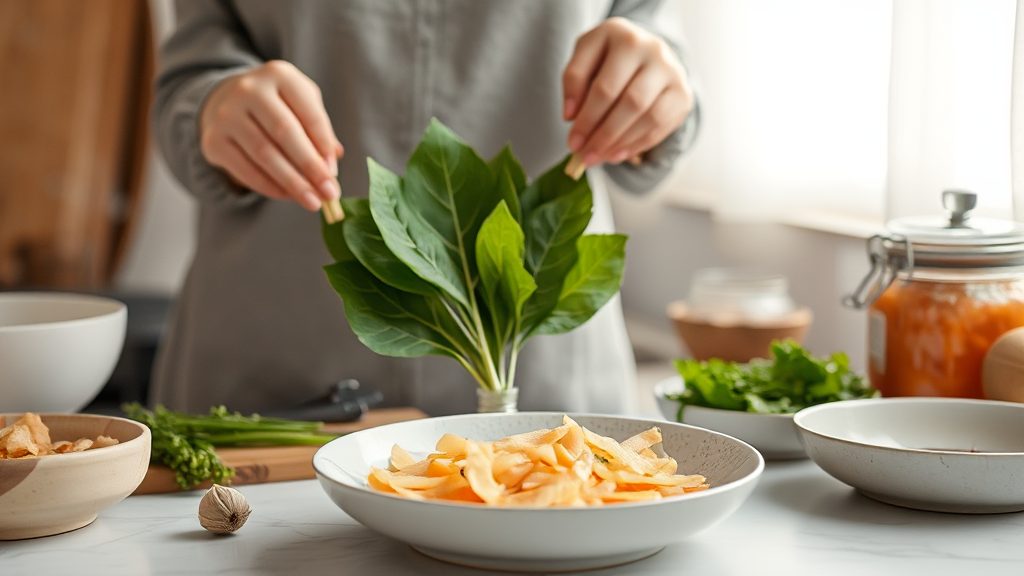
Now comes the meditative part: stacking and seasoning each leaf. Take a clean, airtight container (glass or plastic both work fine) and place one perilla leaf on the bottom, stem side facing you. Using a spoon or your fingers, spread a thin layer of the seasoning paste across the entire leaf—you want coverage, but you don’t need to slather it on thickly. Place another leaf on top, this time with the stem facing away from you (alternating directions helps with even stacking), and spread another thin layer of paste. Continue this process until you’ve used all your leaves, creating a neat stack.
The key to this stacking method is consistency. You want roughly the same amount of seasoning on each leaf, ensuring every bite has balanced flavor. Some cooks like to press down gently on the stack every 10 leaves or so to compact everything slightly. Once you’ve finished stacking all the leaves, spread any remaining seasoning paste on the very top layer, press down one final time to compact the stack, and seal your container tightly.
How Long Does Perilla Leaf Kimchi Take to Ferment?
Unlike traditional cabbage kimchi that benefits from weeks of fermentation, kkaennip kimchi is actually delicious almost immediately and reaches peak flavor much faster. You can eat it after just 2-3 hours at room temperature, though most people find the flavor improves significantly after 24 hours of refrigeration. The leaves soften, the seasonings meld together, and the overall taste becomes more complex and harmonious.
For optimal results, let your perilla leaf kimchi sit at room temperature for about 4-6 hours after assembly, then transfer it to the refrigerator. During those first few hours, the salt and seasonings begin drawing moisture from the leaves and the fermentation process starts, even if it’s subtle. In the refrigerator, the kimchi will continue to develop flavor for about 1-2 weeks, with the first week being the prime eating window. The leaves remain relatively crisp and fresh-tasting during this time, with just enough fermentation to develop that characteristic tangy depth.
After two weeks, perilla leaf kimchi is still perfectly safe to eat, but the leaves begin to break down more significantly and the texture becomes softer and more delicate. Some people actually prefer this stage, as the leaves almost melt in your mouth. The flavor also becomes more pungent and funky, similar to well-aged cabbage kimchi. If you prefer a fresher, more herbaceous taste, plan to consume your batch within the first 7-10 days.
Storage Tips and Serving Suggestions
Proper storage is essential for maintaining the quality of your korean pickled perilla. Always store the kimchi in an airtight container in the refrigerator, and try to press down on the stack occasionally to keep everything submerged in the liquid that naturally accumulates as the leaves release moisture. This liquid (called “kimchi juice”) is precious—it’s packed with flavor and beneficial probiotics, so don’t drain it off. Instead, spoon some of it over the leaves when serving to keep them moist and flavorful.
When you’re ready to eat your perilla leaf kimchi, use clean chopsticks or a fork to carefully lift out 2-3 leaves at a time, trying not to disturb the remaining stack too much. The leaves can be eaten as-is alongside rice and other banchan, or you can get creative with how you use them. They’re fantastic wrapped around a bite of rice and grilled meat (try them with samgyeopsal or galbi), chopped and mixed into fried rice, layered in a kimchi grilled cheese sandwich, or even served alongside your favorite Korean dishes as a flavor-packed complement.
One serving tip that elevates the experience: let the leaves come to cool room temperature for about 10-15 minutes before eating. The flavors are more pronounced when they’re not refrigerator-cold, and the sesame oil’s aroma becomes more noticeable. Some people also like to drizzle a tiny bit of additional sesame oil on their portion right before eating for extra richness.
In terms of shelf life, perilla leaf kimchi will keep for about 3-4 weeks in the refrigerator, though as mentioned earlier, the texture and flavor continue to evolve over time. If you notice any off smells, mold growth, or slimy texture, it’s time to discard the batch. However, this is rare if you’ve used clean utensils and stored everything properly. The high salt and acidic content naturally preserve the kimchi and prevent spoilage.
Troubleshooting Common Issues and Recipe Variations
Even with a straightforward recipe like this, you might encounter a few common issues. If your perilla leaf kimchi turns out too salty, you likely used too much soy sauce or fish sauce in the seasoning paste. The fix for future batches is simple: reduce each by about half a tablespoon and taste the paste before using it. Remember, you can always add more salt, but you can’t take it away once the leaves are seasoned. If your current batch is too salty, try pairing it with plain rice or using it sparingly as a flavor accent rather than eating large quantities at once.
If the kimchi lacks flavor or seems bland, you probably didn’t use enough seasoning paste per leaf, or your gochugaru was old and had lost its potency. Korean red pepper flakes do lose their vibrancy over time, especially if stored improperly. Keep your gochugaru in an airtight container in a cool, dark place, or even in the freezer for extended storage. For a bland batch, you can carefully unstack the leaves, prepare more seasoning paste, and re-season them—it’s not ideal, but it works in a pinch.
As for variations on the basic recipe, there are numerous ways to customize your perilla leaf kimchi recipe based on personal preference. For a vegetarian or vegan version, simply replace the fish sauce with additional soy sauce or use a vegan fish sauce alternative that’s become more widely available in 2026. You can also add a bit of kelp powder or dried mushroom powder to boost the umami factor without animal products.
🌊 Broth tip: a few pieces of dashima transform plain water into savory stock. This is the kelp I buy →
As an Amazon Associate I earn from qualifying purchases.
Some regional variations include adding thinly sliced raw garlic between layers for an extra punch, incorporating julienned Korean radish for crunch, or mixing in some salted shrimp (saeujeot) for a more pungent, oceanic flavor. In some families, they add a bit of minced raw onion to the seasoning paste, which adds sweetness and bite. These easy kimchi variations show how adaptable the basic formula is—once you master the fundamental technique, you can adjust it to match your taste preferences or whatever ingredients you have available.
Another popular variation involves cutting the stacked, marinated leaves into smaller pieces after a few days of fermentation, then storing them in their accumulated juices. This creates a more “salad-like” preparation that’s easier to serve and mix with rice. It’s particularly useful if you’re packing lunches or want to incorporate the kimchi into other dishes rather than eating whole leaves.
Why This Recipe Deserves a Place in Your Kitchen
Making perilla leaf kimchi at home connects you to a lesser-known but deeply beloved aspect of Korean culinary tradition. While cabbage kimchi gets most of the international attention, kkaennip kimchi represents the incredible diversity of Korean fermentation practices and the creativity that comes from preserving seasonal produce. The fact that you can prepare a batch in under an hour, with minimal ingredients and no special equipment, makes it an accessible entry point for anyone interested in exploring Korean food culture beyond the usual dishes.
The practical benefits are equally compelling. Perilla leaf kimchi is lower in sodium than many kimchi varieties (since you’re not pre-salting the base vegetable), it’s naturally gluten-free if you use tamari instead of regular soy sauce, and it provides a concentrated dose of vitamins, minerals, and beneficial probiotics in every serving. The perilla leaves themselves are nutritional powerhouses, rich in omega-3 fatty acids, calcium, and various antioxidants. Combined with the garlic, ginger, and chili peppers in the seasoning paste, you’re creating a side dish that’s as healthful as it is delicious.
Beyond nutrition and ease of preparation, there’s something deeply satisfying about the rhythmic process of stacking and seasoning each leaf. In our fast-paced world of 2026, where so much happens on screens and through algorithms, taking time to work with your hands and create something tangible feels increasingly valuable. This recipe offers that meditative quality—you can’t rush the stacking process, and the repetitive motion becomes almost therapeutic.
Whether you’re drawn to this recipe because you love trying new fermented foods, you want to expand your side dish repertoire, or you’re simply curious about what makes korean pickled perilla so special, the result will be worth your effort. The intensely aromatic, savory-spicy leaves pair with virtually everything in your refrigerator, they keep for weeks, and they offer a taste experience that’s genuinely unique. Once you’ve mastered this basic recipe, you’ll find yourself returning to it again and again, perhaps tweaking the seasonings slightly each time as you dial in your perfect version. That’s the beauty of home cooking—recipes become personal, evolving with your taste and experience, creating food that’s not just nourishing but meaningful.