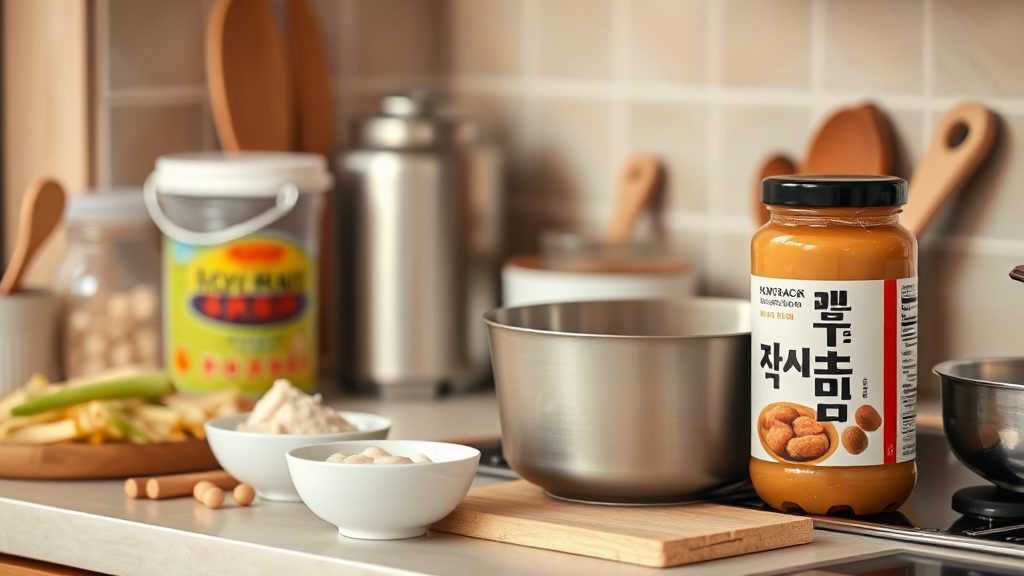
If you’ve ever wandered down the fermented foods aisle of a Korean grocery store, you’ve probably faced a wall of brown paste jars and wondered which one to grab. Korean soybean paste, known as doenjang, comes in dozens of varieties, each with its own flavor profile, saltiness level, and best uses. Understanding the differences between traditional and modern brands will transform your cooking and help you choose the right paste for every dish.
🫙 No doenjang yet? It keeps for months in the fridge and there’s no real substitute. This is the doenjang I reach for →
As an Amazon Associate I earn from qualifying purchases.
Understanding Traditional Doenjang vs Modern Korean Soybean Paste
Traditional doenjang follows a fermentation process that dates back centuries. Families would make large batches during late winter, forming meju (fermented soybean blocks) and aging them in earthenware crocks called onggi for months or even years. This long fermentation creates an intensely savory, deeply complex paste with a pronounced earthy funk that some describe as barnyard-like. The color tends toward darker brown, and the texture remains somewhat chunky with visible soybean pieces.
🫙 Fermentation staple: grab the fermentation jars I reach for →
As an Amazon Associate I earn from qualifying purchases.
Modern commercial korean soybean paste brands take a different approach. Most use faster fermentation methods, sometimes completing the process in weeks rather than months. These products prioritize consistency and milder flavor profiles that appeal to contemporary palates. The texture is usually smoother, the color lighter, and the funk considerably tamed. Brands like CJ Haechandle, Sempio, and Chung Jung One dominate supermarket shelves with these approachable versions.
Neither style is inherently better—they serve different purposes. Traditional doenjang shines in dishes where you want that paste to be the star, like doenjang jjigae (soybean paste stew) or ssamjang (dipping sauce for lettuce wraps). Modern versions work better when you need a background umami boost without overwhelming other ingredients, making them ideal for marinades, salad dressings, or fusion cooking.
What’s the Difference Between Doenjang vs Miso?
Doenjang and miso are both fermented soybean pastes, but they’re distinct products with different flavors and uses. Doenjang typically ferments longer and uses only soybeans, salt, and water, resulting in a bolder, more pungent flavor. Miso, the Japanese counterpart, often includes rice or barley koji (a specific mold culture) and comes in varieties ranging from sweet white miso to intense red miso.
The fermentation methods differ significantly too. Korean soybean paste traditionally relies on natural ambient bacteria and yeasts, while miso production uses controlled koji cultivation. This creates fundamentally different flavor compounds—doenjang tends toward robust, earthy notes while miso offers more delicate, sometimes sweet characteristics. You’ll notice doenjang has a coarser texture with visible soybean chunks, whereas most miso varieties are ground to a smooth paste.
In cooking, these differences matter. Doenjang holds up to long simmering and high heat, making it perfect for stews and braises. Miso’s more delicate flavors can dissipate or turn bitter with prolonged cooking, so it’s often added at the end of cooking or used in dressings. While you can substitute one for the other in a pinch, the results will taste noticeably different. If you’re serious about exploring Korean cooking, keeping both in your refrigerator opens up more authentic flavor possibilities.
Navigating Saltiness Levels and Soybean Paste Brands
Salt content varies dramatically between soybean paste brands, and this single factor will make or break your dishes if you don’t pay attention. Traditional artisanal doenjang can range from 12-18% salt by weight, while commercial brands typically fall between 10-14%. Some “low sodium” versions marketed to health-conscious consumers drop to 8-10%, which fundamentally changes how you need to use them.
CJ Haechandle’s regular doenjang sits around 13% salt and offers reliable, balanced flavor that works across applications. Sempio’s traditional doenjang runs slightly saltier at about 14%, with deeper fermented notes. Chung Jung One produces both regular and organic versions, with the organic option tasting noticeably less salty and more subtly sweet. Mother-in-Law’s brand, increasingly popular in American stores, falls on the milder end with approximately 11% salt content.
When trying a new brand, always taste it first before adding to your dish. Mix a small amount with hot water to make a quick broth—this reveals the true saltiness and flavor intensity. For stews that serve four people, you might need two tablespoons of a mild paste but only one tablespoon of an intense traditional variety. Keep notes on brands you try, including how much you used and whether you’d adjust next time. This prevents the frustrating experience of oversalting an entire pot of stew because you switched brands without accounting for the difference.
Choosing the Right Korean Soybean Paste for Different Dishes
Matching your fermented paste cooking to the right application elevates your results dramatically. For doenjang jjigae, the classic Korean stew, you want a paste with pronounced fermented character—this is where traditional or “mat” (flavor) labeled doenjang excels. The long simmering time mellows the intensity while allowing complex flavors to bloom. Look for pastes labeled “재래식” (jaerraesik, meaning traditional style) or those sold in earthenware crocks rather than plastic tubs.
Quick stir-fries and vegetable seasonings benefit from milder, smoother commercial pastes. When you’re tossing doenjang into a vegetable stir-fry or mixing it into bibimbap, you don’t want overwhelming funk—just a savory umami foundation. The refined Sempio or CJ white containers work perfectly here. These versions also blend more easily into sauces and dressings without leaving grainy texture.
For ssamjang (the thick sauce served with Korean BBQ and lettuce wraps), you’re actually making a mixture rather than using straight doenjang. Combine your chosen soybean paste with gochujang (red pepper paste), sesame oil, garlic, and sometimes honey. Here, a medium-intensity paste balances best—not so mild that it disappears behind the gochujang, but not so strong that it dominates the other flavors. This is where standard commercial brands really shine.
🥢 One upgrade that matters: cheap sesame oil tastes flat — a real toasted one is nutty and fragrant. This is the toasted sesame oil I use →
As an Amazon Associate I earn from qualifying purchases.
🌶️ No gochujang on hand? It’s worth buying the real thing rather than substituting — this is the gochujang I use →
As an Amazon Associate I earn from qualifying purchases.
Marinades for meat require different considerations. Since the paste won’t cook long, you want one that tastes good relatively raw. Test this by spreading a tiny amount on your finger and tasting—if it’s too harsh or salty straight, it’ll likely overpower your marinade. Milder organic versions or those labeled “순” (sun, meaning mild) work better here. You can always add more depth with other ingredients like soy sauce or sesame oil.
How Do You Substitute Korean Soybean Paste in Recipes?
If you can’t find doenjang or need a substitute in a pinch, red miso (aka miso) provides the closest approximation. Use about three-quarters the amount called for in the recipe since miso tends to be more intensely flavored, then taste and adjust. Add a small splash of soy sauce to compensate for doenjang’s deeper savory notes that miso lacks.
Other fermented paste substitutions work less reliably but can function in specific situations. Chinese fermented bean paste (doubanjiang) brings similar fermented depth but adds significant heat from chili peppers—only use this if spiciness fits your dish, and reduce the amount by half. Thai fermented soybean paste (tao jiao) works reasonably well in soups and stews, though it’s considerably saltier and thinner in texture. Start with half the amount and thin your doenjang-based recipe slightly since tao jiao doesn’t provide the same body.
🌶️ Need doubanjiang? here’s the spicy bean paste I use →
As an Amazon Associate I earn from qualifying purchases.
Western pantry alternatives fall short but can salvage a dish if you’re truly stuck. Mixing equal parts tahini and dark miso creates a crude approximation—the tahini provides richness while miso supplies fermented flavor. Some cooks add a tiny amount of anchovy paste to deepen the umami. However, these frankenstein substitutions will never truly replicate authentic Korean flavors. If you’re genuinely interested in exploring Korean cooking beyond one-off experiments, investing in a proper jar of doenjang is worthwhile. A single container lasts months in the refrigerator and opens up dozens of traditional recipes.
The Health Benefits of Fermented Soybean Paste
Beyond flavor, korean soybean paste offers genuine nutritional benefits that justify its prominent place in Korean cuisine. The fermentation process breaks down soybeans’ complex proteins into easily digestible amino acids, including all essential amino acids your body needs. This makes doenjang a complete protein source, particularly valuable in plant-based diets. A tablespoon provides approximately 2-3 grams of protein along with significant amounts of vitamin B12, which is rare in plant foods.
The probiotic content varies depending on whether the paste is pasteurized. Traditional unpasteurized varieties contain live beneficial bacteria similar to those in yogurt or kimchi, supporting gut health and digestion. These probiotics survive the fermentation process and remain viable if the paste isn’t heated above 140°F (60°C). When making soup, you can preserve some probiotic benefit by reserving a portion of doenjang to stir in after cooking, rather than adding it all during the boiling phase.
Research from 2023 and 2025 has highlighted specific compounds in fermented soybean products that show promising health effects. Genistein and other isoflavones, concentrated through fermentation, demonstrate potential cardiovascular benefits and may support bone health. Studies suggest regular consumption of fermented soy products correlates with reduced inflammation markers and improved cholesterol profiles. Korean scientists have also identified unique peptides in traditionally fermented doenjang that exhibit antioxidant properties stronger than those in shorter-fermented versions.
The sodium content does require awareness, especially if you’re monitoring salt intake. However, recent research suggests the bioactive compounds in fermented soy may partially offset typical sodium-related blood pressure concerns. A 2026 study from Seoul National University found that regular doenjang consumption didn’t elevate blood pressure the way equivalent amounts of table salt did, possibly due to the presence of peptides that support vascular function. Still, moderation remains sensible—using doenjang as a flavoring agent in balanced meals rather than eating it by the spoonful.
Making Your Korean Soybean Paste Purchase Decision
When you’re standing in the store deciding which jar to buy, start by determining your primary use. If you’re planning to make traditional stews and want authentic flavor, invest in a traditional-style doenjang even if it costs slightly more—brands like Chung Jung One Traditional or any labeled “재래식” deliver that characteristic depth. For everyday cooking, marinades, and experimenting with fusion dishes, a standard commercial brand like CJ Haechandle or Sempio provides excellent versatility at a reasonable price point.
Check the ingredient list before purchasing. Authentic doenjang should list soybeans, water, and salt as the primary ingredients, possibly with rice or barley added. Avoid products with long lists of preservatives, artificial flavors, or hydrolyzed proteins—these indicate industrial production methods that sacrifice flavor complexity for shelf stability. Organic versions typically use non-GMO soybeans and avoid synthetic additives, though they don’t necessarily taste better than quality conventional brands.
Consider starting with two different pastes if your budget allows: one traditional-style for stews where the fermented flavor should shine, and one mild commercial variety for everyday use. Store both in your refrigerator, where they’ll keep for a year or longer. The upfront cost might seem high, but these jars last through dozens of meals, working out to pennies per serving. As you become more familiar with how different soybean paste brands perform in your cooking, you’ll develop preferences that match your palate and the dishes you make most often.
Understanding Korean soybean paste transforms it from a mysterious brown paste into a versatile ingredient that adds profound depth to your cooking. Whether you choose a pungent traditional doenjang or a smooth modern version, you’re working with a product that represents centuries of fermentation wisdom. Start with a quality commercial brand, experiment with it in simple dishes like doenjang jjigae or mixed into rice, and let your growing familiarity guide future purchases. The right paste for you is the one that makes you excited to cook Korean food more often—and that discovery is worth the journey through those intimidating aisles of fermented possibilities.