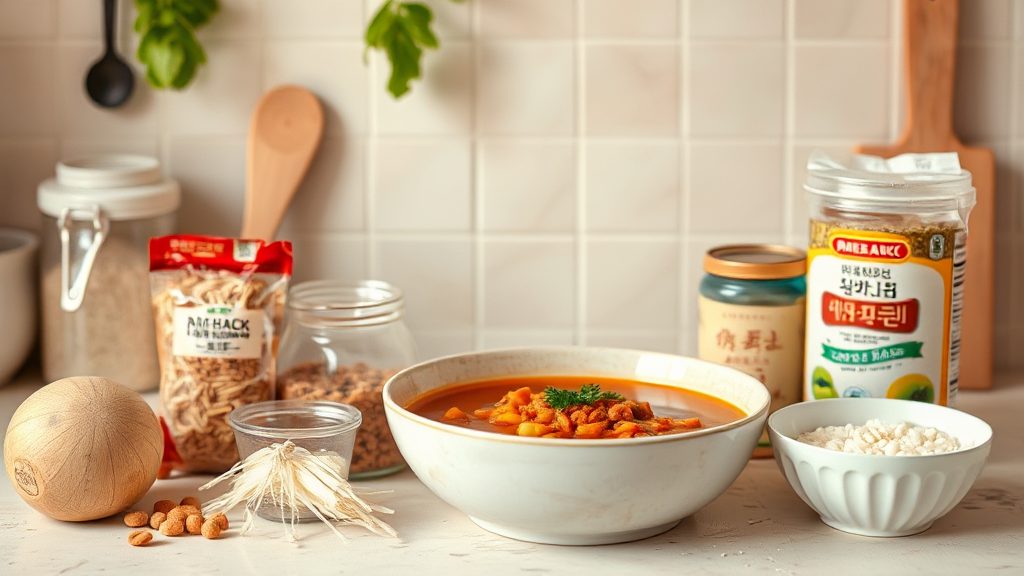
When you’re ready to make authentic Korean soups and stews but can’t find traditional Korean soup base substitutes, you don’t need to abandon your recipe plans. Whether you’re missing dried anchovies for savory miyeok guk, can’t source kelp for a clean doenjang jjigae base, or simply need accommodations for dietary restrictions, understanding how to swap these foundational ingredients will keep your Korean cooking on track without sacrificing the depth of flavor that makes these dishes so comforting.
🐟 For real Korean broth: dried anchovies (myeolchi) are the traditional base for savory stock. Here’s the bag I use →
As an Amazon Associate I earn from qualifying purchases.
🌊 Making Korean stock? Dashima (dried kelp) is the base of clean, umami-rich broth. Here’s the dried kelp I use →
As an Amazon Associate I earn from qualifying purchases.
🫙 No doenjang yet? It keeps for months in the fridge and there’s no real substitute. This is the doenjang I reach for →
As an Amazon Associate I earn from qualifying purchases.
The backbone of Korean soup-making traditionally relies on three core ingredients: dried anchovies (멸치, myeolchi), kelp (다시마, dashima), and dried shiitake mushrooms (표고버섯, pyogo beoseot). Each contributes distinct umami characteristics—the anchovies provide a briny, oceanic depth; the kelp offers mineral-rich sweetness; and the mushrooms add an earthy, meaty complexity. When you understand what each ingredient brings to the pot, finding effective substitutes becomes a matter of matching flavor profiles rather than following strict rules.
Understanding Traditional Korean Soup Base Components
Before diving into substitutions, you’ll benefit from knowing exactly what role each traditional ingredient plays. Korean home cooks typically make soup stock (yuksu or yuksoo) by simmering dried anchovies and kelp together for 15-20 minutes, sometimes adding dried shiitake for extra dimension. This creates a clear, deeply flavored base that doesn’t compete with but rather enhances the main ingredients of your soup or stew.
Dried anchovies come in various sizes, with medium ones (about 1.5-2 inches) being most common for stock-making. They’re gutted and heads removed before use to prevent bitterness. Kelp, on the other hand, should never be boiled aggressively—it releases its best flavors at temperatures just below boiling and can turn slimy if overcooked. Dried shiitake mushrooms need longer steeping, ideally 30 minutes to an hour in cool or warm water, to extract their maximum umami potential.
The combination of these ingredients creates what food scientists call a “synergistic umami effect.” Anchovies are rich in inosinate, kelp contains high levels of glutamate, and mushrooms provide guanylate—three different umami compounds that, when combined, multiply rather than simply add to each other’s savory impact. This is why Korean soup base substitutes work best when you combine elements rather than relying on a single replacement ingredient.
Best Anchovy Dashi Substitute Options for Korean Cooking
If you’re cooking without anchovy due to allergies, dietary preferences, or simple unavailability, you have several effective options. Japanese bonito flakes (katsuobushi) provide the closest flavor match—they’re also dried fish, though made from skipjack tuna rather than anchovies. Use about the same volume you would use for anchovies, steeping them for 5-7 minutes before straining. The resulting stock will have a similar oceanic depth with slightly smokier notes.
For a fish-free but non-vegan alternative, chicken stock makes a surprisingly adaptable foundation. Choose a high-quality, low-sodium version or make your own by simmering chicken bones with aromatics. The key is to enhance it with a small amount of fish sauce (1-2 teaspoons per 4 cups of stock) to reintroduce that marine salinity that anchovy typically provides. This combination works particularly well in heartier stews like kimchi jjigae or doenjang jjigae where the robust flavors can stand up to the meatier chicken base.
🐟 Need fish sauce? A good Korean or Vietnamese fish sauce brings deep savory depth to kimchi and soups. Here’s the bottle I use →
As an Amazon Associate I earn from qualifying purchases.
Vegetarians and vegans can turn to shiitake mushroom stock as their primary anchovy dashi substitute. Use 6-8 dried shiitake mushrooms per 6 cups of water, steeping them for at least an hour or overnight in the refrigerator. To approximate the mineral saltiness that anchovies contribute, add a tablespoon of light-colored miso paste or a teaspoon of soy sauce per cup of stock. Kombu (kelp) becomes especially important in vegetarian versions—it’s not just a substitute but an essential component for building adequate umami depth.
Some modern Korean home cooks have found success with a small amount of nori (roasted seaweed sheets) torn into pieces and steeped briefly with mushrooms. While nori isn’t traditional in Korean stock-making, it contributes oceanic notes without fish, making it useful in vegetarian versions of soups that traditionally rely heavily on seafood flavors. Use 2-3 sheets per 6 cups of water, removing them after 10 minutes to prevent excessive seaweed flavor.
🍙 Roasted seaweed (gim) is essential for kimbap, rice, and snacking — look for the toasted, seasoned sheets. Here’s the gim I use →
As an Amazon Associate I earn from qualifying purchases.
Kelp Stock Alternatives That Preserve Umami Depth
When seeking kelp stock alternatives, you’re looking to replace both the subtle mineral sweetness and the glutamate-rich umami that kelp provides. Wakame seaweed, commonly found in the international aisle of many supermarkets, offers the most straightforward substitution. Use approximately the same amount by weight, but note that wakame is often sold pre-cut into small pieces while dashima comes in large sheets. Steep wakame for only 5-7 minutes as it’s more delicate than kelp and can become unpleasantly soft if overcooked.
If no seaweed is available, mushroom powder or dried porcini mushrooms can partially fill kelp’s role in building umami complexity. Porcini mushrooms have an intense earthy flavor that differs from kelp’s clean, oceanic character, so use them sparingly—about half the amount you would use for kelp by weight. Steep them alongside any other stock ingredients and strain thoroughly, as porcini can create a slightly murky broth if not properly filtered.
For recipes where the clean, slightly sweet flavor of kelp is particularly important—such as miyeok guk (seaweed soup) or clear beef soups—consider using a small amount of tamari or low-sodium soy sauce combined with a pinch of sugar. This won’t replicate kelp’s texture or mineral notes perfectly, but it will provide the foundational savory-sweet balance. Use about 2 teaspoons of tamari and 1/4 teaspoon of sugar per 4 cups of water, adjusting to taste.
You might also explore the diverse world of Korean cooking to understand how different soups rely on kelp to varying degrees, helping you determine when a substitute is critical versus when it can be omitted entirely with minimal impact on the final dish.
What Can I Use Instead of Dried Shiitake Mushrooms?
Fresh shiitake mushrooms can substitute for dried ones, though you’ll need to use significantly more volume—approximately 6-8 ounces of fresh mushrooms for every ounce of dried. The drying process concentrates shiitake’s flavors dramatically, so fresh versions won’t provide the same umami intensity but will still contribute earthy depth and some textural interest to your broth.
Other dried mushrooms work reasonably well in Korean broth replacements. Dried porcini mushrooms offer perhaps the strongest umami punch, though their flavor profile skews more European in character. Use them in a 1:1 ratio for dried shiitake. Dried oyster mushrooms provide a milder option that won’t dominate your soup’s flavor, making them suitable when you want mushroom umami without too much earthy intensity. You’ll need about 1.5 times the amount compared to shiitake to achieve similar depth.
Mushroom-based seasonings represent another practical solution. Mushroom powder, mushroom seasoning packets (often found in Asian grocery stores), or even finely ground dried mushrooms stirred directly into your soup base can approximate the umami contribution of whole dried shiitake. Start with about 1 teaspoon of mushroom powder per cup of water, adjusting upward as needed. These products are particularly convenient when you’re making smaller portions or want to avoid straining your stock.
Creating Allergy-Friendly Korean Soup Base Substitutes
Food allergies and dietary restrictions require thoughtful adaptation of traditional Korean soup bases, but they don’t mean sacrificing flavor. For shellfish and fish allergies, the most crucial step is eliminating all seafood-derived ingredients including fish sauce, shrimp paste, and obviously anchovy stock. Build your base instead on vegetable stock enhanced with mushrooms, focusing on creating multiple layers of umami through plant-based sources.
A robust allergy-friendly base starts with this combination: 6 cups of water, 1 large piece of kelp (if tolerated), 8-10 dried shiitake mushrooms, 1 small onion (quartered), 3-4 garlic cloves (smashed), and a 2-inch piece of ginger. Simmer everything except the kelp for 30-40 minutes, adding the kelp only in the last 15 minutes. This creates a deeply flavored stock without any fish products. Season with soy sauce or tamari (ensuring it’s wheat-free if needed for gluten allergies) and a small amount of mirin or rice wine for complexity.
🍶 Need mirin? This sweet rice wine rounds out marinades and takes the edge off strong flavors. Here’s the mirin I use →
As an Amazon Associate I earn from qualifying purchases.
For those avoiding soy products entirely, coconut aminos provides a surprisingly effective substitute for soy sauce in Korean cooking, though it’s slightly sweeter and less intensely savory. You’ll need to use about 25% more coconut aminos compared to soy sauce and may want to add a pinch of salt to boost the savory notes. Miso paste (verify it’s soy-free if needed) dissolved in the finished soup also adds fermented depth similar to what Korean fermented soybean pastes contribute.
MSG-sensitive individuals should know that dried mushrooms and kelp contain naturally occurring glutamates—the same compound in MSG. If you react to these ingredients, focus your Korean soup base substitutes on ingredients with different umami sources. Tomato paste (about 1 tablespoon per 6 cups stock), nutritional yeast (2-3 tablespoons), and aged parmesan cheese rind (if dairy is tolerated) all contribute savory depth through alternative pathways. While these ingredients aren’t traditional in Korean cooking, they can help you build satisfying soup bases when standard options are off-limits.
Practical Substitution Ratios and Cooking Techniques
Understanding the right proportions transforms your substitution efforts from guesswork to reliable cooking. When replacing dried anchovies with bonito flakes, use a 1:1 ratio by weight—about 1/2 cup of bonito flakes for 1/2 cup of dried anchovies. Both steep relatively quickly, so timing remains consistent. For chicken or vegetable stock replacing anchovy-kelp stock, the ratio is straightforward: use the same volume, but fortify it with 1-2 teaspoons of fish sauce per 4 cups (or soy sauce and a pinch of sugar for vegetarian versions).
Kelp substitutions require more attention to timing. Kelp should steep for 15-20 minutes in water that’s steaming but not rapidly boiling—around 170-180°F (77-82°C). Wakame needs only 5-7 minutes at similar temperatures. If using mushroom stock as a complete Korean broth replacement, extend your steeping time to 45-60 minutes to extract maximum flavor, or better yet, soak the mushrooms overnight in cold water in the refrigerator for the deepest umami development.
Temperature control matters more than many home cooks realize. Boiling kelp or bonito flakes vigorously creates off-flavors and cloudiness. Instead, bring your water to a gentle simmer, add your ingredients, then reduce heat to maintain that gentle bubble. For dried shiitake or their substitutes, you can simmer more actively since mushrooms aren’t as delicate as sea vegetables or fish products.
Layering techniques enhance substitutes significantly. Rather than relying on a single ingredient to replace anchovy or kelp, combine two or three elements. For instance, vegetable stock plus mushroom powder plus a strip of nori creates more complex flavor than any single substitute alone. Similarly, chicken stock enhanced with both fish sauce and a small piece of kelp more closely approximates traditional anchovy-kelp stock than either element individually.
For those interested in deepening their understanding of Korean culinary traditions beyond soup-making, exploring authentic Korean cooking techniques and recipes provides valuable context for why these particular ingredients became foundational to Korean cuisine and how flexibility in the kitchen has always been part of the cooking tradition.
Quick-Reference Pantry Solutions for Last-Minute Cooking
When you’re mid-recipe and realize you’re missing a key ingredient, having pantry staples that can approximate Korean soup bases saves dinner. High-quality vegetable bouillon cubes or paste combined with soy sauce creates an acceptable emergency base—use about half the amount of bouillon the package recommends (to avoid over-salting) and add 1 teaspoon of soy sauce per cup of water. This won’t have the complexity of properly made stock, but it provides adequate savory foundation for weeknight meals.
Instant dashi packets, widely available at Asian groceries and increasingly in mainstream supermarkets, offer another convenience option. These typically contain bonito and kelp extracts along with salt and sometimes MSG. One packet usually seasons 2 cups of water. While purists might object, instant dashi creates perfectly acceptable soup bases for home cooking, especially when you enhance it with fresh aromatics like garlic, ginger, and scallions specific to Korean preparations.
Miso paste deserves special mention as a versatile emergency ingredient. A tablespoon of white or yellow miso dissolved in hot water provides instant umami depth. It won’t replicate the specific character of anchovy-kelp stock, but it creates a satisfying savory base. Combine it with mushroom broth or even plain water enhanced with garlic and ginger for surprisingly good results. This works especially well in thicker, more robust soups like kimchi jjigae where the fermented flavors of the kimchi itself carry much of the flavor load.
Keep dried mushrooms of any variety in your pantry—they last for months when stored in a cool, dry place and can be quickly rehydrated for same-day cooking. Even basic button mushrooms, when dried and steeped, contribute worthwhile umami. You can dry fresh mushrooms yourself in a low oven (170°F for 4-6 hours) or food dehydrator, creating a custom stock ingredient that’s always available.
Making Your Substitutions Work Seamlessly
The key to successful korean soup base substitutes lies in understanding that traditional ingredients weren’t chosen arbitrarily—they represent centuries of Korean cooks identifying the most efficient sources of umami, minerals, and aromatic complexity. When you substitute, you’re not looking for exact replicas but rather ingredients that fulfill similar roles in building flavor depth. Combining multiple substitute elements usually works better than relying on a single replacement, as this recreates the layered complexity of traditional stock.
Don’t be afraid to taste and adjust as you go. Korean home cooking has always involved flexibility and adaptation based on what’s available, seasonally and regionally. If your first attempt with substitutes doesn’t taste quite right, a small amount of additional seasoning—a bit more soy sauce, a pinch of sugar, a dash of sesame oil—can often bridge the gap between “close enough” and “delicious.” Trust your palate and remember that soup bases should enhance, not dominate, the main ingredients of your dish.
🥢 One upgrade that matters: cheap sesame oil tastes flat — a real toasted one is nutty and fragrant. This is the toasted sesame oil I use →
As an Amazon Associate I earn from qualifying purchases.
With these substitution strategies in your cooking repertoire, you can confidently approach any Korean soup or stew recipe, knowing that missing one or two traditional ingredients won’t prevent you from creating satisfying, flavorful meals. Whether you’re adapting for allergies, dietary preferences, or simple ingredient availability, these alternatives ensure that the comforting, nourishing tradition of Korean soup-making remains accessible in your kitchen.