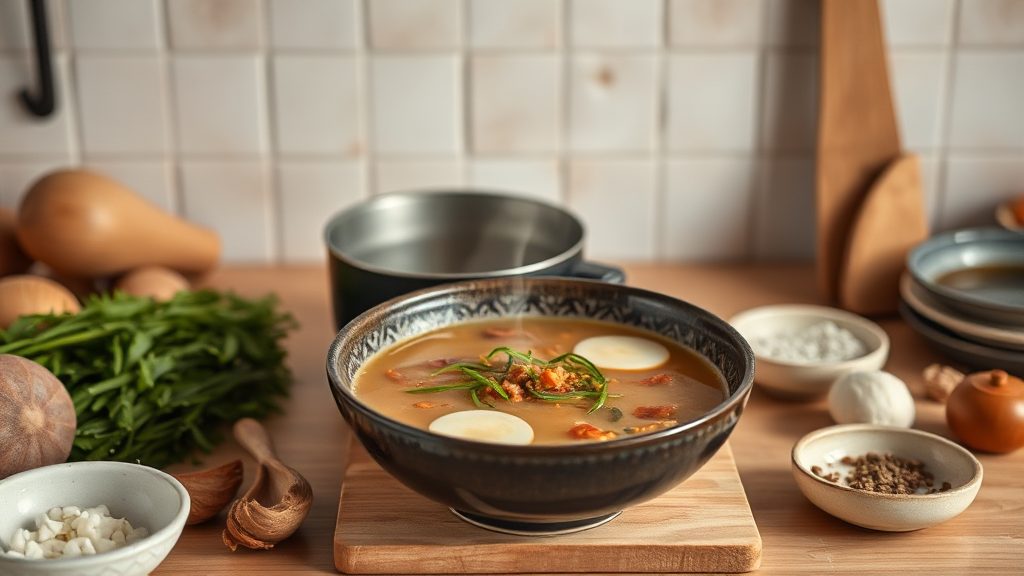
If you’ve ever celebrated a birthday with Korean friends or family, you’ve likely encountered a warm, nourishing bowl of miyeok guk recipe on the table. This comforting seaweed soup holds a special place in Korean cuisine and culture, traditionally served on birthdays as a symbolic reminder of a mother’s sacrifice during childbirth. But beyond its cultural significance, this Korean kelp soup is surprisingly simple to make, incredibly nutritious, and absolutely delicious any day of the year.
🌊 Pantry staple: dried dashima keeps forever and is essential for real Korean soup stock. Grab the one I keep on hand →
As an Amazon Associate I earn from qualifying purchases.
What Is Miyeok Guk and Why Does It Matter?
Miyeok guk (미역국) is a traditional Korean soup made primarily from miyeok (미역), which is brown seaweed or kelp that’s been dried and reconstituted. The soup typically includes a protein element like beef, seafood, or anchovy broth, seasoned with garlic, sesame oil, and soy sauce. The result is a silky, savory broth with tender strips of seaweed that provide both texture and an unmistakable oceanic flavor.
🥢 Sesame oil tip: look for 100% toasted sesame oil, not the pale kind. Here’s the bottle I keep by the stove →
As an Amazon Associate I earn from qualifying purchases.
This Korean kelp soup became a birthday tradition because Korean women have historically eaten it postpartum to aid recovery. Miyeok is exceptionally rich in iodine, calcium, and iron—nutrients crucial for both healing after childbirth and supporting lactation. On your birthday, eating miyeok guk serves as a tribute to your mother and the nourishment she needed to bring you into the world. It’s a beautiful, tangible way to honor maternal sacrifice while enjoying a genuinely beneficial meal.
Beyond birthdays, many Koreans eat this soup regularly because it’s light yet satisfying, easy to digest, and packed with minerals that support thyroid function and bone health. If you’re exploring Korean recipes, miyeok guk represents the perfect intersection of simplicity, nutrition, and cultural depth.
Essential Ingredients for Your Miyeok Guk Recipe
One of the most appealing aspects of making this seaweed soup recipe is how few ingredients you actually need. The shopping list is manageable even if you’re new to Korean cooking, and most items are available at Asian grocery stores or increasingly at regular supermarkets with international sections.
Here’s what you’ll need for a basic beef miyeok guk that serves 4-6 people:
- Dried miyeok (seaweed): About 1 ounce or 30 grams of dried seaweed, which will expand significantly when soaked. Look for miyeok specifically labeled for soup rather than the type used for making seaweed salad.
- Beef brisket or stew meat: 8 ounces (roughly 225 grams), cut into small bite-sized pieces. The beef adds depth and richness to the broth. For a leaner option, you can use sirloin.
- Sesame oil: 2 tablespoons for sautéing, which creates the foundational flavor of the soup.
- Garlic: 3-4 cloves, minced. Fresh garlic is essential here—don’t substitute with powder.
- Soy sauce: 2-3 tablespoons, preferably a Korean soup soy sauce (guk ganjang) for the most authentic taste, though regular soy sauce works in a pinch.
- Water or beef broth: 8-10 cups. Using broth instead of water intensifies the flavor.
- Salt: To taste, for final seasoning adjustments.
🫙 Korean soy sauce (ganjang) is brewed for a cleaner, deeper flavor than generic soy sauce. Here’s the one I use →
As an Amazon Associate I earn from qualifying purchases.
The beauty of this ingredient list is its flexibility. You can swap the beef for mussels, clams, or even omit protein entirely for a vegetarian version using anchovy broth or simply vegetable stock. The miyeok itself carries so much flavor and nutritional value that the soup remains satisfying regardless of your protein choice.
Step-by-Step Instructions for Making Miyeok Guk
Preparing this easy Korean soup involves three main phases: soaking the seaweed, building the flavor base, and simmering everything together. The entire process takes about 40 minutes, with most of that being hands-off simmering time.
Step 1: Soak and prepare the miyeok. Place your dried seaweed in a large bowl and cover it with cold water. Let it soak for at least 20 minutes—you’ll be amazed at how much it expands. Once fully rehydrated, drain the seaweed and squeeze out excess water. Then cut it into bite-sized pieces, about 2-3 inches long. If you leave the pieces too long, they become unwieldy to eat with a spoon.
Step 2: Sauté the beef and seaweed. Heat the sesame oil in a large pot over medium-high heat. Add your beef pieces and cook them for about 2-3 minutes until they’re lightly browned. The beef doesn’t need to be fully cooked at this stage. Add the minced garlic and stir for about 30 seconds until fragrant. Now add the prepared miyeok to the pot and stir everything together. Continue cooking for another 3-4 minutes, allowing the seaweed to absorb the sesame oil and begin releasing its flavors. This sautéing step is crucial—it’s what gives the soup its characteristic nutty, rich taste rather than a watery, bland profile.
Step 3: Add liquid and simmer. Pour in your water or broth, add the soy sauce, and bring everything to a boil. Once boiling, reduce the heat to medium-low and let the soup simmer uncovered for 20-30 minutes. During this time, the beef will become tender, the seaweed will soften further, and all the flavors will meld together. You’ll notice the broth taking on a slightly darker color from the soy sauce and developing a glossy sheen from the sesame oil.
Step 4: Season and serve. Taste your soup and adjust the seasoning with additional soy sauce or salt as needed. The soup should be savory but not overly salty, with a gentle oceanic undertone from the seaweed. Serve hot in individual bowls, ideally with a bowl of steamed rice and some banchan (Korean side dishes) on the side. The soup is traditionally eaten by alternating spoonfuls of soup with bites of rice, creating a comforting, balanced meal.
How Do You Customize Your Miyeok Guk With Different Proteins?
The basic miyeok guk recipe is incredibly adaptable, and switching up the protein can completely change the character of your soup while maintaining its essential comfort and nutrition. The cooking method remains largely the same regardless of which protein you choose, with only minor timing adjustments.
For a seafood version, replace the beef with fresh mussels, clams, or both. Use about 1 pound of shellfish, cleaned and debearded if using mussels. Follow the same sautéing process with the seaweed and garlic, but add the shellfish during the final 5-7 minutes of simmering so they don’t become rubbery. The shellfish will release their natural brine into the soup, creating a lighter but intensely oceanic broth that pairs beautifully with the miyeok. This version is especially popular in coastal regions of Korea.
For a vegetarian or vegan version, skip the meat entirely and build your flavor base differently. Use vegetable broth instead of water, and consider adding dried shiitake mushrooms during the simmering stage for umami depth. You can also increase the sesame oil slightly (to about 3 tablespoons) to compensate for the richness typically provided by meat. Some cooks add a small piece of dashima (kelp) to the broth for additional minerals and flavor, though be careful not to double up on seaweed taste—the miyeok already provides plenty.
A chicken version works beautifully too, though it’s less traditional. Use boneless chicken thighs cut into small pieces, which stay tender during the simmering process better than chicken breast. The resulting soup is lighter than the beef version but still satisfying, and it can be a good option if you’re cooking for someone who doesn’t eat red meat but isn’t quite ready for a fully vegetarian approach.
What Makes This Korean Seaweed Soup So Nutritionally Valuable?
Understanding the nutritional profile of this Korean kelp soup helps explain why it’s been considered healing food for centuries. Miyeok is one of nature’s most concentrated sources of iodine, providing well over 100% of your daily requirement in a single serving. Iodine is essential for thyroid hormone production, which regulates metabolism, energy levels, and even mood. In fact, iodine deficiency remains one of the most common nutritional deficiencies globally, making miyeok guk a genuinely therapeutic food.
Beyond iodine, miyeok contains significant amounts of calcium (important for bone density), iron (crucial for preventing anemia, especially postpartum), and magnesium (which supports muscle function and stress management). The seaweed is also rich in fucoidan, a type of complex carbohydrate with demonstrated anti-inflammatory and immune-supporting properties in research studies conducted as recently as 2026.
When you add beef to the soup, you’re incorporating high-quality protein, B vitamins, and additional iron in its most bioavailable form (heme iron). The combination creates a meal that’s genuinely restorative—no wonder Korean mothers have been eating this soup for postpartum recovery for generations. The sesame oil contributes healthy fats and vitamin E, while garlic adds its own immune-supporting compounds.
From a digestive perspective, this seaweed soup recipe is remarkably gentle. The soup is warm, lightly seasoned, and easy to digest even when you’re not feeling well. Many Korean families prepare miyeok guk when someone is recovering from illness or surgery, not just after childbirth. If you’re interested in the broader context of nourishing Korean traditions, you might enjoy exploring more about Korean culture and daily life on the blog.
Common Mistakes to Avoid When Making Miyeok Guk
Even with such a straightforward recipe, there are a few pitfalls that can compromise your results. Being aware of these common mistakes will help you create the most flavorful, properly textured soup possible.
Not soaking the miyeok long enough is perhaps the most frequent error. If the seaweed hasn’t fully rehydrated, it will be chewy and unpleasant rather than tender and silky. Give it the full 20 minutes minimum, and if you’re using particularly thick pieces, 30 minutes is even better. The miyeok should feel soft and pliable when you squeeze it.
Skipping the sautéing step might seem like a time-saver, but it’s actually where the soup develops its depth. Simply boiling everything together without first cooking the seaweed and protein in sesame oil results in a flat, watery soup that lacks the nutty richness that makes miyeok guk so satisfying. Those few minutes of sautéing are absolutely worth it.
Over-salting early in the process is another common issue. Remember that the soy sauce will concentrate slightly as the soup simmers, and if you’re using store-bought broth rather than water, it likely already contains salt. Always taste and adjust seasoning at the end rather than adding all your salt upfront. You can always add more, but you can’t take it back out.
Using the wrong type of seaweed can also create problems. Some packages labeled simply as “seaweed” are meant for making salads or banchan and won’t break down properly in soup. Look specifically for “miyeok” or seaweed labeled for soup use. The packaging often shows a bowl of soup on the front.
Finally, cooking seafood for too long in seafood versions of the soup will make the shellfish tough and rubbery. Mussels and clams only need 5-7 minutes of gentle simmering once the shells open. Add them toward the end of your cooking process, not at the beginning with the other ingredients.
Bringing Miyeok Guk Into Your Regular Cooking Rotation
Once you’ve mastered this easy Korean soup, you’ll likely find yourself returning to it regularly. It’s one of those recipes that becomes more intuitive with each iteration, and you’ll start adjusting it to your personal preferences naturally. Some people like their miyeok guk brothier with more liquid, while others prefer it thicker and more concentrated. Some add a touch of chili flakes for gentle heat, while others keep it mild and soothing.
The soup keeps beautifully in the refrigerator for 3-4 days, and the flavors actually deepen overnight as the seaweed continues to infuse the broth. It reheats wonderfully on the stovetop—just add a splash of water if it’s thickened too much. You can also freeze portions for up to three months, making it easy to have this nourishing soup available whenever you need comfort food or a quick, healthy meal.
Making miyeok guk connects you to centuries of Korean culinary tradition while providing genuine nutritional benefits in our modern context. Whether you’re celebrating a birthday, recovering from illness, or simply craving something warm and wholesome, this Korean kelp soup delivers on every level. The minimal ingredient list, straightforward technique, and flexibility make it accessible for cooks at any skill level, while the cultural significance and health benefits give it meaning beyond simple sustenance.
As you continue exploring Korean cuisine, you’ll discover that many of the most beloved dishes share miyeok guk’s characteristics: thoughtful simplicity, deep flavor despite few ingredients, and a genuine concern for nourishment rather than mere indulgence. If you’re curious about expanding your Korean cooking repertoire, the food section offers additional recipes and insights into the philosophy behind Korean home cooking. Start with this miyeok guk recipe, perfect it through practice, and you’ll have a foundational skill that serves you well for years to come.