As an Amazon Associate I earn from qualifying purchases. This post contains affiliate links, which means I may earn a small commission — at no extra cost to you — if you buy through them. I only recommend things I believe are genuinely worth your time.
When most people hear “curry,” they think of Indian curry with complex spice blends, or Thai curry with coconut milk and lemongrass, or maybe Japanese curry with its thick, sweet sauce. Korean curry exists in the same family but has its own personality — milder, sweeter, golden-hued, and arguably the most approachable curry of them all. It’s the kind of dinner you can throw together on a Tuesday when you don’t have the energy for anything complicated, and it still feels like a warm hug on a plate.
I came to Korean curry after spending time exploring Thai panang curry (which I love) and being curious about how Korea does its version. It turns out Korean curry is a completely different experience — less spicy, less complex, more homey and comforting. It’s comfort food in the most literal sense, and once I understood what it was going for, I appreciated it for exactly what it is.
What Is Korean Curry?
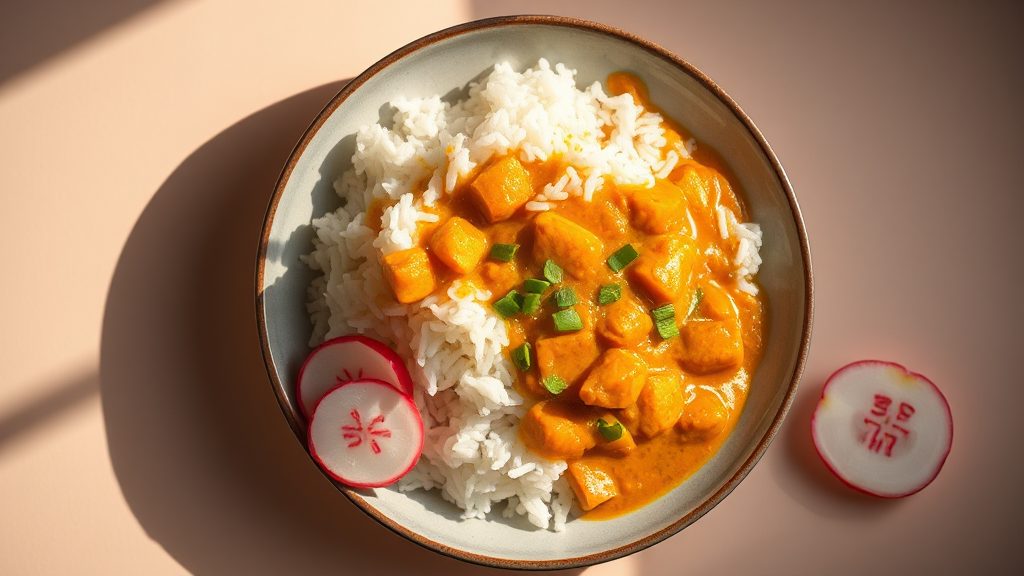
Korean curry (카레, pronounced “ka-reh”) is a mild, golden curry sauce served over steamed white rice. It’s made with a curry roux — typically a pre-made brick or powder — combined with vegetables and meat simmered in water until everything is tender and the sauce thickens into a glossy, velvety coating.
If you’re familiar with Japanese curry, Korean curry is its close cousin. Both use a brick roux (as opposed to the paste-based curries of Thailand or the ground-spice curries of India), and both have that characteristic mild, sweet, slightly fruity flavor. The main difference is that Korean curry tends to be a touch milder and simpler — it’s really a home-cooking dish, not a restaurant showpiece.
Korean curry became popular in Korea through Japanese influence during the 20th century, but Koreans have made it their own. It’s one of the most common weeknight dinners in Korean households, especially for families with kids, because it’s mild enough for children and easy enough for anyone to make. It’s the kind of dish that doesn’t get a lot of food-blog glamour, but it’s deeply beloved for a reason.
The Golden Brick: Korean Curry Roux
The secret to Korean curry’s ease is the curry roux — a pre-made block that contains curry powder, flour, oil, and seasonings all pressed into a brick that you break apart and dissolve into your cooking liquid. The most popular brand in Korea is Ottogi (오뚜기), which comes in a bright yellow box that you’ll recognize instantly at any Korean grocery store.
Ottogi curry roux comes in mild, medium, and hot varieties, though even the “hot” version is relatively mild compared to other curry traditions. The mild version is genuinely gentle — warm and aromatic without any real heat, which makes it perfect for kids or anyone who’s sensitive to spice. I usually go for the medium, which has just enough warmth to be interesting without overpowering anything.
Using the roux is almost foolishly simple. You cook your vegetables and meat, add water, bring it to a simmer, then break the roux brick into pieces and stir until it dissolves. That’s it. The roux thickens the liquid into a sauce as it melts, and within minutes you have a glossy, golden Korean curry sauce coating everything in the pot. There’s no measuring spices, no making a paste, no toasting anything. The roux does all the work.
You can also find Korean curry powder (as opposed to the brick roux), which gives you a bit more control over thickness and intensity. But the brick roux is the classic choice for Korean curry at home, and it’s what most Korean families use.
What Goes Into Korean Curry
One of the things I appreciate about Korean curry is how straightforward the ingredients are. This isn’t a dish that requires a trip to a specialty store (beyond the roux itself). The vegetables and proteins are pantry staples that you probably already have.
Potatoes are the backbone. Cut into chunks, they simmer in the curry until they’re tender and slightly starchy, which helps thicken the sauce even further. Korean curry without potatoes doesn’t feel complete.
Carrots add sweetness and color. Cut them into similar-sized chunks as the potatoes so everything cooks evenly. The natural sweetness of carrots is a big part of what makes Korean curry taste so gentle and comforting.
Onion — lots of it. Diced onion melts into the curry as it simmers, adding body and a mild sweetness to the sauce. Some recipes call for caramelizing the onions first for extra depth, which is a nice touch if you have the time.
Meat is optional but common. Diced chicken thigh, thinly sliced pork, or cubed beef all work well. The meat simmers in the curry sauce and absorbs all that golden flavor. For a quicker option, I’ve seen Korean recipes that use ground meat, which cooks in minutes. You can also make Korean curry entirely vegetarian — the vegetables and roux carry enough flavor on their own.
That’s genuinely it for a basic Korean curry. Potatoes, carrots, onion, meat, water, and a curry roux brick. Five ingredients plus the roux, and you have dinner for the whole family. The simplicity is the point.
How Koreans Eat Their Curry
Korean curry is always — always — served over steamed white rice. The thick, golden sauce pools around the rice and you eat them together in every bite. Some people pour the curry right over the rice; others keep the rice on one side of the plate and the curry on the other, mixing as they go. Either way, the rice-and-curry combination is the whole point.
A common accompaniment is danmuji — yellow pickled radish. The sweet, crunchy, tangy radish cuts through the richness of the curry and refreshes your palate between bites. If you’ve ever gotten those little cubes of yellow pickled radish with Korean fried chicken delivery, that’s danmuji. It’s the same principle here — something bright and acidic to balance something rich and warm.
Some people also eat Korean curry with kimchi on the side, which adds fermented funk and spice to the otherwise mild dish. And I’ve seen Korean curry served with a fried egg on top (Koreans love a fried egg on things, and honestly, so do I), with tonkatsu (breaded fried pork cutlet) for a Korean twist on Japanese katsu curry, or even with cheese melted on top for a fusion take.
Korean curry also makes great leftovers. The sauce thickens even more overnight as the potatoes break down, so the next day’s version is often even better than the first. I’ve seen Korean recipes suggest using leftover curry as a filling for bread, as a sauce for udon noodles, or mixed into fried rice. The versatility is part of what makes it such a practical weeknight staple.
How Korean Curry Compares to Other Curries
If you’re a curry lover (and I am — Thai panang curry is one of my favorites), it helps to understand where Korean curry sits on the spectrum.
Compared to Indian curry: Indian curries are built on complex spice blends — cumin, coriander, turmeric, fenugreek, mustard seeds — often toasted and ground fresh. The flavors are layered and bold. Korean curry is much simpler and milder. The curry roux contains curry powder (which is itself a blend), but you’re not building spice layers from scratch. Korean curry is curry with the volume turned down.
Compared to Thai curry: Thai curries use fresh ingredients (lemongrass, galangal, kaffir lime leaves, chilies) pounded into a paste and cooked with coconut milk. They’re aromatic, often spicy, and have that characteristic coconut richness. Korean curry has none of those elements — no coconut milk, no fresh herb paste, no lemongrass. It’s a completely different flavor family.
Compared to Japanese curry: This is the closest comparison. Both Korean and Japanese curry use a brick roux, both feature potatoes/carrots/onions/meat, and both are served over rice. Japanese curry tends to be slightly richer and sometimes a bit more complex (some Japanese roux brands include chocolate, apple, or honey). Korean curry is generally simpler and slightly milder, but the differences are subtle. If you enjoy one, you’ll almost certainly enjoy the other.
Korean curry isn’t trying to compete with these other traditions. It’s its own thing — unpretentious, gentle, and designed for easy weeknight comfort. And there’s real value in that.
Why Korean Curry Deserves More Attention
Korean curry doesn’t get talked about nearly as much as kimchi or Korean BBQ or bibimbap. It’s not flashy. It doesn’t photograph as dramatically as a bubbling pot of jjigae. But in Korean homes, it’s one of the most frequently cooked meals — especially for families with kids — and there’s a reason for that. It’s easy, it’s cheap, it feeds a crowd, and it tastes like someone cared enough to make you dinner even when life is busy.
As someone working through a Korean cookbook and exploring Korean cooking as a complete beginner, Korean curry was a revelation in simplicity. After making dishes that required sourcing gochugaru, doenjang, dried anchovies, and specific cuts of meat, Korean curry felt like a breather — all I needed was an Ottogi curry roux brick and some vegetables from the regular grocery store. Twenty minutes of cooking and I had a pot of golden, fragrant curry that my whole house could smell.
🐟 Pantry staple: dried anchovies keep in the freezer and make broth taste like home. Grab the ones I keep on hand →
As an Amazon Associate I earn from qualifying purchases.
🫙 No doenjang yet? It keeps for months in the fridge and there’s no real substitute. This is the doenjang I reach for →
As an Amazon Associate I earn from qualifying purchases.
🌶️ Pantry note: real Korean gochugaru makes a noticeable difference here. This is the bag I reach for →
As an Amazon Associate I earn from qualifying purchases.
If you’re looking for the coziest, lowest-effort Korean dinner you can make, start here. Pick up a box of Ottogi curry roux (medium is a safe bet), dice some potatoes, carrots, and onion, add whatever protein you have on hand, and let it all simmer together. Serve it over rice with some pickled radish on the side. It’s not going to win any culinary awards for complexity, but that’s not what Korean curry is about. It’s about feeding people something warm and good when you need it most — and on that front, it delivers every single time.