As an Amazon Associate I earn from qualifying purchases. This post contains affiliate links, which means I may earn a small commission — at no extra cost to you — if you buy through them. I only recommend things I believe are genuinely worth your time.
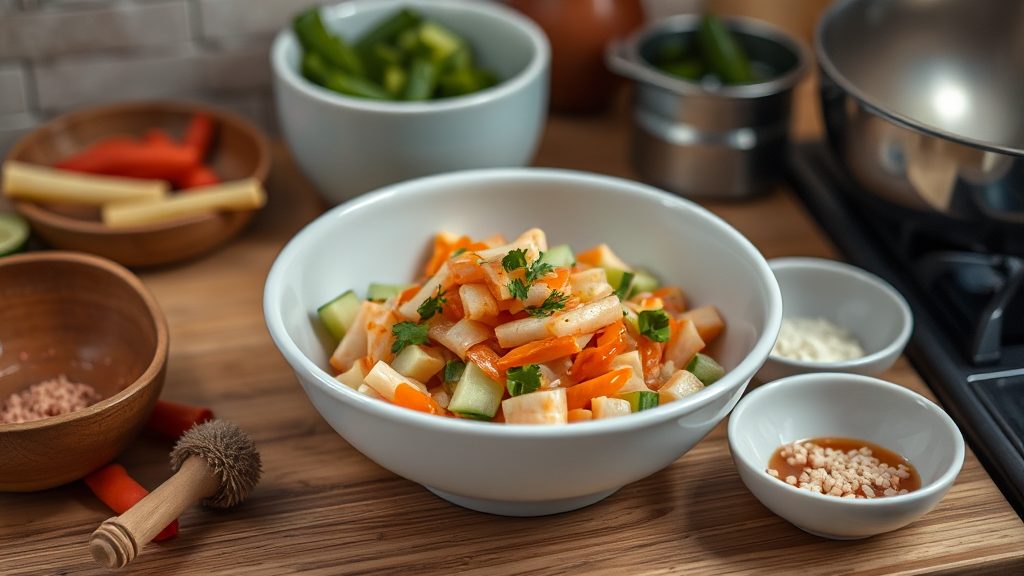
If you’ve ever enjoyed a Korean meal, you’ve likely encountered the refreshing crunch of a Korean cucumber side dish served alongside your main course. This cold, tangy banchan (side dish) known as oi kimchi offers the perfect balance of crisp texture, bright flavors, and cooling spice that makes it an ideal companion to heavier dishes like grilled meats or steaming bowls of rice. Unlike its fermented cousin traditional napa cabbage kimchi, this quick Korean cucumber kimchi can be ready to eat in just a few hours, making it perfect for when you need a fresh, flavorful side dish without the wait.
What makes this cold cucumber banchan so appealing is its simplicity and versatility. You don’t need specialized ingredients or fermentation equipment—just fresh cucumbers, a handful of aromatics, and a spicy-sweet seasoning mixture that comes together in minutes. Whether you’re new to Korean cooking or a seasoned home chef looking to expand your banchan repertoire, this oi kimchi recipe will become a go-to in your kitchen throughout 2026 and beyond.
Understanding Oi Kimchi and Korean Cucumber Banchan
Oi kimchi (오이김치) literally translates to “cucumber kimchi” in Korean, and it represents one of the many variations of kimchi beyond the familiar fermented cabbage version. This korean cucumber side dish falls into the category of “quick kimchi” or geotjeori, which refers to fresh kimchi that’s meant to be consumed soon after preparation rather than aged for weeks or months. The cucumbers retain their satisfying crunch while absorbing the bold flavors of garlic, ginger, Korean chili flakes (gochugaru), and fish sauce or salted shrimp.
🐟 Flavor tip: fish sauce is the secret umami in so many of these dishes. This is the one I keep by the stove →
As an Amazon Associate I earn from qualifying purchases.
🌶️ Can’t find gochugaru locally? You’re not alone — it’s a specialty item most stores don’t carry. Here’s the coarse Korean red pepper powder I order →
As an Amazon Associate I earn from qualifying purchases.
In Korean dining culture, banchan serves multiple purposes beyond simply filling the table. These small side dishes provide textural contrast, palate cleansing between bites, and nutritional variety to balance the meal. Cold cucumber banchan specifically excels during warmer months when you want something light and refreshing, though it’s equally welcome year-round. The cooling nature of cucumber combined with the heat from gochugaru creates a dynamic flavor profile that stimulates your appetite while never overwhelming your palate.
The beauty of this dish lies in its adaptability. While traditional recipes exist, Korean home cooks regularly adjust ingredients based on personal preference, seasonal availability, and what complements their main dishes. Some versions lean sweeter with added sugar or Korean pear juice, while others emphasize the savory umami notes from fish sauce or fermented shrimp. This flexibility means you can tailor your oi kimchi to match your taste preferences while still honoring the essential character of this beloved side dish. If you’re interested in exploring more about Korean culinary traditions, you’ll find additional insights on Korean food and recipes.
Choosing and Preparing Your Cucumbers
The foundation of any excellent korean cucumber kimchi starts with selecting the right cucumbers. Korean cucumbers (also called Korean pickling cucumbers or “oi”) are the traditional choice—these are typically shorter, thinner, and have fewer seeds than standard American slicing cucumbers. They measure about 6-8 inches long with thin, tender skins covered in small bumps. If you can find them at a Korean grocery store or Asian market, they’re worth seeking out for their superior crunch and minimal water content.
However, you don’t need to abandon this recipe if Korean cucumbers aren’t available. Persian cucumbers make an excellent substitute with their similar size, thin skin, and crisp texture. English cucumbers also work in a pinch, though you’ll want to cut them into smaller pieces and possibly remove some seeds if they’re particularly large and watery. Avoid regular garden cucumbers with thick, waxy skins, as these contain too much water and won’t provide the right texture. The key characteristic you’re seeking is firm flesh with minimal seeds and thin, edible skin that doesn’t require peeling.
Preparation technique matters significantly for achieving the ideal texture. Most oi kimchi recipes call for cutting cucumbers into bite-sized pieces—either diagonal slices about half an inch thick, or quartered lengthwise and then cut into 2-inch segments. Some cooks prefer to score the cucumbers lengthwise before cutting, creating decorative ridges that help the seasoning penetrate deeper. After cutting, salt your cucumbers and let them sit for 20-30 minutes. This crucial step draws out excess moisture, concentrates the cucumber flavor, and creates a firmer texture that won’t turn soggy when mixed with the seasoning. Rinse the cucumbers thoroughly after salting and gently squeeze out excess water before proceeding with your recipe.
Creating the Perfect Seasoning Mixture for Your Korean Cucumber Side Dish
The seasoning mixture transforms simple cucumbers into a quick korean side dish bursting with complex flavors. At its core, the sauce combines gochugaru (Korean red pepper flakes), minced garlic, freshly grated ginger, fish sauce or salted shrimp (saeujeot), rice vinegar, and a touch of sugar. The proportions you use will determine whether your oi kimchi leans more spicy, tangy, savory, or sweet.
🍚 Staple: a good rice vinegar brightens banchan and quick pickles without overpowering. Grab the one I reach for →
As an Amazon Associate I earn from qualifying purchases.
Gochugaru deserves special attention as the primary flavoring agent. Unlike cayenne pepper or regular crushed red pepper, Korean chili flakes offer mild to moderate heat with a slightly sweet, smoky undertone and vibrant red color. The coarse, fluffy texture adheres beautifully to the cucumber surfaces. For approximately two pounds of cucumbers, you’ll typically use 2-3 tablespoons of gochugaru, adjusting based on your heat tolerance and the spiciness of your particular gochugaru batch. Remember that this cold cucumber banchan should have some kick, but shouldn’t be painfully spicy—the goal is balanced heat that enhances rather than dominates.
The aromatics—garlic and ginger—provide essential depth and pungency. Use fresh ingredients rather than dried or powdered versions for the brightest flavor. Plan on roughly 5-6 cloves of garlic and a thumb-sized piece of ginger for two pounds of cucumbers, though you can adjust based on preference. Some recipes include thinly sliced green onions, julienned carrots, or Korean chives (buchu) for additional texture and visual appeal. The umami element comes from fish sauce or fermented salted shrimp; vegetarians can substitute soy sauce mixed with a bit of miso paste, though the flavor profile will shift slightly. A tablespoon of rice vinegar adds brightness, while a teaspoon or two of sugar balances the heat and acidity without making the dish overtly sweet.
Mix all seasoning ingredients together in a bowl before adding your prepared cucumbers. This ensures even distribution and allows you to taste and adjust the flavor before committing. The mixture should be slightly over-seasoned at this stage since the cucumbers will dilute the intensity. When you combine the cucumbers with the seasoning, wear gloves and massage everything together gently but thoroughly, ensuring every piece gets coated. This hands-on approach—common throughout Korean cooking—gives you better control and connection to your food than simply stirring with a spoon.
How Long Does Oi Kimchi Last and How Should You Store It?
Properly stored oi kimchi will keep in your refrigerator for about one week, maintaining its crisp texture and fresh flavors. Unlike fermented kimchi varieties that develop complexity over months, this quick korean cucumber kimchi is best enjoyed within the first few days when the cucumbers remain at peak crunchiness. After about three to four days, you’ll notice the cucumbers beginning to soften slightly as they continue releasing moisture, though they’ll still taste delicious.
For optimal storage, transfer your finished oi kimchi to an airtight glass or plastic container, pressing down gently to minimize air pockets. Make sure the cucumbers are submerged in their flavorful liquid—this brine protects them from oxidation and helps maintain freshness. Always use clean utensils when serving to avoid introducing bacteria that could shorten the shelf life. Store the container in the coldest part of your refrigerator, typically the back of a lower shelf where temperature remains most consistent.
You’ll know your korean cucumber kimchi has passed its prime if the cucumbers become very soft and limp, develop an off smell beyond the characteristic pungent kimchi aroma, or show visible signs of mold. The liquid may become cloudier over time, which is normal as flavors meld and vegetables continue releasing juices. Some people actually prefer their cold cucumber banchan after it’s had a day or two to marinate, as the flavors become more integrated and mellow slightly. Consider making smaller batches that you’ll consume within three to four days rather than large quantities that might go to waste.
Serving Suggestions and Pairing Your Korean Cucumber Side Dish
This refreshing korean cucumber side dish shines as part of a traditional Korean meal spread, but its versatility extends far beyond conventional banchan service. The classic presentation involves serving small portions in individual banchan dishes alongside other sides, rice, and your main protein. The cold, crunchy texture and bright acidity make it particularly complementary to rich, fatty dishes like Korean BBQ (bulgogi or galbi), pork belly (samgyeopsal), or fried chicken. The cucumber’s cooling effect balances spicy stews like kimchi jjigae or sundubu jjigae beautifully.
Beyond traditional Korean meals, oi kimchi works wonderfully as a light appetizer for summer gatherings or potlucks. Serve it in a decorative bowl with toothpicks for easy grabbing, and watch it disappear quickly. The bright red color and fresh appearance make it visually appealing on any table. You can also incorporate this cold cucumber banchan into fusion dishes—try it as a topping for grain bowls, tucked into tacos or wraps, or served alongside grilled fish or chicken for a Korean-inspired twist on weeknight dinners.
When planning your meal, consider that this cucumber kimchi tastes best ice cold, so remove it from the refrigerator just before serving rather than letting it sit at room temperature. The chilled temperature enhances its refreshing quality and provides maximum textural contrast against hot dishes. If you’re serving it as part of a larger banchan spread, aim for variety in colors, textures, and flavors—the cucumber’s bright red coating, crisp texture, and spicy-tangy profile should complement rather than compete with your other sides. For more inspiration on building balanced Korean meals, explore additional recipes and food culture posts.
Customizing Your Oi Kimchi Recipe for Different Preferences
One of the most appealing aspects of making your own korean cucumber kimchi is the ability to adjust it according to dietary needs, spice tolerance, and personal taste preferences. For those who find traditional recipes too spicy, reduce the gochugaru by half and gradually increase it in future batches as your palate adjusts. You can also use a milder variety of gochugaru, which delivers the characteristic color and flavor with less heat. Adding a bit more sugar or including naturally sweet elements like Korean pear juice or apple can help balance and mellow the spiciness without completely eliminating it.
Vegetarian and vegan adaptations require substituting the fish sauce or salted shrimp that provides traditional oi kimchi’s characteristic umami depth. Soy sauce offers the saltiness but lacks complexity, so enhance it with a tablespoon of white miso paste, a teaspoon of mushroom powder, or a splash of kombu broth. Some cooks use coconut aminos for a slightly sweeter, less salty alternative. While the flavor profile shifts somewhat from traditional versions, these substitutions still produce a delicious cold cucumber banchan that captures the essential spirit of the dish.
🌊 Pantry staple: dried dashima keeps forever and is essential for real Korean soup stock. Grab the one I keep on hand →
As an Amazon Associate I earn from qualifying purchases.
For texture and flavor variations, experiment with additions like julienned carrots for sweetness and color, thinly sliced onions for bite and pungency, Asian pear matchsticks for fruity sweetness, or Korean radish for additional crunch. Fresh perilla leaves (kkaennip) or sesame leaves add an herbaceous note that some people love. Toasted sesame seeds sprinkled on top just before serving provide nutty flavor and visual appeal. You might also adjust the cutting style—some prefer their cucumbers in thick spears that maintain maximum crunch, while others like thinner slices that absorb more seasoning and become more pickle-like in character.
🥢 Pantry staple: keep toasted sesame seeds within reach for namul, rice, and marinades. Grab the ones I use →
As an Amazon Associate I earn from qualifying purchases.
The beauty of this quick korean side dish is that there’s no single “correct” version. Korean home cooks across the country make oi kimchi slightly differently based on regional preferences, family traditions, and individual tastes. Your version should reflect what you enjoy eating. Keep notes on your adjustments so you can replicate successful batches and continue refining your personal recipe over time. As you become more comfortable with the basic technique, you’ll develop an intuitive sense for balancing the flavors without measuring precisely—a hallmark of experienced Korean home cooking.
Making Oi Kimchi Part of Your Regular Cooking Rotation
Incorporating this cold cucumber banchan into your regular meal planning offers multiple benefits beyond simply enjoying delicious food. The quick preparation time—typically under 30 minutes of active work—makes it realistic for busy schedules. You can easily prepare a batch on Sunday evening and have fresh, crunchy banchan ready to accompany weeknight dinners throughout the first half of the week. This approach aligns perfectly with meal prep strategies while keeping your refrigerator stocked with something healthy, flavorful, and homemade.
From a nutritional standpoint, cucumbers provide hydration, vitamins K and C, and various antioxidants while remaining very low in calories. The fermented elements (even in quick kimchi versions) introduce beneficial probiotics that support gut health. The capsaicin in gochugaru may boost metabolism and provide anti-inflammatory benefits. Garlic and ginger contribute their own impressive health properties. When you serve this alongside rice and protein, you’re creating a balanced meal with vegetables, complex carbohydrates, and various nutrients—all while satisfying your taste buds with bold, complex flavors.
Consider keeping the essential ingredients on hand so you can whip up oi kimchi whenever fresh cucumbers are available. Gochugaru, fish sauce, rice vinegar, and garlic are pantry staples that keep well and serve multiple Korean recipes. Fresh ginger root lasts several weeks in the refrigerator or can be frozen and grated directly into your seasoning mixture. With these basics ready, you’re never more than a grocery store cucumber run away from fresh, restaurant-quality korean cucumber side dish at home. This preparedness transforms occasional cooking adventures into sustainable habits that make Korean food a regular, accessible part of your culinary life throughout 2026.
Making your own oi kimchi connects you to Korean food traditions while giving you complete control over ingredients, spice levels, and flavors. Each batch you prepare builds your confidence and intuition for Korean cooking, making it easier to tackle more complex recipes over time. The simple act of creating this cold cucumber banchan with your own hands brings satisfaction that store-bought versions simply cannot match—you’ll taste the difference in every crisp, flavorful bite.