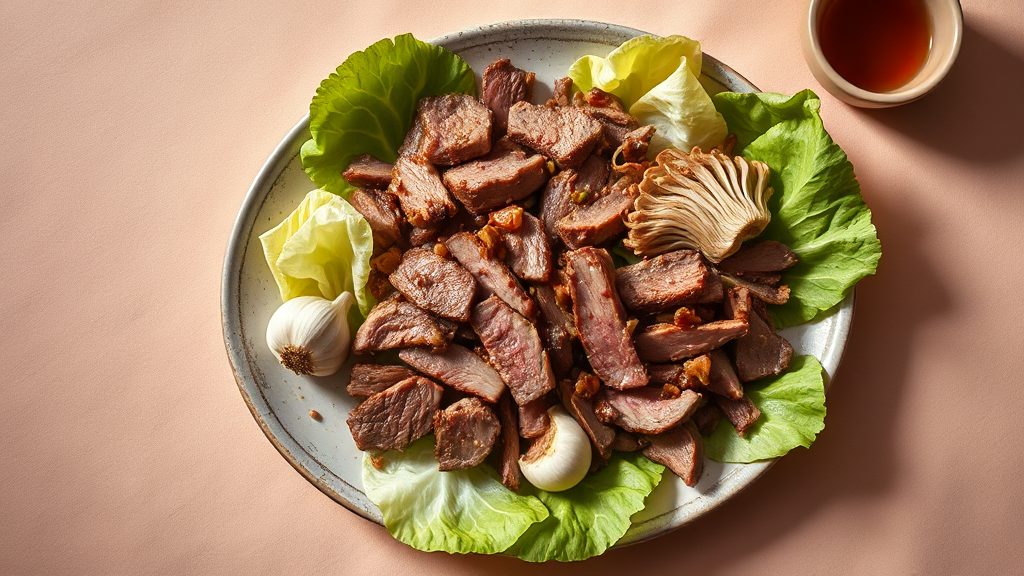
If you’re craving the bold, savory flavors of Korean cuisine at home, Korean beef recipes are the perfect place to start your culinary adventure. These dishes combine tender beef with deeply flavorful marinades and braising liquids that transform simple ingredients into restaurant-quality meals. Whether you’re preparing a quick weeknight dinner or planning an impressive weekend feast, mastering a few essential Korean beef dishes will expand your cooking repertoire and introduce you to the beautiful balance of sweet, salty, and umami flavors that define Korean cooking.
Classic Bulgogi: The Gateway to Korean Beef Recipes
Bulgogi, which literally translates to “fire meat,” stands as the most internationally recognized Korean beef recipe and for good reason. This dish features thinly sliced beef marinated in a mixture of soy sauce, sugar, sesame oil, garlic, and pear, then grilled or pan-fried to caramelized perfection. The key to an authentic bulgogi recipe lies in three critical elements: the cut of meat, the marinade balance, and the slicing technique.
🥢 One upgrade that matters: cheap sesame oil tastes flat — a real toasted one is nutty and fragrant. This is the toasted sesame oil I use →
As an Amazon Associate I earn from qualifying purchases.
For the best results, choose ribeye or sirloin and slice it paper-thin against the grain. Freezing the meat for about 30 minutes before slicing makes this task significantly easier. The traditional marinade includes Asian pear, which contains natural enzymes that tenderize the meat while adding subtle sweetness. If you can’t find Asian pear, substitute with kiwi or pineapple, but use sparingly as these fruits have stronger enzymatic activity.
Here’s what you’ll need for a basic bulgogi serving four people: 1.5 pounds of thinly sliced beef, 1/4 cup soy sauce, 2 tablespoons sugar, 2 tablespoons sesame oil, 1 tablespoon rice wine, 1/2 Asian pear (grated), 4 cloves minced garlic, 1 teaspoon grated ginger, 2 chopped green onions, and 1 tablespoon toasted sesame seeds. Mix all marinade ingredients, coat the beef thoroughly, and refrigerate for at least 2 hours or overnight for maximum flavor penetration. Cook the marinated beef in a hot skillet or on a grill for just 2-3 minutes per side until caramelized but still tender.
🥢 Pantry staple: keep toasted sesame seeds within reach for namul, rice, and marinades. Grab the ones I use →
As an Amazon Associate I earn from qualifying purchases.
Serve your bulgogi wrapped in crisp lettuce leaves with steamed rice, kimchi, and ssamjang (Korean dipping sauce) for an interactive dining experience that brings the Korean barbecue restaurant atmosphere to your table. You can explore more about Korean food traditions and recipes to complement your bulgogi meal with authentic side dishes.
Korean Beef Jjim: The Ultimate Comfort Braised Dish
While bulgogi captures attention with its sizzle and char, Korean beef jjim (galbijjim) wins hearts through slow-braised tenderness and deeply complex flavors. This celebratory dish traditionally features beef short ribs braised until they’re fall-off-the-bone tender in a sauce enriched with soy sauce, garlic, ginger, and dried jujubes. Though it requires more time than bulgogi, the hands-off cooking method makes it surprisingly approachable for home cooks.
The foundation of excellent jjim starts with selecting the right cut. Look for flanken-style short ribs (cut across the bone) or English-style short ribs (cut parallel to the bone). Flanken-style ribs cook faster and present beautifully, while English-style ribs offer more meat per piece. Before braising, blanch the ribs in boiling water for 5 minutes to remove impurities and excess fat, which results in a cleaner-tasting final dish.
For a pot that serves 4-6 people, you’ll need: 3 pounds beef short ribs, 1/2 cup soy sauce, 1/4 cup brown sugar, 3 tablespoons rice wine, 2 tablespoons sesame oil, 8 cloves minced garlic, 1 tablespoon grated ginger, 2 cups water, 1 large onion (quartered), 3 carrots (cut into chunks), 1 Korean radish or daikon (cut into chunks), 6-8 dried jujubes (optional), and 2 tablespoons corn syrup or honey for glaze. Combine the blanched ribs with all ingredients in a heavy-bottomed pot or Dutch oven, bring to a boil, then reduce heat and simmer covered for 2-3 hours until the meat is tender.
🍲 Kitchen essential: check out this Dutch oven →
As an Amazon Associate I earn from qualifying purchases.
During the final 30 minutes of cooking, remove the lid to allow the sauce to reduce and thicken into a glossy glaze. The vegetables should be tender but not mushy, and the meat should yield easily to a fork while still clinging to the bone. This impressive dish works wonderfully for special occasions and family gatherings, proving that Korean cuisine offers much more than quick stir-fries.
What Makes Korean Beef Banchan Different from Main Dishes?
Beef banchan are small side dishes that feature beef as a key ingredient but are served in modest portions alongside rice and other accompaniments. Unlike main dishes like bulgogi or jjim that anchor a meal, banchan provide variety and complementary flavors in smaller quantities. These dishes are typically more intensely seasoned and designed to be eaten in small bites between spoonfuls of rice.
One popular beef banchan is jangjorim, a soy-braised beef dish that exemplifies the banchan philosophy. To make jangjorim, you’ll simmer 1 pound of beef brisket or eye of round in water until tender (about 1 hour), then shred it and braise the pieces in a mixture of 1/3 cup soy sauce, 2 tablespoons sugar, 2 tablespoons rice wine, 4 cloves garlic, and enough cooking liquid to barely cover the meat. Add hard-boiled quail eggs and sliced jalapeños during the final 15 minutes of cooking. The result is a savory, slightly sweet preparation that keeps refrigerated for up to two weeks, making it an excellent meal-prep option.
Another beloved beef banchan is yukpo, Korean beef jerky, which involves marinating thin beef slices in a concentrated soy-based mixture before drying. While traditional yukpo requires specialized equipment, a simplified version can be made in a low-temperature oven, creating a chewy, intensely flavored snack that bridges the gap between banchan and street food.
Braised Beef Recipes for Everyday Korean Cooking
Beyond the celebratory jjim, Korean cuisine features several everyday braised beef preparations that deliver maximum flavor with minimal effort. These dishes rely on simple braising techniques that transform economical cuts into tender, flavorful meals perfect for busy weeknights when you want something more substantial than a quick stir-fry.
Soy-braised beef brisket (soegogi jangjorim, a heartier version of the banchan mentioned earlier) serves as an excellent example. Unlike the shredded banchan version, this preparation keeps the brisket in larger pieces suitable as a main protein. Start with a 2-pound beef brisket, simmer it in water with a few slices of ginger and a quartered onion for 90 minutes until tender. Remove the beef, slice it into 1/2-inch thick pieces, and return it to a pot with 1 cup of the cooking liquid, 1/2 cup soy sauce, 1/4 cup brown sugar, 3 tablespoons rice wine, and 6 cloves of smashed garlic. Simmer uncovered for 30 minutes until the sauce reduces to a glaze.
For those interested in expanding their Korean culinary knowledge beyond these specific recipes, exploring Korean language and cultural resources can deepen your appreciation for the food’s context and help you navigate Korean grocery stores and authentic recipe sources with confidence.
Another weeknight-friendly option is spicy braised beef (sogogi bokkeum), which bridges braising and stir-frying techniques. Cut 1 pound of beef chuck into bite-sized cubes and marinate them for 30 minutes in a mixture of 3 tablespoons gochujang (Korean red pepper paste), 2 tablespoons soy sauce, 1 tablespoon sugar, 1 tablespoon sesame oil, and 3 cloves minced garlic. Stir-fry the marinated beef over high heat until browned, then add 1/2 cup water, cover, and simmer for 20 minutes until tender. The gochujang provides a spicy kick while the braising liquid creates a thick, coating sauce perfect for mixing with rice.
🌶️ Pantry staple: a good gochujang lasts months in the fridge and elevates everything. Grab the one I reach for →
As an Amazon Associate I earn from qualifying purchases.
Essential Ingredients and Substitutions for Korean Beef Dishes
Success with Korean beef recipes depends on having the right ingredients, though many can be adapted with readily available substitutions. Understanding which ingredients are essential and which offer flexibility helps you create authentic flavors even without access to a well-stocked Korean grocery store.
Soy sauce forms the foundation of most Korean beef marinades and braising liquids. Korean soy sauce (ganjang) comes in two varieties: regular soy sauce (jin ganjang) for general cooking and soup soy sauce (guk ganjang) for soups and lighter dishes. For beef recipes, regular Korean soy sauce or Japanese soy sauce works well. Chinese soy sauce tends to be saltier and darker, so reduce the quantity by about 20% if substituting.
🫙 Staple: keep a proper Korean soy sauce on hand for authentic seasoning. Grab the one I reach for →
As an Amazon Associate I earn from qualifying purchases.
Sesame oil adds the distinctive nutty aroma that characterizes Korean beef dishes. Always use toasted sesame oil rather than light sesame oil, and add it near the end of cooking or in marinades to preserve its delicate flavor. There’s no effective substitute that provides the same flavor profile, making this one ingredient worth seeking out.
Korean rice wine (cheongju or mirim) adds depth and helps tenderize meat. Japanese mirin works as a substitute, though it’s sweeter, so reduce added sugar slightly. In a pinch, dry sherry or sake provides similar functionality without the exact flavor match.
🍶 Need mirin? This sweet rice wine rounds out marinades and takes the edge off strong flavors. Here’s the mirin I use →
As an Amazon Associate I earn from qualifying purchases.
Fresh garlic and ginger appear in virtually every Korean beef preparation and should be used fresh rather than powdered for optimal flavor. Korean recipes typically use more garlic than Western cooks might expect—embrace the generous quantities for authentic taste.
Asian pear serves a dual purpose in bulgogi marinades: its enzymes tenderize meat while its subtle sweetness balances the salty soy sauce. Kiwi or pineapple can substitute but use only half the amount due to their stronger enzymatic activity. Applesauce mixed with a pinch of pear juice concentrate works as a gentler alternative.
Serving Suggestions and Meal Planning with Korean Beef
Korean meals follow a distinct structure that differs from Western plating conventions, and understanding this approach helps you present these beef dishes in their proper context. A traditional Korean meal centers on bap (rice) and guk (soup), with various banchan and a main protein arranged around these staples. This creates a balanced, varied eating experience where diners combine small bites of different dishes throughout the meal.
When serving bulgogi, arrange the cooked beef on a large platter surrounded by lettuce leaves, perilla leaves if available, and small dishes of ssamjang and raw garlic slices. Provide steamed white rice and at least three banchan—kimchi, seasoned spinach, and bean sprouts make an excellent combination. Diners create wraps (ssam) by placing a bit of rice, beef, and condiments in a lettuce leaf and eating it in one or two bites.
For jjim or braised beef dishes, the presentation focuses on the glossy, caramelized appearance of the finished product. Serve these dishes in the cooking vessel or transfer to a large, shallow bowl, arranging the vegetables around the meat to showcase the various components. The rich braising liquid should coat everything with a shiny glaze. Provide plain steamed rice to balance the intensely flavored meat, along with lighter banchan like cucumber salad and seasoned radish to refresh the palate.
For meal planning purposes, many of these Korean beef recipes actually improve with time. Bulgogi can be marinated up to 24 hours in advance, while braised dishes like jjim and jangjorim taste even better the next day as flavors meld. This makes them excellent candidates for weekend batch cooking. Prepare jjim on Sunday, and you’ll have luxurious leftovers that reheat beautifully for easy weeknight dinners.
These recipes also freeze exceptionally well. Portion cooled bulgogi or braised beef with sauce into freezer containers, where they’ll keep for up to three months. Thaw overnight in the refrigerator and reheat gently, adding a splash of water if needed to loosen the sauce. This approach lets you always have a satisfying Korean meal ready with minimal effort.
If you’re interested in discovering more about Korean culture beyond the kitchen, you might enjoy exploring additional articles about Korean traditions, language, and lifestyle that provide context for these beloved dishes.
Bringing Korean Beef Recipes Into Your Regular Rotation
Mastering these Korean beef recipes opens up a world of flavors that can transform your weekly meal planning from mundane to exciting. Start with bulgogi if you’re new to Korean cooking—its quick cooking time and crowd-pleasing flavors make it an accessible entry point. Once you’re comfortable with the basic marinade technique, experiment with jjim or braised preparations when you have more time and want something that fills your home with irresistible aromas.
The beauty of these dishes lies not just in their distinctive flavors but in their flexibility. You can adjust sweetness levels, spice intensity, and cooking times to suit your preferences and schedule. A weeknight bulgogi might take 30 minutes from start to finish, while a weekend jjim project becomes a relaxing, rewarding cooking experience that yields multiple meals.
Remember that Korean cooking values balance—the interplay of salty, sweet, spicy, and savory creates harmony rather than overwhelming individual flavors. Trust the traditional ratios in these recipes initially, then adjust to your taste as you become more familiar with the cuisine. With these essential Korean beef recipes in your repertoire, you’ll find yourself reaching for these preparations again and again, making Korean flavors a natural part of your home cooking rather than something reserved for restaurant visits.