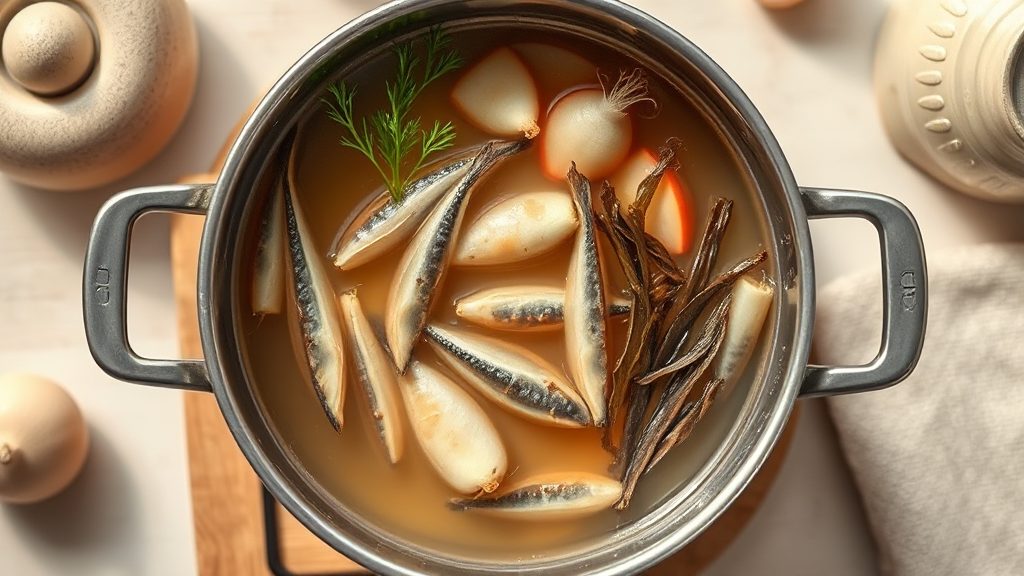
If you’ve ever wondered how Korean home cooks achieve that deep, savory flavor in their soups and stews, the secret often lies in a simple Korean anchovy stock recipe known as myeolchi dashi. This fundamental broth is the backbone of countless Korean dishes, from comforting miyeok guk (seaweed soup) to robust kimchi jjigae, and learning to make it will transform your Korean cooking. The best part? You only need three ingredients and about 20 minutes to create a stock that rivals anything you’d find in a Korean home kitchen.
🐟 Stock tip: a handful of dried anchovies gives soups their authentic backbone. This is the one I buy →
As an Amazon Associate I earn from qualifying purchases.
Unlike Western stocks that simmer for hours, myeolchi dashi is quick, efficient, and delivers an umami punch that adds complexity to everything it touches. Whether you’re just starting to explore Korean cuisine or you’re looking to refine your technique, mastering this anchovy broth will give you the confidence to tackle authentic Korean recipes with ease.
What Makes Myeolchi Dashi Essential in Korean Cooking
Myeolchi dashi serves as the flavor foundation for Korean soups, stews, and even some banchan (side dishes). The dried anchovies, called myeolchi in Korean, contain natural glutamates that create a rich, savory base without overwhelming the other ingredients in your dish. When combined with kombu (dried kelp), the stock develops layers of umami that make your taste buds sit up and take notice.
🌊 Pantry staple: dried dashima keeps forever and is essential for real Korean soup stock. Grab the one I keep on hand →
As an Amazon Associate I earn from qualifying purchases.
In Korean households, this stock isn’t treated as something special—it’s an everyday essential, much like chicken stock in Western cooking. Mothers and grandmothers keep batches in the refrigerator, ready to use throughout the week. The difference between a good Korean stew and a mediocre one often comes down to whether you used water or proper korean dashi broth as your base.
The beauty of this stock lies in its versatility. You can use it in doenjang jjigae (soybean paste stew), tteokguk (rice cake soup), kongnamul guk (soybean sprout soup), or any recipe that calls for a flavorful liquid base. Some cooks even use it to cook rice for an extra layer of flavor, or as the liquid component in savory pancakes like pajeon.
🍡 Shortcut: shelf-stable rice cakes soften right up in sauce — no Korean market trip needed. This is the one I buy →
As an Amazon Associate I earn from qualifying purchases.
🫙 Need doenjang? This fermented soybean paste is the soul of Korean stews and ssamjang. Here’s the tub I use →
As an Amazon Associate I earn from qualifying purchases.
Choosing the Right Ingredients for Your Korean Anchovy Stock Recipe
The quality of your myeolchi dashi starts with selecting the right anchovies. At Korean grocery stores, you’ll find dried anchovies in various sizes, typically labeled by number. For stock-making, you want medium to large anchovies (about 2-3 inches long), which provide the best flavor without excessive fishiness. The smaller ones are better suited for eating as banchan or adding to stir-fries.
Look for anchovies with a silver-white color and a clean ocean smell. Avoid any that appear yellowish or have an off odor, as these indicate age and oxidation. Fresh dried anchovies should have a subtle, pleasant seafood aroma, not a strong fishy smell. Many Korean brands package their anchovies with a small packet of desiccant to maintain freshness—this is a good sign of quality control.
Kombu, the second key ingredient, is a type of dried kelp that contributes minerals and a subtle sweetness to balance the anchovies’ intensity. You’ll find it sold in thick, dark green sheets with a white powdery coating (this is natural glutamate, not mold—don’t wash it off completely). A piece about 4×4 inches is sufficient for a standard batch of stock. Some Korean stores sell kombu specifically labeled for dashi or stock-making, which works perfectly for this purpose.
Water quality matters more than you might think. If your tap water has a strong chlorine taste or mineral flavor, consider using filtered water. The stock’s clean, oceanic flavor can be compromised by off-tasting water, so this small detail makes a difference in your final result.
Step-by-Step Instructions for Making Perfect Anchovy Broth
Making myeolchi dashi is remarkably straightforward, but a few techniques will elevate your stock from good to exceptional. Start by preparing your anchovies—this step is crucial for preventing any bitter or overly fishy flavors. Take about 20-25 medium dried anchovies and remove their heads and guts. The heads and black internal organs contain the compounds that can make your stock bitter, so spending five minutes on this prep work pays dividends.
To remove the guts, simply tear or cut the anchovy lengthwise and pull out the dark stringy bits inside. Some cooks find this meditative; others find it tedious. Either way, it’s worth doing if you want clean-tasting stock. If you’re in a rush, you can skip this step, but expect a slightly stronger, more assertive flavor that might overpower delicate soups.
Here’s the cooking process that delivers consistent results every time:
- Add 6 cups of cold water to a medium pot
- Add your cleaned anchovies and one 4×4-inch piece of kombu
- Bring the water to a boil over medium-high heat (this takes about 7-8 minutes)
- Once boiling, reduce heat to medium-low and simmer for 10-12 minutes
- Remove the kombu after 7 minutes of simmering (leaving it longer can make the stock slimy)
- Continue simmering the anchovies for the remaining 3-5 minutes
- Strain the stock through a fine-mesh strainer or cheesecloth
The timing here is important. Over-simmering can extract bitter compounds from the anchovies, while under-simmering leaves flavor on the table. The 10-12 minute range hits the sweet spot where you extract maximum umami without bitterness. You’ll know you’ve done it right when the stock has a clear, light golden color and smells pleasantly oceanic without any harsh notes.
Some cooks like to add additional aromatics for extra complexity. A small piece of dried shiitake mushroom, a few slices of radish, or a small piece of onion can deepen the flavor profile. These additions are optional but worth experimenting with as you become comfortable with the basic korean anchovy stock recipe.
How Long Does Korean Anchovy Stock Last?
Properly stored myeolchi dashi will keep in the refrigerator for 4-5 days in an airtight container. For longer storage, freeze the stock in portions for up to 3 months without any loss of flavor or quality. The stock doesn’t contain any preservatives, so refrigeration or freezing is essential for food safety.
For practical everyday use, many Korean home cooks make a batch twice a week, keeping it refrigerated in a large jar or pitcher. This approach means you always have stock ready when inspiration strikes for a quick soup or stew. The convenience factor cannot be overstated—having homemade anchovy broth on hand is like having a secret weapon for weeknight cooking.
If you choose to freeze your stock, consider using ice cube trays for smaller portions. Once frozen, pop the cubes into a freezer bag. This method lets you use exactly the amount you need—two or three cubes for a single serving of soup, or a full bag for a large pot of stew. Silicon ice cube trays work particularly well because the frozen stock pops out easily without running the tray under warm water.
You’ll know your stock has gone bad if it develops a sour smell, cloudy appearance, or slimy texture. Fresh anchovy broth should always smell clean and oceanic, with a clear to light golden appearance. When in doubt, trust your nose—spoiled stock will announce itself unmistakably.
Using Your Stock in Everyday Korean Dishes
Once you have your korean dashi broth ready, a world of Korean cooking opens up to you. The stock shines brightest in soups and stews where its clean, umami-rich flavor can support and enhance the other ingredients without competing for attention. For kimchi jjigae, the stock’s savory depth balances the kimchi’s tang and spice, creating a harmonious bowl that tastes like it simmered for hours.
In miyeok guk (seaweed soup), traditionally served for birthdays and to new mothers, the anchovy stock provides the essential backbone that makes the soup nourishing and satisfying rather than bland. The subtle brininess of the stock complements the seaweed’s natural ocean flavor without overwhelming it. If you’re exploring more Korean recipes, you’ll find this stock called for again and again.
For doenjang jjigae (soybean paste stew), the stock carries the fermented soybean paste’s robust flavor while adding its own layer of complexity. The combination creates a deeply satisfying taste that defines Korean comfort food. You can also use it as the base for sundubu jjigae (soft tofu stew), kongnamul guk (soybean sprout soup), or even as cooking liquid for seasoned vegetables.
Beyond soups and stews, creative cooks use anchovy stock in unexpected ways. Try it as the liquid in kimchi fried rice for extra depth, or use it to braise vegetables like braised potatoes or radish. Some cooks even add a small amount to the liquid when making savory pancakes or cooking noodles. The stock’s versatility means you’ll find new applications the more you cook with it.
One practical tip: when a recipe calls for water in Korean cooking, ask yourself whether anchovy stock might work better. In most cases, the answer is yes. The stock adds virtually no calories or fat, but it multiplies the flavor exponentially. This simple substitution is one of the easiest ways to make your home-cooked Korean food taste more authentic.
Troubleshooting Common Issues with Myeolchi Dashi
Even with a straightforward recipe, you might encounter a few challenges as you perfect your technique. The most common issue is bitterness, which almost always results from leaving the anchovy heads and guts intact, or from simmering too long. If your stock tastes bitter, reduce the simmering time by 2-3 minutes next batch, and make sure you’re removing those internal organs.
If your stock tastes too fishy rather than pleasantly oceanic, you’re likely using anchovies that are too small or too old. Switch to fresher, larger anchovies and ensure you’re removing the heads. Some cooks briefly toast the cleaned anchovies in a dry pan for 2-3 minutes before making stock, which can mellow any excessive fishiness while adding a subtle roasted note.
A weak, watery stock usually means you didn’t use enough anchovies or you diluted it with too much water. The ratio should be roughly 20-25 medium anchovies to 6 cups of water. If you prefer a stronger stock, increase the anchovy count to 30-35, but be careful not to go overboard or you’ll tip into fishy territory.
Cloudiness in your finished stock typically comes from boiling too vigorously. A gentle simmer produces clearer stock than a rolling boil. The difference is mostly aesthetic—cloudy stock tastes just as good—but for soups where appearance matters, maintain that gentle simmer and strain carefully through fine mesh or cheesecloth.
Some cooks worry about the white foam that appears when the stock first comes to a boil. You can skim this off if you want crystal-clear stock, but it’s not necessary. The foam is primarily protein and won’t harm your stock’s flavor. For everyday cooking, most Korean home cooks don’t bother with this step.
Making Korean Anchovy Stock Work for Your Schedule
The beauty of this anchovy broth is how easily it fits into busy schedules. Unlike bone broths that require hours of simmering and constant attention, you can make myeolchi dashi while preparing the rest of your meal. Start the stock when you begin cooking, and by the time you’ve chopped vegetables and gathered ingredients, your stock is ready to use.
For maximum efficiency, prepare several batches of cleaned anchovies at once. Store them in the freezer in pre-portioned bags with your kombu pieces. When you need stock, grab a bag, add water, and simmer—no prep work required. This batch preparation strategy means you can make fresh stock anytime with minimal effort.
If you’re cooking Korean food regularly, consider making a double or triple batch on the weekend. Portion it into containers or freezer bags, and you’ll have stock ready for the entire week. This approach aligns with the Korean cooking philosophy of working smarter, not harder, using simple techniques and quality ingredients to create complex flavors.
You might also explore the dried stock packets sold at Korean grocery stores, which contain pre-measured anchovies, kombu, and sometimes dried shiitake. These packets make good emergency backups, though homemade stock gives you more control over flavor intensity and ingredients. Think of the packets like bouillon cubes—convenient, but not quite the same as making it from scratch.
Beyond the Basics: Customizing Your Stock
Once you’ve mastered the fundamental korean anchovy stock recipe, you can experiment with variations that suit specific dishes or personal preferences. Adding a dried shiitake mushroom or two creates a deeper, earthier stock that works beautifully in vegetable-forward soups and stews. The mushrooms contribute their own umami compounds, creating a stock with remarkable depth.
For a lighter, more delicate stock suitable for clear soups, reduce the simmering time to 7-8 minutes and use slightly fewer anchovies. This produces a stock with subtle flavor that won’t overpower mild ingredients like soft tofu or delicate vegetables. Conversely, for robust stews like gamjatang (pork bone stew), you can simmer for up to 15 minutes for a more assertive base.
Some regional variations include a small piece of radish or onion, which adds sweetness and helps clarify the stock. These additions create a rounder, more complex flavor profile that works particularly well in soups where the stock plays a starring role rather than a supporting one. Experiment with these variations as you become comfortable with the basic technique.
For vegetarian adaptations, you can make a kombu-only dashi that captures some of the ocean umami without the anchovies. While it won’t replicate the exact flavor of myeolchi dashi, it provides a respectable base for Korean soups and stews. Increase the kombu quantity and add dried shiitake mushrooms to boost the umami factor.
Learning to make proper Korean anchovy stock opens the door to authentic home cooking that captures the soul of Korean cuisine. This simple broth, made from just dried anchovies, kombu, and water, proves that the best flavors don’t require complicated techniques or expensive ingredients—just quality components treated with respect and a little bit of time. Keep a batch in your refrigerator or freezer, and you’ll find yourself reaching for it constantly, watching as your Korean dishes transform from good to genuinely memorable. The 20 minutes you invest in making this stock will repay you many times over in the depth and authenticity it brings to every dish you create.