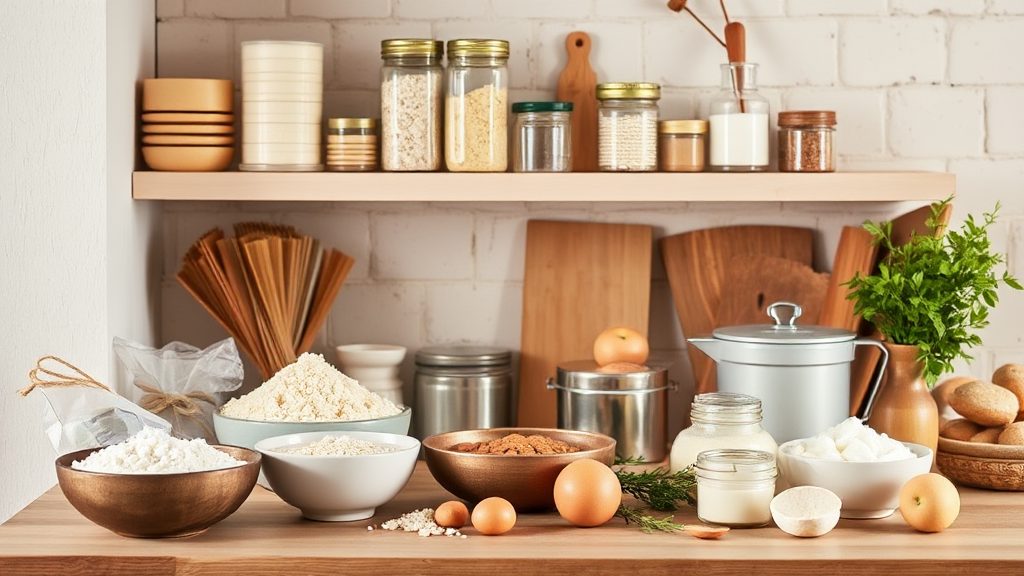
Whether you’re baking your first batch of chocolate chip cookies or planning an ambitious weekend project, knowing the best pantry staples for baking makes all the difference between a successful creation and a last-minute grocery run. A well-stocked baking pantry isn’t just about convenience—it’s about being ready to create homemade goodness for your family, bring comfort to a neighbor, or celebrate life’s sweetest moments without stress. Let’s walk through the essential ingredients every home baker should keep on hand, along with practical tips for storage and shelf life so nothing goes to waste.
Foundation Flours and Grains
All-purpose flour earns its name—it truly works for nearly everything from cakes to cookies to quick breads. Keep at least one five-pound bag in your pantry, stored in an airtight container to prevent moisture and pests. All-purpose flour typically stays fresh for six to eight months at room temperature, or up to a year in the freezer if you buy in bulk.
Bread flour contains more protein than all-purpose, which develops stronger gluten networks perfect for yeast breads, pizza dough, and bagels. If you bake bread regularly, this becomes non-negotiable. The higher protein content (usually around 12-14%) gives your loaves that beautiful chewy texture and helps them rise higher.
Whole wheat flour adds nutrition and a nutty, hearty flavor to baked goods. Because it contains the wheat germ with its natural oils, whole wheat flour turns rancid faster than white flour—usually within three months at room temperature. Store it in the refrigerator or freezer to extend its life to six months or more. When you’re experimenting with healthier versions of favorite recipes, whole wheat flour lets you add fiber and nutrients without completely abandoning traditional textures.
Cake flour creates the tender, delicate crumb you want in layer cakes and cupcakes. Its lower protein content (around 8%) produces less gluten, resulting in a softer texture. While not absolutely essential if you’re a casual baker, cake flour makes a noticeable difference in special occasion cakes.
Leavening Agents That Make Things Rise
Baking powder and baking soda might look similar, but they work differently and you need both among your baking pantry essentials. Baking soda is pure sodium bicarbonate and requires an acidic ingredient (like buttermilk, yogurt, or vinegar) to activate. Baking powder contains both an acid and a base, so it works without additional acidic ingredients.
Check expiration dates on these leaveners—they lose potency over time. Baking powder typically stays effective for six to twelve months after opening. You can test baking powder by adding a spoonful to hot water; it should bubble vigorously if still good. Test baking soda by mixing it with vinegar—fresh baking soda will fizz immediately.
Active dry yeast and instant yeast belong in your pantry if you bake any yeasted breads or rolls. Instant yeast (also called rapid-rise or bread machine yeast) can be mixed directly into flour, while active dry yeast should be dissolved in warm water first. Store opened yeast in the refrigerator or freezer to maintain its leavening power for several months beyond the package date.
Sweeteners Beyond White Sugar
Granulated white sugar is the workhorse sweetener for most baking projects. It creams beautifully with butter, dissolves easily, and provides structure to baked goods beyond just sweetness. A five-pound bag stores indefinitely in an airtight container—sugar doesn’t spoil, though it can harden if exposed to moisture.
Brown sugar, whether light or dark, adds moisture and a subtle molasses flavor that makes cookies chewier and gives depth to spice cakes and quick breads. Store brown sugar in an airtight container or resealable bag to prevent it from drying into rock-hard chunks. If it does harden, place a slice of bread or a damp paper towel in the container overnight to restore moisture.
Powdered sugar (also called confectioners’ sugar) is essential for frostings, glazes, and dusting finished desserts. The cornstarch added to prevent clumping also makes it perfect for delicate frostings that need to stay smooth. Keep it sealed tight or it will absorb moisture and form lumps.
Honey offers a natural sweetness with added flavor complexity. It’s wonderful in quick breads, some cookies, and as a partial sugar substitute in many recipes. Pure honey never spoils, though it may crystallize over time—simply warm the jar in hot water to return it to liquid form.
Essential Fats and Oils
Unsalted butter gives you control over the salt content in your recipes and provides the rich flavor that makes baked goods irresistible. Many bakers keep butter in both the refrigerator (for immediate use) and freezer (for backup stock). Frozen butter maintains quality for six to nine months when properly wrapped.
Vegetable oil or canola oil works for cakes and quick breads where you want moisture without the flavor of butter. These neutral oils create incredibly tender crumb structures and keep well for several months in a cool, dark pantry.
Coconut oil has become popular for dairy-free baking and adds a subtle sweetness to certain recipes. Use refined coconut oil when you don’t want coconut flavor, or virgin coconut oil when you do. It stays solid at room temperature but melts easily when warmed.
Shortening creates flaky pie crusts and exceptionally tender cookies. While butter often tastes better, shortening has its place in specific applications where texture matters most. It stores at room temperature for up to two years unopened, or about a year after opening.
Flavor Builders and Extracts
Pure vanilla extract transforms ordinary baked goods into something special. While imitation vanilla costs less, pure extract offers incomparably richer, more complex flavor. A small bottle goes a long way, and it keeps indefinitely thanks to its alcohol base.
Almond extract adds wonderful depth to cookies, pound cakes, and fruit desserts. Use it sparingly—it’s potent—but the difference it makes in cherry pie or wedding cookies is remarkable.
Salt might seem obvious, but it’s crucial even in sweet baking. It balances flavors and strengthens gluten structure. Keep regular table salt or fine sea salt for baking, and perhaps some flaky sea salt for finishing touches on cookies or brownies.
Cinnamon, nutmeg, and ginger form the holy trinity of baking spices. Ground cinnamon brightens everything from coffee cakes to snickerdoodles. Nutmeg (preferably freshly grated from whole nutmeg) adds warmth to custards and spice cakes. Ground ginger brings both heat and sweetness to gingerbread and molasses cookies. These ground spices maintain their potency for about six months to a year, so buy in quantities you’ll actually use.
Chocolate and Other Mix-Ins
Semi-sweet chocolate chips are probably the most-used mix-in in American baking. They’re perfect for cookies, muffins, and countless other treats. Store them in a cool, dry place and they’ll last for up to two years.
Unsweetened cocoa powder (not hot chocolate mix) is essential for chocolate cakes, brownies, and frostings. Dutch-process cocoa has been treated to neutralize acidity and offers a smoother, mellower flavor, while natural cocoa powder tastes more intensely chocolate-forward and works with baking soda. Either works for most recipes, but some specifically call for one type or the other.
Baking chocolate bars (unsweetened, bittersweet, or semi-sweet) give you more control over chocolate flavor intensity than chips. They melt more smoothly for brownies and ganache. Wrapped tightly, they keep for two years or more.
Nuts like walnuts, pecans, and almonds add texture and richness. Buy them raw and toast them yourself for maximum flavor and freshness. Because of their oil content, nuts turn rancid relatively quickly at room temperature—store them in the freezer where they’ll stay fresh for a year or more.
Dairy and Egg Alternatives
While fresh eggs and milk can’t exactly be “pantry staples,” understanding your options helps you maintain a complete baking ingredients stockpile. Powdered milk works surprisingly well in many baked goods and stores at room temperature for months. Evaporated milk and sweetened condensed milk are pantry-stable options that work in specific recipes like pumpkin pie or certain bar cookies.
For households with dairy sensitivities, shelf-stable alternatives like almond milk or oat milk can sit in your pantry until opened. These typically work well in quick breads and muffins, though they may affect texture in more delicate baked goods.
What Baking Staples Last the Longest?
Properly stored in airtight containers, most must-have baking supplies last quite a while: granulated sugar, salt, and honey essentially never expire. Baking powder and baking soda maintain potency for six to twelve months. Flours vary—all-purpose flour lasts six to eight months at room temperature, while whole grain flours should be refrigerated and used within three months for best quality.
The key to maximizing shelf life is proper storage. Transfer opened packages to airtight containers, label them with the date, and store them in cool, dry places away from direct sunlight. Refrigerate or freeze items with natural oils (whole grain flours, nuts) to prevent rancidity. Check your pantry seasonally and refresh items as needed.
Building Your Collection Gradually
You don’t need to purchase everything at once. Start with the absolute basics—all-purpose flour, sugar, butter, eggs, baking powder, baking soda, salt, and vanilla. These six items handle probably 80% of common baking projects. As you try new recipes, add specialty items gradually.
Consider your family’s preferences when building your pantry. If you bake bread weekly, prioritize bread flour and yeast. If cookies are your specialty, stock up on chocolate chips and various extracts. If you enjoy creating treats for church gatherings or blessing neighbors with homemade goodies, you might want backup supplies of your most-used ingredients.
Being prepared to bake isn’t just about having ingredients—it’s about being ready to create moments of connection and comfort. There’s something deeply satisfying about pulling a cake from the oven when someone needs encouragement, or filling your home with the smell of fresh cookies on a regular afternoon. These simple provisions enable us to practice hospitality, celebrate with loved ones, and steward our homes well, which are all expressions of faithful living in everyday moments.
Keeping Everything Organized
Even the best pantry staples for baking won’t help if you can’t find them when you need them. Dedicate a specific area of your pantry to baking supplies. Use clear, airtight containers so you can see at a glance what needs replenishing. Label containers with both the contents and the date you transferred them.
Group similar items together: flours in one area, sugars in another, leaveners together, spices in one spot. This organization saves time when you’re mid-recipe and need to grab multiple ingredients quickly. It also helps you avoid buying duplicates of things you already have buried in the back.
Keep a running list of items that need replacing. Some bakers keep a small notepad inside the pantry door, or use a notes app on their phone. When you notice you’re running low on brown sugar or your vanilla extract is nearly empty, add it to the list before you completely run out.
Making the Most of What You Have
A well-stocked pantry isn’t just about having everything—it’s about knowing how to work with what you have. Learn a few basic substitutions for emergencies: buttermilk can be made by adding a tablespoon of vinegar or lemon juice to regular milk; cake flour can be approximated by replacing two tablespoons of all-purpose flour per cup with cornstarch; brown sugar can be made by mixing white sugar with molasses.
That said, substitutions have limits. Some recipes truly need specific ingredients to work properly. Understanding which substitutions work and which don’t comes with experience. Start with recipes that are forgiving—cookies and quick breads tolerate variation better than delicate layer cakes or temperamental macarons.
Your baking pantry should support the life you actually live, not some imaginary ideal. If you realistically bake once a month, don’t stock ingredients that will go stale before you use them. If Saturday morning pancakes are a family tradition, keep those ingredients consistently on hand. Let your pantry reflect your rhythms and the ways you actually nourish and serve your household.
Ready When You Need It
The best pantry staples for baking are ultimately the ones you’ll actually use. A thoughtfully stocked baking pantry means you’re prepared for both planned celebrations and spontaneous moments of creativity or hospitality. It means when your child asks to make cookies together, or when you want to surprise a friend with homemade banana bread, or when you simply need the therapeutic process of creating something with your hands, you’re ready.
Start with the foundations—flour, sugar, leaveners, fats, and flavorings—and build from there based on what you actually make. Store everything properly to maximize freshness and minimize waste. Keep your baking area organized so you can work efficiently. Most importantly, use these ingredients to create not just baked goods, but memories, comfort, and expressions of love for the people around you.
What you keep in your pantry might seem like a small thing, but these simple staples enable you to practice generosity, creativity, and the art of making your house a home. Stock your shelves wisely, and you’ll always be ready to turn ordinary ingredients into something meaningful, whether that’s weekend family traditions or unexpected opportunities to bless someone who needs it.