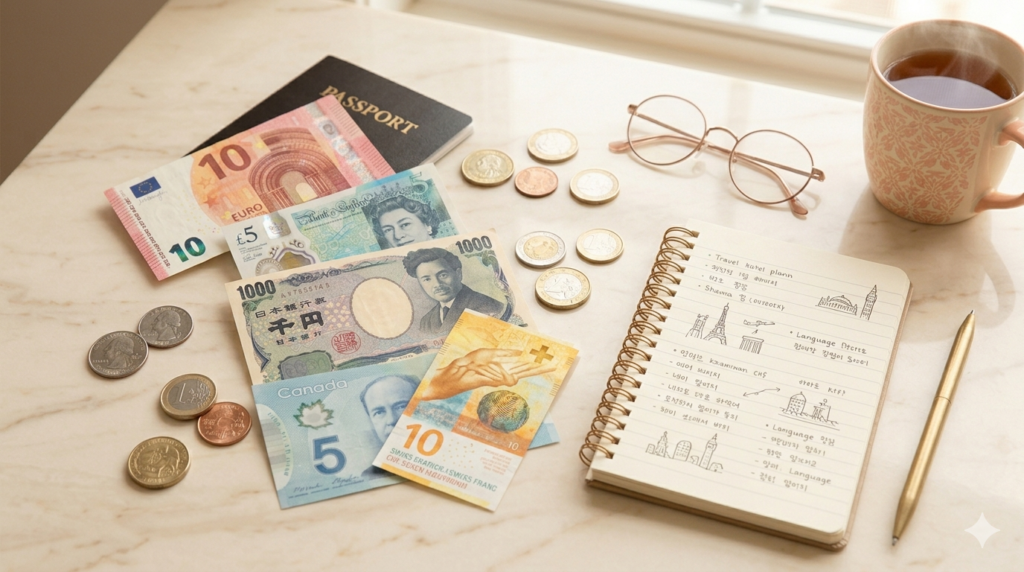
Planning a trip abroad is exciting, but dealing with currency exchange for travel can feel overwhelming. Between airport kiosks advertising “no commission,” ATM fees that seem to multiply, and credit cards with confusing foreign transaction charges, it’s hard to know which option gives you the best deal. The good news? Understanding your currency exchange options can save you hundreds of dollars on your next international adventure, and it’s simpler than you might think.
Why Airport Currency Exchange Is Usually Your Worst Option
Those convenient currency exchange kiosks at the airport might seem like the easiest solution, but they’re typically the most expensive way to get foreign currency. Airport exchange services know they have a captive audience of travelers who need cash immediately, so they charge premium rates—often marking up the exchange rate by 7-15% compared to the mid-market rate you see on Google.
Even when these kiosks advertise “no commission” or “zero fees,” they’re building their profit into a poor exchange rate. For example, if you’re exchanging $500 USD to euros, an airport kiosk might give you €420 while a better option could net you €460—that’s a $45 difference for the same transaction. If you absolutely must exchange money at the airport, limit it to a small amount just for immediate expenses like transportation to your hotel.
ATMs Abroad: Your Best Friend for Getting Local Currency
Using ATMs at your destination consistently offers some of the best currency exchange rates available to travelers. Banks negotiate wholesale exchange rates that are much closer to the true mid-market rate, and withdrawing directly from an ATM gives you access to these better rates. The key is understanding and minimizing the fees involved.
You’ll typically encounter two types of fees when using foreign ATMs: your home bank’s foreign ATM fee (usually $3-5 per withdrawal) and the foreign bank’s fee (varies by country, often $2-5). Some ATMs will also offer “dynamic currency conversion,” which lets you see the charge in your home currency right at the machine. This sounds helpful, but it’s actually a trap—always decline this option and choose to be charged in the local currency instead. Dynamic currency conversion typically adds a 3-7% markup to your transaction.
To maximize your savings with ATM withdrawals, take out larger amounts less frequently to minimize per-transaction fees. If your bank charges $5 per withdrawal, taking out $500 once costs you 1% in fees, while five withdrawals of $100 each costs you 5%. Before you travel, call your bank to ask about their international ATM fees and see if they have partner banks in your destination country that might offer fee-free withdrawals.
Credit Cards and Debit Cards: Understanding the Real Costs
Credit cards offer convenience and security for international travel, but not all cards are created equal when it comes to foreign transactions. Most credit cards charge a foreign transaction fee of 2-3% on every purchase you make abroad. This might not sound like much, but on a $3,000 trip, you’re paying an extra $60-90 just for the privilege of using your card overseas.
The solution is to get a travel-friendly credit card with no foreign transaction fees before your trip. Many travel rewards cards offer this benefit at no annual fee, and they often include additional perks like travel insurance and emergency assistance. These cards use competitive exchange rates similar to what you’d get from an ATM, making them excellent for larger purchases like hotels, restaurants, and tours.
One important tip: just like with ATMs, always choose to pay in the local currency when using your credit card abroad. When a merchant asks if you want to pay in dollars or local currency, selecting dollars triggers dynamic currency conversion with poor exchange rates that can cost you 5-8% extra on the transaction.
Banks and Exchange Services: When They Make Sense
Exchanging currency at your home bank before departure seems old-fashioned, but it can be useful in specific situations. Most major banks offer currency exchange services to account holders, often with better rates than airport kiosks but not quite as good as ATM withdrawals abroad. Banks typically need 2-3 business days to order foreign currency, so this requires advance planning.
This option makes sense if you’re traveling to a country where ATM access might be limited, if you want peace of mind having cash in hand when you land, or if you’re visiting somewhere that’s heavily cash-based. Countries in Southeast Asia, parts of Latin America, and some destinations in Africa often require more cash for daily transactions than card-friendly places like Western Europe or Japan.
Dedicated currency exchange services like Travelex or local exchange bureaus in major cities can offer competitive rates, especially for larger amounts. In financial hubs like London, Hong Kong, or Bangkok, you’ll find exchange offices competing for business with rates significantly better than airport options. Research exchange services near your hotel before you travel, and check online reviews to avoid tourist-trap locations with deceptive rates.
Smart Travel Money Strategies That Save You Hundreds
The absolute best approach to currency exchange for travel combines multiple methods strategically. Here’s what savvy travelers do: apply for a no-foreign-transaction-fee credit card at least a month before your trip and use it for most purchases abroad. This gives you excellent exchange rates and valuable purchase protections. Keep the card in a secure location and have your PIN ready in case you need it for chip-and-PIN terminals common in Europe.
For cash needs, plan to use ATMs at your destination for the best rates. Withdraw money from ATMs located inside banks rather than standalone machines on the street—they’re safer and often have lower fees. Bring a debit card from a bank that reimburses foreign ATM fees (several online banks offer this benefit) to eliminate those pesky transaction charges entirely.
Always notify your bank and credit card companies before traveling internationally to prevent your cards from being frozen for suspicious activity. Keep a small emergency cash reserve in USD or euros (widely accepted for exchange worldwide) hidden separately from your main wallet. Finally, use a currency conversion app or website to check the mid-market rate before any exchange so you know if you’re getting a fair deal.
Where to exchange currency matters less than understanding the fees and rates involved in each option. By avoiding expensive airport kiosks, maximizing ATM withdrawals with the right bank cards, using travel-friendly credit cards for purchases, and always paying in local currency, you’ll keep more money in your pocket for the experiences that make travel worthwhile. A little preparation before your trip ensures that currency exchange becomes one less thing to worry about while you’re exploring the world.