As an Amazon Associate I earn from qualifying purchases. This post contains affiliate links, which means I may earn a small commission — at no extra cost to you — if you buy through them. I only recommend things I believe are genuinely worth your time.
I need to tell you about galbi. Korean BBQ ribs — specifically the soy-pear-garlic-sesame marinade that transforms ordinary short ribs into something almost unreasonably delicious. The first time I tasted properly marinated Korean BBQ ribs, I remember thinking: how is this just soy sauce and fruit? Because the flavor is so much bigger than the ingredient list suggests.
Korean BBQ ribs have become one of those dishes I think about when I’m planning meals for the week. They’re impressive enough to feel special, but the actual hands-on work is minimal — the marinade does most of the heavy lifting. As someone who’s been working through a Korean cookbook one recipe at a time, galbi was one of those recipes that made me stop and realize just how elegant Korean cooking can be. Simple ingredients, incredible results.
What Are Korean BBQ Ribs (Galbi)?
Galbi (갈비) literally means “ribs” in Korean, and when people talk about Korean BBQ ribs, they’re usually referring to galbi-gui — marinated beef short ribs that are grilled over high heat. The beef is typically cut thin so it cooks fast and develops those gorgeous charred edges while staying tender and juicy inside.
What sets Korean BBQ ribs apart from American-style BBQ ribs is the marinade. There’s no low-and-slow smoking here, no heavy tomato-based BBQ sauce. Instead, galbi relies on a marinade built from soy sauce, Asian pear (or sometimes regular pear or kiwi), garlic, sesame oil, sugar, and sometimes rice wine. The fruit isn’t just for sweetness — enzymes in the pear naturally tenderize the meat, which is why properly marinated Korean BBQ ribs practically melt in your mouth.
🥢 Finishing touch: a good toasted sesame oil is what makes these dishes taste like the real thing. Grab the one I reach for →
As an Amazon Associate I earn from qualifying purchases.
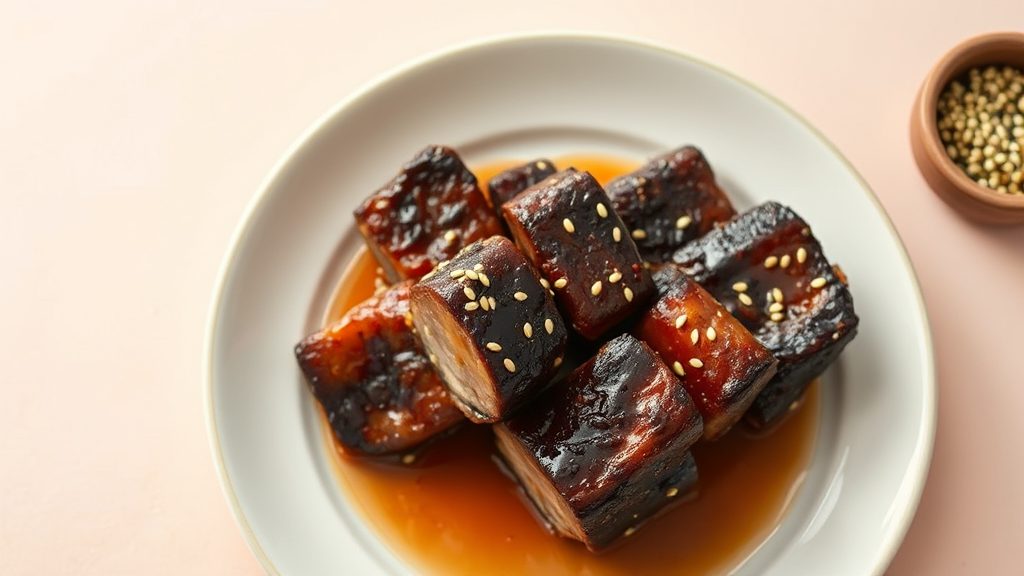
The combination of salty soy sauce, sweet pear, nutty sesame, and sharp garlic creates this deeply savory-sweet profile that caramelizes beautifully when it hits high heat. Those caramelized, slightly charred edges are honestly the best part. Korean BBQ ribs are the kind of food that makes you close your eyes when you take the first bite.
LA-Style vs. Traditional Cut Korean BBQ Ribs
If you’re shopping for Korean BBQ ribs, you’ll likely come across two different cuts, and it helps to know the difference.
Traditional cut (Korean-style): The ribs are cut parallel to the bone in long strips, with the meat scored in a crosshatch pattern. This allows the marinade to penetrate deeply and the meat to cook quickly and evenly. This is the more traditional way galbi is prepared in Korea.
LA-style cut (flanken cut): The ribs are cut across the bone, so you get thin strips with small cross-sections of bone running through them. This style is called “LA galbi” because it was popularized by Korean communities in Los Angeles. The thin cut means the meat cooks in just a few minutes and you get maximum surface area for caramelization — which means maximum flavor.
Most Korean grocery stores (like H-Mart) sell pre-cut LA-style short ribs specifically for Korean BBQ ribs. They’re usually in the meat section labeled “LA galbi” or “flanken-cut short ribs.” If you don’t have a Korean market nearby, you can ask your butcher to cut beef short ribs flanken-style, about a quarter inch thick. It’s a common enough cut that most butchers will know what you mean.
I’ve been using the LA-style cut because it’s easier to find and cooks incredibly fast. Three to four minutes per side on high heat and you’re done. The thin cut also means the marinade doesn’t need as long to work its way through the meat.
The Korean BBQ Ribs Marinade That Changes Everything
The marinade is where Korean BBQ ribs go from “grilled meat” to “unforgettable meal.” Here’s what goes into a classic galbi marinade:
Soy sauce forms the salty, umami backbone. Use regular soy sauce, not low-sodium — you need that punch of salinity to balance the sweetness.
Asian pear is the secret weapon. Grated Asian pear adds natural sweetness and, more importantly, contains enzymes that tenderize the beef. If you can’t find Asian pear, a regular ripe pear or even kiwi works as a substitute. Some recipes use pineapple juice, but be careful — pineapple is more aggressive and can turn the meat mushy if left too long.
Garlic — and lots of it. Korean cooking in general is generous with garlic, and Korean BBQ ribs are no exception. I usually use about 5-6 cloves for a couple pounds of ribs, minced or grated.
Sesame oil gives the marinade its distinctive nutty aroma. Just a tablespoon or two goes a long way. Toasted sesame oil has a more intense flavor than regular, and that’s what you want here.
Sugar — brown sugar or white — helps with caramelization and balances the soy sauce. Some recipes also add mirin or rice wine for a more complex sweetness.
🍶 Flavor tip: a splash of mirin adds gentle sweetness and shine to sauces. This is the bottle I buy →
As an Amazon Associate I earn from qualifying purchases.
Black pepper, scallions, and sesame seeds round things out. The scallions go into the marinade and some are reserved for garnish after cooking.
🥢 Toasted sesame seeds add that signature nutty crunch and aroma to Korean dishes. Here’s the jar I keep on hand →
As an Amazon Associate I earn from qualifying purchases.
Mix everything together, coat the ribs, and let them marinate. A minimum of 2-4 hours is good, but overnight is ideal. The longer the marinade has to work, the more flavorful and tender your Korean BBQ ribs will be. I usually prep the marinade the night before and let the ribs sit in the fridge until I’m ready to cook.
How to Make Korean BBQ Ribs Without a Grill
Living in Florida, I technically have grilling weather year-round, but I don’t always feel like firing up an outdoor grill — especially on a weeknight. The good news is that Korean BBQ ribs are completely delicious without one.
Cast iron skillet: This is my go-to method. Get your cast iron screaming hot, add a tiny bit of oil with a high smoke point (avocado or vegetable oil), and cook the ribs for about 3-4 minutes per side. The cast iron gives you great caramelization and those charred edges that make Korean BBQ ribs so irresistible. Open a window first — it will smoke.
🍳 Kitchen workhorse: this is the skillet I’d pick →
As an Amazon Associate I earn from qualifying purchases.
Broiler: Set your oven to broil on high, place the marinated ribs on a foil-lined baking sheet about 4-5 inches from the heating element, and broil for about 3-4 minutes per side. Watch them carefully — the sugar in the marinade can go from perfectly caramelized to burnt quickly.
Grill pan: A stovetop grill pan won’t give you actual smoke flavor, but the ridges create nice grill marks and allow fat to drip away from the meat. Heat it over medium-high heat and cook the same way as the cast iron method.
🔥 Korean BBQ at home? here’s the grill pan I’d recommend →
As an Amazon Associate I earn from qualifying purchases.
Honestly, some of the best Korean BBQ ribs I’ve made have been in a cast iron skillet. The high, even heat gives you a great sear, and cleanup is easier than dealing with a grill. Don’t let not having a grill stop you from making these.
Side Dishes That Go With Korean BBQ Ribs
Korean BBQ ribs are rich, sweet, savory, and intense — which means you want side dishes that cut through that richness and refresh your palate between bites. This is where banchan (Korean side dishes) really shine.
Kimchi is non-negotiable. The tangy, spicy, fermented crunch of kimchi is the perfect counterpoint to the sweet, caramelized meat. I always serve my homemade kimchi alongside Korean BBQ ribs. If you’ve got napa cabbage kimchi and radish kimchi (kkakdugi), even better.
Pickled radish (danmuji) — those bright yellow pickled radish slices you get at Korean restaurants. They’re sweet, crunchy, and tangy, and they cleanse your palate beautifully between bites of rich, meaty galbi.
Steamed rice is essential. Plain white rice is the anchor for any Korean BBQ meal. It mellows out the intense flavors and fills you up.
Lettuce wraps (ssam) are a classic way to eat Korean BBQ ribs. Take a leaf of green leaf lettuce or perilla leaf, add a piece of meat, a dab of ssamjang (spicy dipping paste), a slice of garlic, and wrap it up. The fresh, crunchy lettuce against the warm, caramelized meat is one of the best textural combinations in all of food.
Scallion salad (pa-muchim) — thinly sliced scallions tossed with sesame oil, vinegar, gochugaru, and a pinch of sugar. It’s sharp, bright, and pairs incredibly well with the sweetness of the galbi marinade.
🌶️ Can’t find gochugaru locally? You’re not alone — it’s a specialty item most stores don’t carry. Here’s the coarse Korean red pepper powder I order →
As an Amazon Associate I earn from qualifying purchases.
Why Korean BBQ Ribs Are Worth the Effort
Here’s the thing — Korean BBQ ribs aren’t even that much effort. The marinade takes about 10 minutes to throw together. The actual cooking takes less than 10 minutes. The longest part is waiting for the meat to marinate, and that’s just patience, not labor. For what you get — deeply caramelized, sweet-savory, melt-in-your-mouth beef ribs — the effort-to-reward ratio is absurdly good.
As someone who’s learning Korean cooking from scratch (literally from a cookbook, one recipe at a time), galbi was a turning point for me. It showed me that Korean food isn’t intimidating or unapproachable — it’s thoughtful, balanced, and often simpler than you’d expect. The magic is in the quality of the ingredients and the balance of flavors: salty, sweet, savory, nutty, and just a little bit smoky from the grill or the cast iron.
If you’ve never made Korean BBQ ribs at home, please try. Get yourself some flanken-cut short ribs, mix up that soy-pear-garlic-sesame marinade, and let them sit overnight. When you cook them the next day and that caramelized, sweet-savory aroma fills your kitchen, you’ll understand why galbi is one of the most beloved dishes in Korean cuisine. Wrap a piece in lettuce with some ssamjang and a slice of raw garlic, and I promise you — you’ll be hooked.