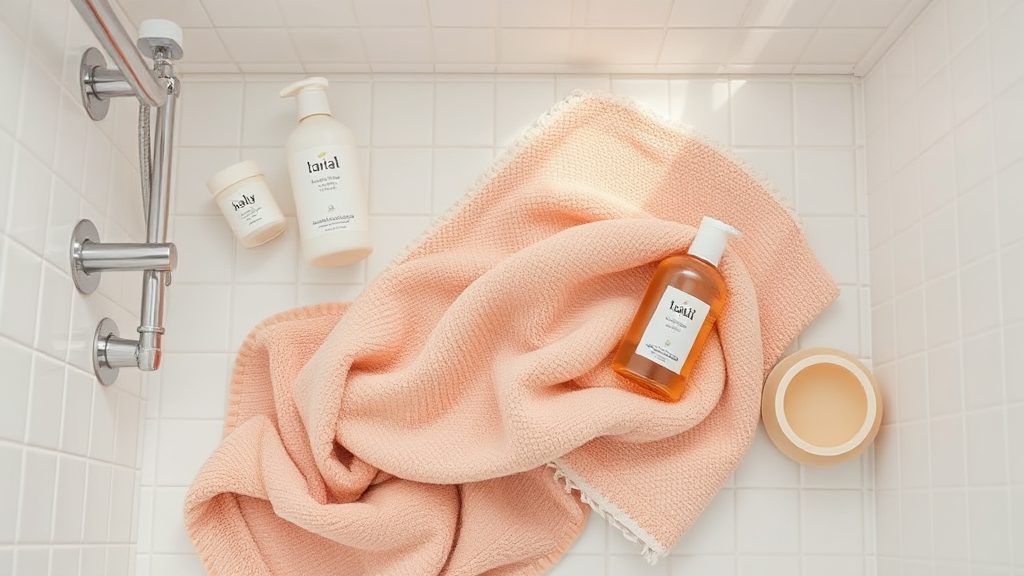
The first time I saw a Korean bathroom in a vlog, I was genuinely confused. Where was the shower curtain? Where was the bathtub? Why was the showerhead just… hanging on the wall next to the toilet? And why did the entire floor look wet?
Welcome to Korean showers — where the whole bathroom is the shower, and honestly, once you understand it, it kind of makes more sense than what we do here in the States.
I’ve been learning Korean for a while now, and one of my favorite rabbit holes is everyday cultural differences — the stuff that’s not in textbooks. Korean showers and bathroom culture turned out to be one of the most fascinating ones. It’s not just about how people bathe. It’s about how an entire culture thinks about cleanliness, community, self-care, and even social bonding.
The Korean Wet Bathroom: Why the Whole Room Is the Shower
In most American homes, the shower is a separate enclosed space — a bathtub with a curtain, a glass-door shower stall, something with a clear boundary between “shower zone” and “rest of the bathroom.” Korean bathrooms throw that concept out entirely.
A typical Korean bathroom — especially in apartments, which is where most Koreans live — is a single waterproofed room. The entire floor has a drain. The showerhead is mounted on the wall, usually handheld, and you just… shower right there. Next to the sink. Near the toilet. The whole floor gets wet, and that’s completely by design.
This is called a “wet bathroom” design, and it’s standard across Korea (and much of East Asia). The floors are typically tiled and slightly sloped toward a central drain. After you shower, you might use a squeegee or just let the floor dry. Many Korean bathrooms have floor heating (온돌, ondol), so the floor dries relatively quickly.
The first time you see it as an American, it looks strange. But think about it — it’s actually easier to clean (just hose down the whole room), takes up less space (no need for a separate shower enclosure), and in a country where apartments are typically smaller than American homes, that efficient use of space matters a lot.
Korean showers almost always use handheld showerheads rather than fixed overhead ones. This gives you way more control over where the water goes — which is practical when your toilet is three feet away and you’d rather not soak the toilet paper. Most Korean showerheads have adjustable spray settings and are connected to a flexible hose that lets you direct water exactly where you need it.
Korean Shower Routine: It’s More Than Just Getting Clean
Here’s where Korean showers start to diverge dramatically from the typical American “stand under water for 10 minutes” approach. Korean bathing culture involves actual steps, and people take them seriously.
The Korean shower routine often goes something like this:
Step 1: Soak or steam. Whether at home in a bath or at a jjimjilbang (more on that in a minute), the process starts with softening the skin through hot water or steam. This opens up the pores and loosens dead skin, which is crucial for the next step.
Step 2: Exfoliate with an Italy towel. This is the star of the show. The 이태리타올 (Italy towel) is a small, rough, colored washcloth — usually green, pink, or yellow — that Koreans use to physically scrub dead skin off their bodies. I’m dedicating a whole post to this magical little towel, but the short version is: you scrub, and visible rolls of dead skin come off your body, and it’s equal parts disgusting and deeply satisfying.
Step 3: Wash with soap or body wash. After exfoliating, you do a thorough wash. Many Koreans use a gentle body wash after the intense exfoliation to avoid irritation.
Step 4: Skincare. Korean skincare doesn’t stop at the face. Many people apply body lotion or body oil immediately after showering while the skin is still damp. The face gets its own multi-step routine, of course — Korea’s famous 10-step skincare routine didn’t come from nowhere.
This whole process treats bathing as a ritual, not a chore. And that mindset shift is honestly something I’ve started adopting myself. My showers in my Florida apartment are not exactly a Korean wet bathroom experience, but the intentionality? That’s transferable.
Jjimjilbang Culture: Korean Bathhouses Are a Whole Experience
You can’t talk about Korean showers without talking about 찜질방 (jjimjilbang) — Korean bathhouses. And I need you to understand that a jjimjilbang is not like any spa or sauna you’ve been to in the US. It’s a completely different world.
A jjimjilbang is a large, multi-level facility that typically includes:
Communal bathing areas (gender-separated, fully nude — this is the part that surprises most Westerners). These have hot tubs, cold plunge pools, and rows of showers where you sit on a low stool and wash yourself before entering the pools. Yes, sitting. Korean showers in bathhouses use low plastic stools, and you sit while you wash. It’s actually more comfortable and thorough than standing.
Saunas and heated rooms (co-ed, clothed in provided uniforms). These include various themed rooms — a jade room, a salt room, an ice room, a charcoal room — each at different temperatures and believed to have different health benefits.
Common areas with snack bars (you haven’t lived until you’ve had baked eggs and sikhye sweet rice drink at a jjimjilbang), sleeping rooms, TV areas, and sometimes even PC gaming stations.
People go to jjimjilbangs for hours. Families go together. Friends go together. Couples go together. It’s a social activity as much as a hygiene one. Some people even sleep overnight at jjimjilbangs — they’re open 24 hours, and for budget travelers in Korea, they’re a famously cheap alternative to a hotel.
The communal nudity aspect is the biggest culture shock for Americans. In Korea, it’s just… normal. The bathing areas are separated by gender, and nobody stares or makes it weird. It’s treated with the same casualness as a locker room — except cleaner, more relaxed, and with way better facilities.
Why Korean Showers Use a Handheld Showerhead (And Why It’s Better)
I want to come back to the handheld showerhead thing because I think it’s one of those small details that actually reveals a bigger cultural difference.
In the US, the default is a fixed showerhead mounted high on the wall. You stand under it. The water falls on you like rain. It’s passive — you just exist under the water flow.
Korean showers use a handheld showerhead because the approach to bathing is active, not passive. You direct the water. You control where it goes. You’re engaged in the process of cleaning yourself rather than just standing in a stream of water.
This also makes practical sense in a wet bathroom where you don’t want to unnecessarily spray water on the toilet and sink every time you shower. The handheld design gives you precision. And once you get used to it, going back to a fixed overhead showerhead feels weirdly limiting.
I actually switched to a handheld showerhead in my own bathroom after learning about Korean bathroom culture. It was a $25 swap at the hardware store and honestly one of the best small upgrades I’ve made. I’m not about to renovate my bathroom into a full wet room (my landlord might have thoughts), but the showerhead? Easy win.
The Seated Shower: Why Koreans Sit Down to Wash
At jjimjilbangs and in many Korean homes, people shower while seated on a small plastic stool. This was another thing that seemed odd to me at first — why would you sit down in the shower?
But it makes so much sense. When you’re sitting, you can reach every part of your body more easily. You’re stable, so you can really scrub thoroughly with your Italy towel without worrying about slipping. You’re at a comfortable height to wash your legs and feet properly. And it’s just more relaxing — you’re not standing on a wet surface trying to balance on one foot while scrubbing the other.
In Korean bathhouses, you’ll see rows of these low stools in front of mirrors, each with their own handheld showerhead and a basin. People sit, lather, scrub, rinse, and take their time. There’s no rush. Nobody’s standing in a narrow shower stall trying to speed through the process.
It’s a small thing, but it reflects a broader Korean approach to personal care: it’s not something to rush through. It’s something to do properly.
What Korean Showers Taught Me About Slowing Down
I started researching Korean showers out of pure curiosity — it was one of those “wait, their bathrooms look different” moments that led me down a rabbit hole. But what I actually took away from it was a different relationship with something I do every single day.
In the US, showers are functional. Get in, get clean, get out. We optimize for speed. Korean bathroom culture treats bathing as something that deserves time and attention. The exfoliation, the steps, the jjimjilbang culture of spending hours on self-care — it’s not indulgence. It’s just a different standard of thoroughness.
I’m not Korean. I’m a Russian girl in Florida who’s learning the language and falling in love with the culture one random detail at a time. But Korean showers are one of those details that actually changed something in my daily life. The handheld showerhead. The Italy towel (seriously, get one). Taking an extra five minutes instead of rushing through. Being intentional about something I used to do on autopilot.
Sometimes the most interesting cultural differences aren’t the big, obvious ones. They’re the small daily rituals that reveal how a whole society thinks about care, comfort, and what it means to be clean. Korean showers taught me that, and I’m here for it.