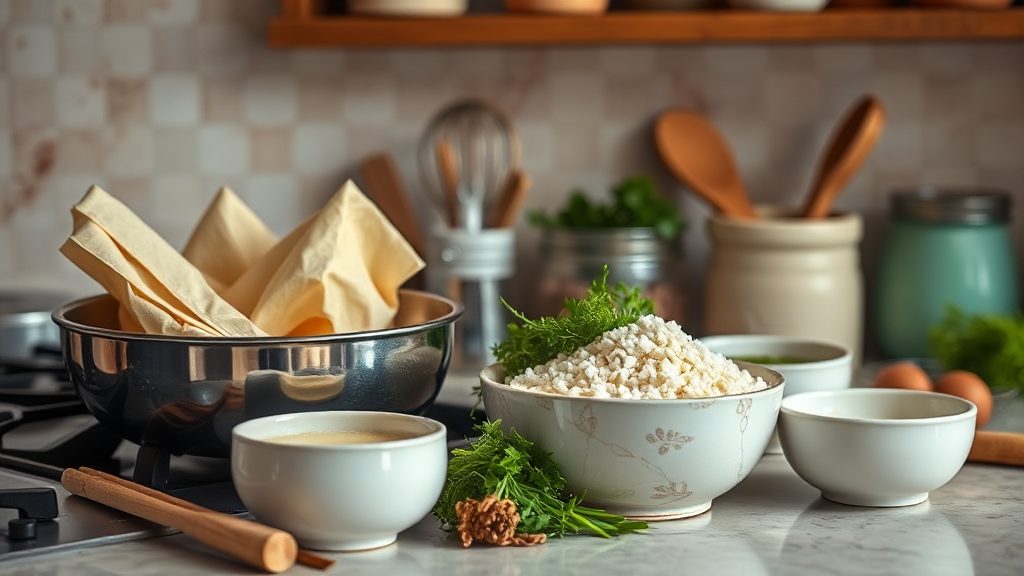
If you’ve ever wondered why some Korean soups have such incredible depth of flavor while others fall flat, the secret lies in the foundation: korean soup base ingredients. These building blocks—myeolchi dashi (anchovy stock), kombu dashi (kelp stock), and chicken stock—form the backbone of countless Korean dishes, from comforting doenjang jjigae to delicate tteokguk. Understanding when to use each base and how to layer them properly will transform your Korean cooking from good to restaurant-quality, and the best part is that you can batch-make these stocks and keep them ready whenever inspiration strikes.
🍡 Need rice cakes (tteok)? Chewy Korean rice cakes are the star of tteokbokki and tteokguk. Here’s the tteok I use →
As an Amazon Associate I earn from qualifying purchases.
🐟 Pantry staple: dried anchovies keep in the freezer and make broth taste like home. Grab the ones I keep on hand →
As an Amazon Associate I earn from qualifying purchases.
🌊 Pantry staple: dried dashima keeps forever and is essential for real Korean soup stock. Grab the one I keep on hand →
As an Amazon Associate I earn from qualifying purchases.
🫙 Pantry staple: a good doenjang makes doenjang jjigae taste like the real thing. Grab the one I keep on hand →
As an Amazon Associate I earn from qualifying purchases.
Understanding Myeolchi Dashi: The Heart of Korean Home Cooking
Myeolchi dashi, made from dried anchovies, is arguably the most essential of all korean soup base ingredients. This deeply savory stock appears in everything from kimchi jjigae to miyeok guk (seaweed soup), and once you learn to make it properly, you’ll understand why Korean home cooks always keep dried anchovies in their pantry. The key to excellent myeolchi dashi lies in selecting the right anchovies and knowing how to coax out their umami without any fishy bitterness.
For the best results, use medium-sized anchovies (about 1.5-2 inches long) rather than the tiny ones. Remove the heads and guts—this step takes about five minutes for a cup of anchovies, but it’s crucial for preventing bitterness. Toast the cleaned anchovies in a dry pan over medium heat for 2-3 minutes until fragrant. This toasting step intensifies the umami flavor and reduces any potential fishiness. Then simmer them in water for about 20 minutes with a piece of kombu (kelp) and a few dried shiitake mushrooms if you have them. The ratio I recommend is roughly 1 cup of dried anchovies to 8 cups of water.
The resulting stock should taste clean, savory, and slightly sweet—never fishy or metallic. If your dashi tastes off, you likely over-simmered it (which extracts bitter compounds) or forgot to remove the heads and guts. This anchovy-based soup stock recipe works beautifully for any jjigae (stew) or guk (soup) where you want a pronounced savory depth. Keep a batch in your refrigerator for up to 5 days, or freeze it in ice cube trays for convenient portioning.
Kombu Dashi: The Subtle Foundation for Delicate Soups
While myeolchi dashi brings bold savory notes, kombu dashi (kelp stock) offers a more refined, mineral-rich base that doesn’t overpower delicate ingredients. This korean dashi variation is perfect for tteokguk (rice cake soup), manduguk (dumpling soup), or any dish where you want the other ingredients to shine rather than compete with a strong stock flavor. Think of kombu dashi as the elegant cousin in the family of Korean soup bases—it supports without demanding attention.
Making kombu dashi requires even less effort than anchovy stock. Take a 4-inch piece of dried kombu and wipe it gently with a damp cloth—don’t rinse it under running water, as you’ll wash away the flavorful white powder on the surface. Place the kombu in 6 cups of cold water and let it soak for at least 30 minutes, or up to overnight in the refrigerator. Then heat the water slowly, removing the kombu just before it reaches a boil. If you let it boil, the stock can become slimy and develop an unpleasant seaweed flavor.
Kombu dashi works exceptionally well as a broth base when you’re making clear soups or want to highlight premium ingredients like hand-rolled dumplings or thinly sliced beef. You can also combine it with myeolchi for a more complex flavor profile—this combination is actually quite common in Korean cooking, where layering different stocks creates remarkable depth. The shelf life is similar to anchovy stock: 5 days refrigerated or several months frozen.
Chicken Stock: Building Richness in Korean Soup Ingredients
Korean chicken stock differs from its Western counterpart in both preparation and application. While Western stocks often simmer for hours with mirepoix, Korean daksu (chicken stock) typically includes aromatic ingredients like ginger, garlic, scallions, and sometimes dried jujubes or ginseng for medicinal soups. This makes it an indispensable component among korean soup base ingredients, especially for nourishing dishes like samgyetang (ginseng chicken soup) or kalguksu (knife-cut noodle soup).
To make Korean-style chicken stock, use a whole chicken or chicken backs and necks for maximum collagen. Blanch the chicken pieces in boiling water for 3-4 minutes, then discard that water—this removes impurities and ensures a crystal-clear stock. Transfer the blanched chicken to a fresh pot with cold water, add a thumb-sized piece of ginger (smashed), 6-8 garlic cloves, 2 scallions, and optionally a few dried jujubes. Simmer gently for 90 minutes to 2 hours, skimming any foam that rises to the surface.
The finished stock should be rich but not greasy, with a golden color and gentle aroma. You can remove excess fat by refrigerating the stock overnight—the fat will solidify on top for easy removal. Korean chicken stock works wonderfully for Korean dishes that need body and richness without the pronounced seafood notes of anchovy stock. It’s particularly excellent for knife-cut noodle soups, rice porridges, and mild soups served to children or those recovering from illness.
What Korean Soup Base Should You Use for Different Dishes?
Myeolchi dashi is your go-to for robust, everyday stews like kimchi jjigae, doenjang jjigae, and sundubu jjigae. Kombu dashi works best for delicate soups like tteokguk and clear broth noodle dishes. Chicken stock shines in hearty noodle soups, medicinal broths, and any dish where you want comforting richness without seafood flavors.
The choice of soup stock recipe fundamentally changes the character of your finished dish. For example, if you make kimchi jjigae with chicken stock instead of myeolchi dashi, you’ll get a milder, less characteristically Korean flavor. Conversely, using anchovy stock in tteokguk (which traditionally calls for beef or chicken broth) would create an overly assertive soup that distracts from the subtle rice cakes. Understanding these distinctions allows you to make intentional choices rather than substituting randomly.
That said, creativity has its place. Some modern Korean home cooks combine stocks—using 70% myeolchi and 30% chicken stock for a jjigae with extra body, or adding a small piece of kombu to chicken stock for additional umami. In 2026, as Korean home cooking continues evolving, these hybrid approaches are becoming more common. The key is understanding the traditional applications first, then experimenting from a place of knowledge rather than guesswork.
Layering Flavors: Beyond Single-Stock Simplicity
Professional Korean restaurant kitchens rarely rely on just one stock type. Instead, they layer multiple korean soup base ingredients to create complex flavor profiles that keep diners coming back. You can apply this same technique at home once you’ve mastered the individual stocks. The principle is simple: combine stocks with complementary characteristics to achieve depth that no single stock can provide alone.
A classic layering technique involves starting with myeolchi dashi as your primary base (about 60-70% of the liquid), then adding chicken stock (20-30%) for body and richness. This combination works beautifully for kimchi jjigae, providing both the characteristic Korean savory depth and a satisfying roundness on the palate. For an even more complex version, add a small amount of dried shiitake soaking liquid (about 10%) to introduce earthy, forest-like notes that complement fermented flavors.
Another sophisticated approach is the kombu-anchovy-chicken trilogy. Make your anchovy stock with kombu included from the start, then blend it 50/50 with chicken stock for dishes like kalguksu. This creates a broth that’s simultaneously light and deeply satisfying—the kombu provides minerals and subtle sweetness, the anchovies contribute umami, and the chicken adds body. The flavor is greater than the sum of its parts, and guests often can’t identify the individual components, just that something tastes exceptionally good.
When layering stocks, always taste as you go. Start with your primary stock, then add the secondary stock gradually, tasting after each addition. The goal isn’t to detect each individual stock clearly, but to create a unified flavor that supports your main ingredients. If you’re new to this technique, keep notes on your ratios so you can replicate successes and learn from less successful experiments. Over time, you’ll develop an intuition for which combinations work with which dishes.
Storage Strategies for Batch-Making Korean Soup Stocks
The secret to making Korean home cooking sustainable in busy 2026 life is having these korean soup base ingredients ready when you need them. Batch-making stocks on a weekend afternoon sets you up for quick weeknight meals throughout the month. The key is using storage methods that preserve quality while making the stocks convenient to use in various quantities.
For refrigerator storage, let your stocks cool completely before transferring to glass jars or food-grade plastic containers. Leave about an inch of headspace for expansion. Properly stored, myeolchi dashi and kombu dashi last 4-5 days in the refrigerator, while chicken stock (with its higher fat content) stays fresh for 3-4 days. Label each container with the contents and date—when you have multiple stocks, this prevents confusion and ensures you use them while they’re still fresh.
Freezing extends the life of your broth base to 3-4 months and offers maximum flexibility. Ice cube trays are perfect for this purpose—each cube holds about 2 tablespoons of stock, ideal for adding quick flavor boosts to stir-fries or small-batch soups. Once frozen solid, pop the cubes into labeled freezer bags. For larger quantities, use silicone muffin pans (each cup holds about ½ cup) or freeze stock in zip-top bags laid flat for space-efficient storage. The flat bags stack beautifully and thaw quickly under running water.
One advanced strategy I recommend is maintaining a “stock library” in your freezer with all three types ready to go. Dedicate one afternoon quarterly to making large batches: simmer 3 batches of myeolchi dashi, 2 batches of kombu dashi, and 1 large pot of chicken stock. Portion and freeze everything. This upfront investment means you’re always prepared to make authentic Korean soups without the last-minute stress of stock-making. It’s the kind of meal prep that actually makes sense—unlike preparing entire meals that lose quality when reheated, stocks freeze beautifully and maintain their integrity.
When you’re ready to use frozen stock, you can add the frozen portions directly to your cooking pot if you’re making hot soup. For recipes requiring precise measurements or when you need the stock at room temperature, thaw overnight in the refrigerator. Never thaw stock at room temperature, as this creates ideal conditions for bacterial growth. If you’re short on time, place the sealed bag or container in a bowl of cold water, changing the water every 30 minutes until thawed.
Bringing It All Together in Your Korean Kitchen
Mastering korean soup base ingredients isn’t about following rigid rules—it’s about understanding the character of each stock and making informed decisions based on what you’re cooking. Myeolchi dashi brings bold savory depth, kombu dashi offers refined minerality, and chicken stock provides comforting richness. Each has its traditional applications, but the real magic happens when you start layering them thoughtfully to create complex flavors that elevate even simple dishes.
The practical takeaway is this: invest a few hours in batch-making these stocks, store them properly, and you’ll always be 20 minutes away from an authentic Korean soup or stew. No matter where you are in your journey of exploring Korean culture and cooking, having quality stocks on hand removes one of the biggest barriers to making Korean food at home. Start with whichever stock appeals most to you—perhaps myeolchi dashi if you love bold jjigae flavors, or chicken stock if you prefer milder dishes—then expand your repertoire from there.
Remember that even professional chefs continue refining their stock-making techniques throughout their careers. Your first batch might not be perfect, and that’s completely normal. Pay attention to how each stock tastes on its own, notice how it transforms when combined with other ingredients, and adjust your technique based on what you learn. With each batch, you’ll develop a deeper understanding of these fundamental korean dashi preparations and the confidence to use them creatively in your own cooking. The foundation of great Korean food is now literally in your hands—or more accurately, in your freezer, ready whenever you need it.