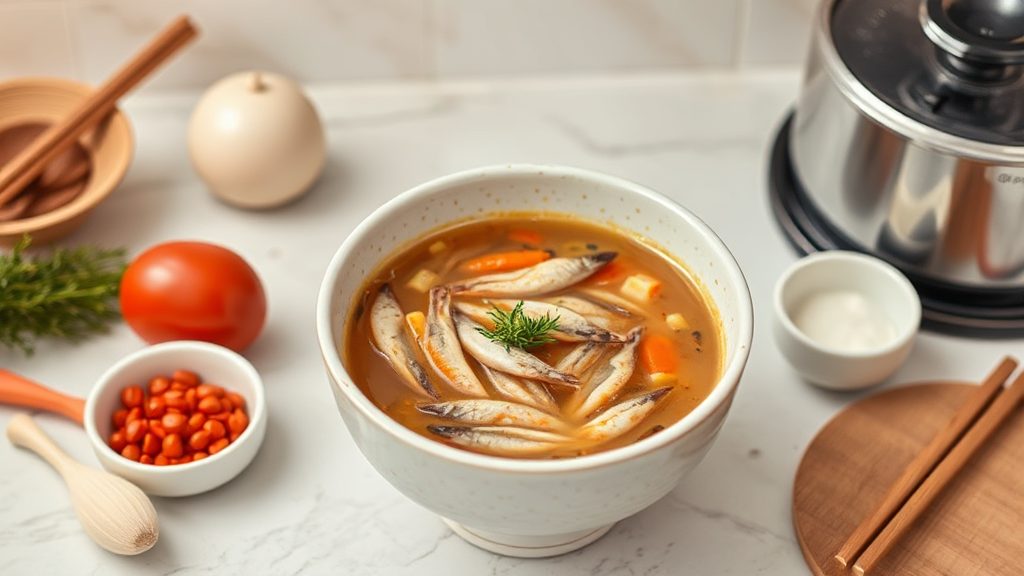
If you’ve ever experienced the clean, savory comfort of Korean anchovy soup, you know there’s something almost magical about how such a simple dish can warm you from the inside out. This humble bowl, known as myeolchi guk in Korean, is a staple in Korean households—often served as a light breakfast soup or alongside rice as part of a traditional meal. Made from dried anchovies, a few vegetables, and minimal seasoning, this soup proves that authentic Korean cooking doesn’t require complexity to deliver incredible flavor.
Whether you’re exploring Korean cuisine for the first time or looking to add another comforting recipe to your repertoire, learning to make myeolchi guk will give you a foundational skill that translates across many Korean soups and stews. The best part? Once you understand the technique for making a proper anchovy broth, you’ll have a versatile base that can be adapted with different vegetables, proteins, and seasonings based on what you have available.
Selecting and Preparing the Right Dried Anchovies
The foundation of any great Korean anchovy soup starts with choosing quality dried anchovies. At Korean grocery stores, you’ll find anchovies in various sizes, and for myeolchi guk, you want medium to large anchovies—typically around 2-3 inches in length. These are sold as “dashida myeolchi” or “gukmu myeolchi,” which specifically means soup anchovies. Smaller anchovies work better for banchan (side dishes) or as crispy snacks, but they won’t give you the depth of flavor needed for a proper broth.
When examining dried anchovies at the store, look for ones with a silver-gray color rather than yellowish or brownish hues, which indicate age and oxidation. Fresh dried anchovies should smell oceanic and clean, not overly fishy or stale. You’ll want to store them in an airtight container in the freezer if you’re not using them immediately—they can last for several months this way without losing their flavor potency.
Before making your broth, there’s an essential preparation step that many beginners skip: removing the heads and guts from the anchovies. This single step dramatically reduces any bitter or overly fishy flavors in your soup. Simply pinch off the head with your fingers, then split the anchovy lengthwise and pull out the dark intestinal tract. Yes, this takes a few extra minutes, but the difference in taste is remarkable. For about 15-20 anchovies (enough for 6 cups of soup), you’re looking at roughly 5-10 minutes of prep work that pays dividends in flavor quality.
Some cooks also briefly dry-roast the cleaned anchovies in a pan over medium heat for 2-3 minutes. This optional step enhances the umami depth and adds a subtle nutty note to the broth. Just be careful not to burn them—you want to see them turn slightly golden and become fragrant, not darkened or smoky.
Building a Flavorful Korean Anchovy Broth Base
Creating the broth for your myeolchi guk recipe is surprisingly straightforward once you’ve prepared your anchovies. Start with about 6 cups of water in a medium pot and add your cleaned anchovies—around 15-20 pieces, depending on their size and your desired intensity. Many Korean cooks also add a small piece of dried kelp (dashima), about 2×3 inches, which contributes minerals and a gentle oceanic sweetness that complements the anchovies beautifully.
Bring the water to a boil over medium-high heat, then immediately reduce to a gentle simmer. This is crucial—boiling too vigorously can make your broth cloudy and extract bitter compounds from the anchovies. Let the broth simmer uncovered for 15-20 minutes. You’ll notice the water taking on a light golden color and the kitchen filling with that characteristic savory aroma. If you added kelp, remove it after about 10 minutes to prevent it from becoming slimy or adding too much iodine flavor.
After your simmering time is complete, strain the broth through a fine-mesh sieve, discarding the spent anchovies. You now have a clean, umami-rich base that’s ready for vegetables and seasonings. Some cooks save the used anchovies to feed to pets or add to compost, but they’ve given up most of their flavor to the broth at this point.
The resulting broth should taste noticeably savory with a clean finish—not fishy, not bitter, just deeply flavorful. If your broth tastes too mild, you likely need more anchovies next time. If it tastes bitter or overly fishy, you either didn’t remove the heads and guts thoroughly, or you boiled it too hard. This broth-making technique is fundamental across Korean cooking, so mastering it here will serve you well in countless other Korean recipes.
Adding Vegetables and Tofu to Your Simple Anchovy Soup
Once you’ve strained your anchovy broth, it’s time to build the soup itself. The beauty of Korean anchovy guk lies in its flexibility—you can keep it minimal with just a couple of ingredients, or make it more substantial depending on your appetite and what’s in your refrigerator. Traditional additions include Korean radish (mu), which adds a gentle sweetness and slight crunch, along with soft tofu for protein and silky texture.
If using Korean radish, cut it into thin rectangular slices about 1/8-inch thick and roughly 1×2 inches in dimension. Add these to your strained broth and simmer for about 7-10 minutes until the radish becomes translucent and tender but still has a slight bite. The radish releases natural sugars as it cooks, balancing the savory depth of the anchovy broth with subtle sweetness. If you can’t find Korean radish, daikon works as a close substitute, though it tends to be slightly less sweet and more watery.
For tofu, soft or silken varieties work best in this soup—they absorb the broth flavor while maintaining their delicate texture. Cut the tofu into cubes about 3/4-inch square and gently slide them into the simmering soup. Let them heat through for 3-4 minutes. Unlike firm tofu, soft tofu is fragile, so avoid stirring too vigorously or it will break apart (though some broken pieces aren’t the end of the world—they still taste delicious).
Other vegetables that work beautifully in myeolchi guk include thinly sliced zucchini, which cooks in just 3-4 minutes, or a handful of watercress added in the last minute of cooking for a peppery bite and bright color. Sliced green onions are almost always included, typically added in the final 2 minutes. Some cooks add a beaten egg, drizzled in slowly to create delicate ribbons throughout the soup, transforming it into a more substantial meal.
What Makes Korean Anchovy Soup Different from Other Fish Soups?
Korean anchovy soup stands apart from other fish-based soups because it relies entirely on dried anchovies rather than fresh fish, creating a concentrated umami flavor without the heavy “fishiness” of many seafood soups. The drying process transforms the anchovies, concentrating their natural glutamates and creating a cleaner, more versatile broth that serves as both a simple soup and a foundational stock for more complex dishes.
Unlike Japanese dashi, which often combines bonito flakes with kelp in specific ratios, myeolchi guk focuses primarily on anchovies for its flavor profile, resulting in a more assertively savory taste. Compared to Western fish soups that typically include cream, tomatoes, or wine, Korean anchovy guk maintains a light, clear quality that lets the pure seafood essence shine through without heavy additions or masking ingredients.
Seasoning Techniques That Balance Korean Anchovy Soup Perfectly
Seasoning myeolchi guk requires a lighter touch than you might expect. Because the anchovies provide such concentrated umami, you need surprisingly little additional flavoring. The standard seasoning trio consists of soup soy sauce (guk ganjang), minced garlic, and salt—that’s essentially it. The restraint is intentional, allowing the pure anchovy flavor to remain the star.
Start with about 1-2 tablespoons of soup soy sauce for 6 cups of broth. Korean soup soy sauce is lighter and less assertive than regular soy sauce, designed specifically for soups where you want seasoning without darkening the broth too much or overwhelming other flavors. Add 1-2 cloves of minced garlic—fresh garlic makes a noticeable difference here compared to jarred or powdered versions. Then taste your soup and adjust with salt as needed. Different brands of anchovies have varying salt levels, so you’ll need to season to taste rather than following exact measurements.
Some regional variations include a small amount of fermented salted shrimp (saeujeot) for an additional layer of funky, complex saltiness, or a touch of Korean fish sauce (aekjeot). These are optional but can add interesting depth if you enjoy more assertive flavors. A final grinding of black pepper right before serving brightens everything up and adds a subtle warmth.
One crucial tip: season gradually and taste frequently. It’s easy to over-salt this soup because both the anchovies and soy sauce contribute sodium. If you accidentally over-season, you can dilute with additional water and adjust the other seasonings proportionally, though it’s always better to start conservative and add more as needed.
Serving Suggestions and Storage Tips for Your Myeolchi Guk
Korean anchovy soup is traditionally served piping hot in individual bowls alongside a bowl of steamed white rice and several banchan (side dishes). The soup acts as a palate cleanser and source of hydration throughout the meal rather than being consumed all at once before the main course, which is more common in Western dining. You’ll typically take spoonfuls of soup between bites of rice and banchan, creating a balanced, varied eating experience.
For a simple breakfast, myeolchi guk is often served with just rice and perhaps some kimchi, creating a light but satisfying start to the day. For lunch or dinner, it complements heavier dishes beautifully—its clean, savory quality provides contrast to richer, spicier foods. The soup is especially comforting during cooler months or when you’re feeling under the weather, as it’s considered gentle on the stomach while still being nourishing.
If you’re making this soup as part of your exploration of Korean culture and cooking, you might appreciate understanding that this simple dish represents the Korean culinary philosophy of “yakshik dongwon” (food and medicine are from the same source). The anchovies provide calcium, omega-3 fatty acids, and protein, while the light, warming broth is considered beneficial for digestion—functionality and flavor working in harmony.
For storage, the anchovy broth base keeps well in the refrigerator for 3-4 days or can be frozen for up to 3 months. Many Korean home cooks make larger batches of broth and freeze it in portion-sized containers for quick soup assembly later. However, if you’ve already added vegetables and tofu, the soup is best consumed within 2 days, as the vegetables can become mushy and the tofu may develop an unpleasant texture after prolonged storage.
When reheating, do so gently over medium-low heat rather than microwaving at full power, which can cause the tofu to become rubbery. If the soup has thickened after refrigeration (which sometimes happens as the vegetables release starches), simply thin it with a bit of water and adjust the seasoning as needed.
Mastering This Foundation of Korean Home Cooking
Learning to make a proper myeolchi guk recipe gives you more than just a single soup—it provides you with a foundational technique that underlies countless Korean dishes. The skill of coaxing maximum flavor from dried ingredients while avoiding bitterness or harsh flavors is central to Korean cooking philosophy. Once you’ve mastered this simple anchovy soup, you’ll find yourself naturally understanding how to approach other Korean soups and stews with confidence.
The real beauty of this dish lies in its accessibility. You don’t need expensive ingredients, specialized equipment, or hours of cooking time. With a bag of dried anchovies (which costs just a few dollars and lasts for months), you can create a nourishing, flavorful soup whenever the craving strikes. It’s the kind of recipe that rewards regular practice—each time you make it, you’ll develop a better intuition for the right amount of anchovies, the ideal simmering time, and the perfect seasoning balance for your personal taste.
As you continue exploring Korean cuisine, you’ll discover that the anchovy broth you’ve learned to make here serves as a base for many other dishes beyond simple soup. It can replace water in kimchi jjigae for added depth, form the foundation for more complex seafood stews, or even be used to cook rice for an extra layer of flavor. The versatility of this humble ingredient makes it a cornerstone of the Korean pantry, and now it can become a staple in yours as well.